How to Make a Tonneau Cover Waterproof
To make your tonneau cover waterproof, start by thoroughly cleaning it with mild soap and warm water, then dry it completely. This initial step ensures that dirt and debris do not interfere with the sealing process. Proper cleaning is essential for effective waterproofing.
Next, inspect and seal any leaks or worn seams using the appropriate sealants for your cover’s material. Pay close attention to areas that are prone to wear and tear. Proper sealing prevents water from seeping through.
After sealing, apply multiple thin layers of waterproof sprays or liquid rubber coatings. Ensure each layer dries fully before applying the next, avoiding trapped moisture. This layering process creates a durable barrier against rain, rust, and wear.
Following these steps keeps your cargo safe and your tonneau cover in excellent condition. Explore proven materials and techniques to enhance your cover’s durability further and maintain its waterproof qualities over time.
Why Waterproof Your Tonneau Cover? Common Leak Problems
Why does waterproofing your tonneau cover matter? You rely on it to protect your truck bed from rain, snow, and moisture damage. Common leak problems stem from worn seals, improper fit, or material degradation.
You might encounter persistent water pooling or seepage during heavy rain, which compromises cargo safety and promotes rust. Don’t fall for waterproofing myths like “all covers are inherently watertight” or “a quick spray is enough.”
Effective waterproofing requires precise sealing and regular maintenance. If you’re considering DIY installation, understand that proper alignment and secure fastening are critical to prevent leaks. Overlooking these technical details often leads to failure.
Pick the Best Waterproofing Materials for Your Cover
How do you select the right materials to guarantee your tonneau cover stays waterproof under all conditions? Start by evaluating material options like waterproof sprays, liquid rubber coatings, and specialized sealants designed for fabrics or vinyl. Each has distinct adhesion properties and durability levels.
Waterproof sprays are easy to apply but may require frequent reapplication, while liquid rubber coatings offer a more robust, flexible barrier. Sealants designed for vinyl excel in sealing seams and edges. Your choice depends on the cover’s fabric type and exposure intensity.
For application techniques, ensure even coverage by using brushes or spray applicators, following manufacturer instructions precisely. Applying multiple thin layers improves waterproofing without compromising flexibility. Proper drying time between coats is crucial to avoid trapping moisture, which can degrade waterproofing performance over time.
Clean, Prepare, and Seal Leaks Before Waterproofing
Before applying any waterproofing treatment, you need to thoroughly clean your tonneau cover to remove dirt, oils, and contaminants that can prevent proper adhesion. Focus on cleaning basics: use mild soap, warm water, and a soft brush to avoid damaging the material.
After cleaning, inspect the cover for leaks or cracks. Preparation steps include drying the cover completely and sealing any identified leaks with an appropriate sealant to ensure a uniform surface for waterproofing.
| Step | Tool/Material | Purpose |
|---|---|---|
| Cleaning | Mild soap, brush | Remove dirt and oils |
| Inspection | Visual check | Identify leaks and damage |
| Drying | Clean towels | Ensure surface is moisture-free |
| Sealing leaks | Sealant | Prevent water penetration |
Apply Sealants and Waterproof Sprays to Your Tonneau Cover
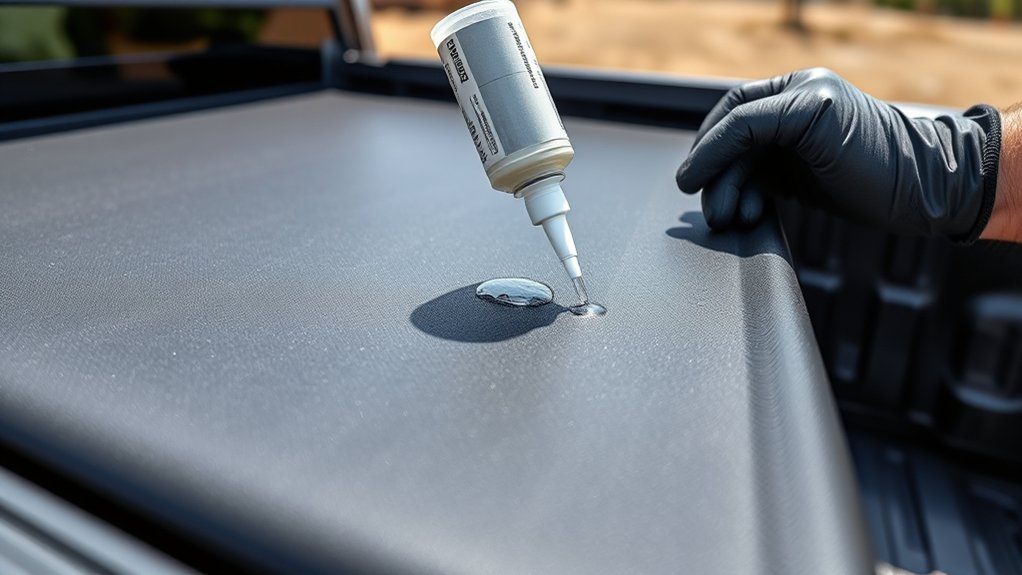
When applying sealants and waterproof sprays to your tonneau cover, precision and technique play critical roles in achieving effective protection. Start by carefully reviewing sealant selection to ensure it matches your cover’s material. Silicone-based sealants work well for vinyl, while polyurethane suits fabric covers.
Next, check spray compatibility; some waterproof sprays may degrade certain materials or existing coatings. Apply sealant evenly along seams and edges, using a fine applicator for controlled placement. Allow the sealant to cure fully before spraying waterproofing products.
When using sprays, hold the can 6 to 8 inches away, applying thin, consistent coats to avoid pooling or streaking. Always work in a well-ventilated area and follow manufacturer instructions. Proper application maximizes durability and water resistance, effectively safeguarding your tonneau cover.
Keep Your Tonneau Cover Waterproof for the Long Haul
Why does maintaining your tonneau cover’s waterproofing require ongoing attention? Over time, exposure to UV rays, rain, and temperature fluctuations degrades waterproof coatings and seals.
To keep it effective, you need to regularly inspect and clean the cover, removing dirt and debris that can compromise the seal. Discuss maintenance by applying waterproof sprays biannually and promptly addressing any tears or loose seams with manufacturer-approved sealants.
Check the product manual to understand how these actions affect your warranty. Some warranties require specific upkeep to remain valid. If your cover shows significant wear, contact the manufacturer before attempting repairs, ensuring you don’t void any coverage.
Frequently Asked Questions
Can I Install a Tonneau Cover by Myself?
Yes, you can install a tonneau cover by yourself. With proper DIY guidance, carefully follow detailed instructions, use the right tools, and ensure precise alignment to achieve a secure, professional fit while installing tonneau covers efficiently and effectively.
What Types of Tonneau Covers Are Available?
You’ll find several types of tonneau covers available, including roll-up, folding, retractable, and hinged.
Materials options range from vinyl, aluminum, fiberglass, to hard plastic, each offering different durability and weather resistance for your truck bed.
How Do I Remove a Tonneau Cover Safely?
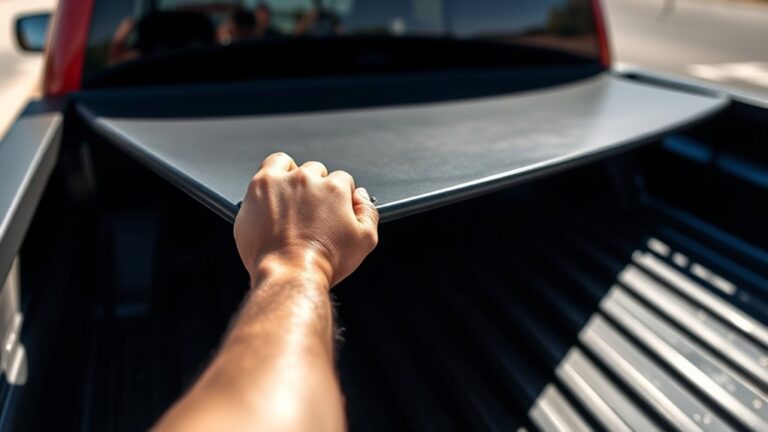
To remove a tonneau cover safely, first detach the rails carefully, then unfasten the clamps or snaps, and finally lift the tarp evenly.
Always use proper tools and avoid forcing parts to prevent damage or injury.
Will a Tonneau Cover Improve My Truck’s Fuel Efficiency?
Yes, a tonneau cover can improve your truck’s fuel efficiency by enhancing aerodynamics. It reduces drag by smoothing airflow over the bed, which positively impacts fuel economy.
This effect is especially noticeable at highway speeds where wind resistance matters most.
Can a Tonneau Cover Protect My Truck Bed From Theft?
You can’t judge a book by its cover, but a quality tonneau cover considerably enhances theft deterrence with secure locking mechanisms and weather resistance. It protects your truck bed from both unauthorized access and harsh environmental conditions.
Conclusion
Just like a seasoned sailor trusts their waterproof gear to brave the fiercest storms, you can rely on these waterproofing steps to protect your tonneau cover. By choosing the right materials, meticulously sealing leaks, and applying quality sealants, you ensure your cover stays watertight and durable.
Stay proactive with regular maintenance, and your cover will shield your truck bed through every downpour. This will preserve your cargo and your peace of mind.
Following these steps will help you make your tonneau cover waterproof, ensuring long-lasting protection against the elements.