How to Install Car Seat Covers
To install car seat covers, start by measuring your seats for a custom fit and clean them thoroughly, removing any debris or accessories. Gathering the right tools like scissors and upholstery needles will help with adjustments.
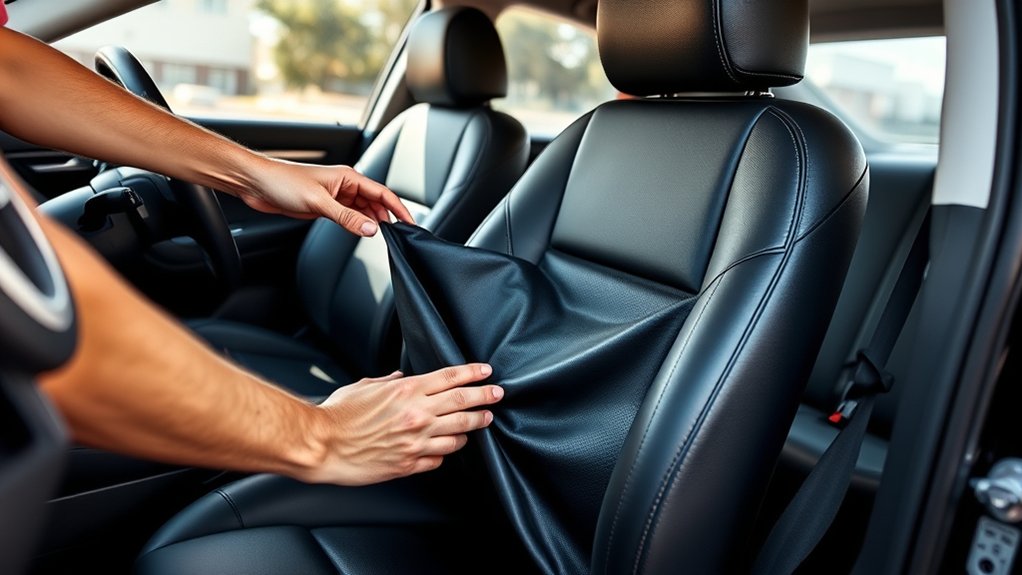
For universal covers, slide the cover over the seat, tuck excess fabric into crevices, and secure straps tightly. Custom-fit covers require aligning with the seat’s contours and fastening underneath.
Check the tension of the covers and avoid wrinkles to prevent slipping. Proper installation not only protects your seats but also ensures safety features remain functional. You can explore detailed steps and troubleshooting tips next.
How to Choose the Right Car Seat Covers for Your Vehicle
How do you guarantee your car seat covers fit perfectly and perform well? Start by measuring your vehicle’s seats accurately, noting dimensions and contours. Focus on two word ideas like “material compatibility” and “custom fit” to narrow your choices.
Avoid considering irrelevant topics such as unrelated aesthetics or generic sizing charts, which can mislead you. Check for compatibility with seat features like airbags and headrests. Evaluate materials, leather, neoprene, or polyester, based on durability and comfort.
Prioritize covers designed specifically for your car make and model to ensure seamless integration. Remember, precision in selecting covers tailored to your vehicle’s specifications is crucial for protection and longevity, so avoid generic or ill-fitting options that compromise safety and appearance.
How to Prepare Your Car Seats Before Installation
Before installing your car seat covers, you need to clean the seats thoroughly to remove dust, dirt, and debris that could affect fit and adhesion. Make certain to vacuum and wipe down all surfaces, paying close attention to seams and crevices. Next, remove any existing accessories like cushions, organizers, or loose covers to ensure a smooth and secure installation.
Clean Seats Thoroughly
Why is it essential to clean your car seats thoroughly prior to installing seat covers? Dirt, oils, and debris interfere with the adhesion and fit of your covers, especially if you use seat covers designed to mimic or complement car seat patterns.
Proper cleaning ensures a smooth surface, preventing wrinkles and premature wear. For faux leather care, use a mild cleaner and microfiber cloth to avoid damage.
| Step | Material Needed | Purpose |
|---|---|---|
| Vacuum | Vacuum cleaner | Remove loose dirt and dust |
| Spot Clean | Mild cleaner | Eliminate stains and oils |
| Wipe Down | Microfiber cloth | Prepare surface for covers |
| Dry Thoroughly | Air or towel | Avoid moisture under covers |
Follow these steps meticulously before installation.
Remove Existing Accessories
Where should you start when preparing your car seats for new covers? Begin by carefully removing existing accessories that could interfere with the installation. First, detach any seat-mounted items like headrest covers or organizers.
Next, remove the bumper or trim pieces near the seat base if applicable, as these can obstruct the cover’s fit. Use appropriate tools to avoid damaging clips or fasteners.
Additionally, adjust the cargo area if your seats fold down; this ensures unobstructed access and a smooth installation process. Make sure to fully recline or reposition seats as needed to reach all attachment points.
Tools and Supplies You’ll Need for Car Seat Covers
What specific tools and supplies do you need to install car seat covers effectively? Ensuring tools readiness is crucial before starting. You’ll require precise instruments to handle fabric materials without damaging the seats or covers.
Proper preparation streamlines installation and guarantees a snug fit.
| Tool/Supply | Purpose |
|---|---|
| Screwdriver | Remove seat components if needed |
| Scissors | Trim excess fabric or threads |
| Pliers | Adjust or remove tight clips |
| Upholstery needle | Secure loose fabric or re-stitch covers |
Have these on hand to maintain control over the fabric materials and avoid errors. This setup aids in achieving a professional finish, optimizing durability, and ensuring the covers align perfectly with your car’s seats.
How to Install Universal Car Seat Covers
How exactly do you install universal car seat covers to guarantee a secure and seamless fit? Start by selecting a durable fabric suited for your vehicle’s interior and climate. Universal fit covers are designed to accommodate most seats but require careful alignment to avoid wrinkles or sagging. Follow these technical steps:
Remove headrests and slide the cover over the seat, aligning the seams with seat contours. Tuck excess material into seat crevices, ensuring the cover conforms tightly. Use the provided straps or hooks to secure the cover underneath the seat firmly. Reinstall headrests through the designated holes, adjusting for tension and fit.
This method ensures the universal fit covers remain stable, look professional, and protect your seats effectively.
How to Install Custom-Fit Car Seat Covers
While universal car seat covers offer a flexible solution, custom-fit covers provide a tailored approach that enhances both protection and aesthetics. To install custom-fit car seat covers, first align the cover precisely with your seat’s contours, ensuring the cutouts for headrests, seat belts, and airbags match perfectly.
Begin by slipping the cover over the seat back, then pull it down over the seat base, smoothing out wrinkles as you go. Pay close attention to securing the fabric beneath the seat using the provided hooks or straps.
Custom-fit options often utilize alternative fabrics like neoprene or leatherette, offering durability and style. For a seamless look, select covers with color coordination that complements your vehicle’s interior, enhancing both visual appeal and cohesion.
How to Secure Car Seat Covers to Prevent Slipping
Why does your car seat cover slip despite careful installation? Slipping often results from inadequate seat fit and insufficient fabric grip. To secure your cover effectively, focus on these technical aspects:
Ensure the cover matches the seat contours precisely for optimal seat fit, reducing movement. Use non-slip backing materials or add anti-slip pads beneath the cover to enhance fabric grip.
Tighten all straps, hooks, or elastic bands uniformly, avoiding slack that permits shifting. Position seat anchors or hooks correctly in factory seams or designated slots to lock the cover in place.
Car Seat Cover Care and Maintenance Tips
You should clean your car seat covers according to the manufacturer’s recommended methods to prevent damage and maintain appearance. Regularly inspect the covers for wear, tears, or loose fittings to ensure optimal protection and safety. When not in use, store the covers in a cool, dry place to avoid mold growth and material degradation.
Cleaning Methods
A thorough cleaning routine guarantees your car seat covers remain durable and visually appealing. Start by selecting appropriate cleaning agents compatible with your cover material to avoid damage. For stain removal, treat spots promptly using targeted solutions, applying them gently to prevent fabric degradation.
Always test cleaning agents on an inconspicuous area first. Follow manufacturer instructions regarding water temperature and drying methods to maintain fabric integrity.
Vacuum covers regularly to remove loose dirt and debris. Use mild detergents or specialized upholstery cleaners for thorough washing. Avoid harsh chemicals or bleach that can weaken fibers. Air dry covers completely to prevent mold and odor buildup.
Regular Inspection
Maintaining the cleanliness of your car seat covers is only part of ensuring their longevity; regular inspection plays an essential role in identifying wear, tears, or loose stitching before they worsen. Check for insufficient fit and improper tension, which can accelerate fabric fatigue or cause detachment.
Use this checklist to guide your inspection:
| Issue | Inspection Focus |
|---|---|
| Wear & Tear | Look for thinning fabric, holes, or frays |
| Loose Stitching | Check seams and attachment points |
| Fit & Alignment | Ensure covers sit flush without gaps |
| Tension Integrity | Confirm elastic bands or straps hold firmly |
| Material Damage | Identify stains, burns, or chemical marks |
Proper Storage
How should you store car seat covers to preserve their shape, material integrity, and overall lifespan? Effective storage planning is essential to avoid deformation, fabric degradation, and contamination. Before storage, ensure the covers are thoroughly cleaned and completely dry to prevent mold and mildew growth. Employing seasonal protection strategies helps maintain optimal condition during extended periods of non-use.
Keep these technical tips in mind:
- Fold covers loosely to avoid creases and fabric stress.
- Store in breathable, moisture-resistant bags to prevent humidity damage.
- Choose a cool, dry environment free from direct sunlight and temperature fluctuations.
- Avoid placing heavy objects on top, which can distort the cover’s shape.
Following these steps guarantees your car seat covers stay functional and aesthetically intact for future use.
Troubleshooting Common Problems When Installing Car Seat Covers
Why do car seat covers sometimes fit improperly or slip out of place during installation? Common causes include incorrect sizing, improper alignment, or failure to secure fastening mechanisms. First, verify that the cover matches your seat model; using a universal fit may lead to gaps or looseness.
Incorrect sizing, poor alignment, or unsecured fasteners often cause car seat covers to slip or fit improperly.
Avoid off topic discussion, such as focusing on unrelated topic like interior cleaning, which distracts from installation precision. Next, ensure you align the cover’s seams with the seat contours before pulling it taut.
Check that straps, hooks, or zippers are fully engaged and tightened. If slipping persists, inspect for obstructions like seat adjustment levers. Correct these issues systematically to prevent movement.
Following these technical steps ensures a snug, stable fit, enhancing both protection and aesthetics.
Frequently Asked Questions
Are Car Seat Covers Safe for Airbags?
About 70% of airbags deploy safely with properly designed seat covers. You’ll want covers with verified airbag compatibility and high fabric stretchability to ensure they don’t interfere with deployment or compromise safety during collisions.
Can Car Seat Covers Affect Seat Heating Functions?
Yes, car seat covers can affect seat heating functions if they lack proper car seat compatibility. Poorly fitted covers may reduce heat retention, causing uneven warming or interfering with the heating elements embedded in the seat.
How Do Car Seat Covers Impact Resale Value?
You protect original upholstery, preserve material durability, and maintain interior appeal, all directly influencing resale value impact. Using high-quality, well-fitted covers minimizes wear, preventing damage that could otherwise reduce your vehicle’s market price and buyer interest.
Are Pet-Friendly Car Seat Covers Available?
Yes, you’ll find pet-friendly car seat covers made from hair friendly materials like microfiber and neoprene. These pet friendly fabrics resist claws, repel hair, and offer easy cleaning, ensuring durability and protection for your vehicle’s interior.
Do Car Seat Covers Protect Against UV Damage?
Yes, car seat covers provide UV protection by blocking harmful rays, which helps maintain material durability. When selecting covers, choose those with UV-resistant fabrics to prevent fading, cracking, and premature wear caused by prolonged sun exposure.