How Do Fuel Injectors Work
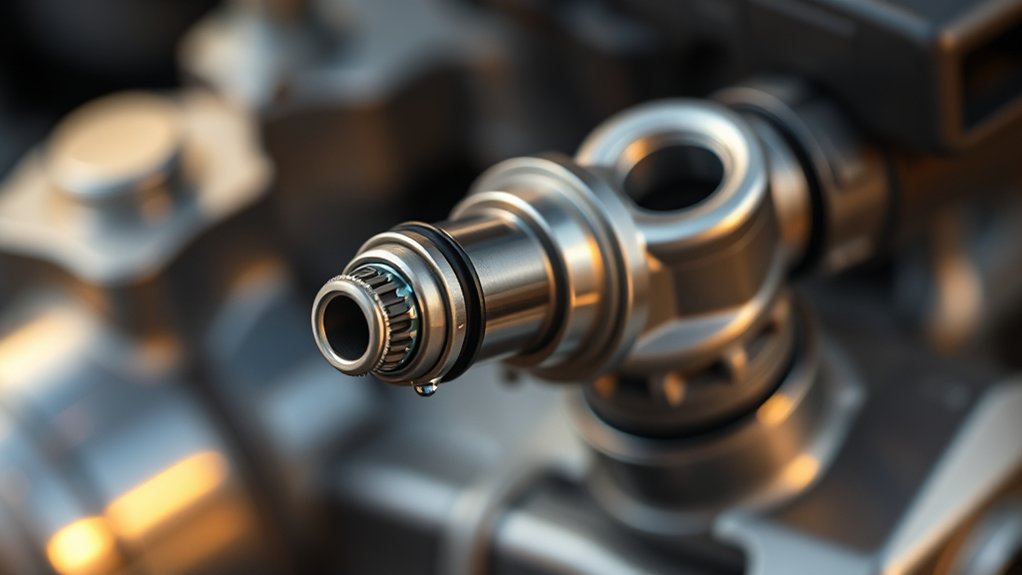
Fuel injectors deliver precisely metered fuel directly into your engine’s combustion chamber by electronically controlling spray patterns for optimal atomization.
Fuel injectors use solenoids timed by the ECU to open and close at exact intervals, ensuring the right amount of fuel mixes efficiently with air.
Proper injector operation prevents fuel waste, reduces emissions, and improves performance.
Understanding their types, maintenance needs, and impact on combustion will help you optimize your engine’s efficiency and longevity.
What Are Fuel Injectors and Why Do They Matter
What exactly are fuel injectors, and why should you care about them? Fuel injectors are precision components in your engine’s fuel system responsible for delivering the exact amount of fuel required for combustion. They atomize fuel into fine droplets, ensuring optimal air-fuel mixture and efficient combustion.
Understanding injector math is crucial here. It involves calculating flow rates, pulse widths, and duty cycles to match engine demands precisely. Without accurate injector math, fuel delivery could be excessive or insufficient, leading to poor performance or increased emissions.
Your vehicle’s fuel system relies on injectors to maintain consistent fuel pressure and timing. Essentially, fuel injectors serve as the engine’s fuel delivery regulators, balancing efficiency, power, and emissions by controlling fuel quantity and spray pattern with high precision.
How Fuel Injectors Feed Your Engine
You rely on fuel injectors to deliver a precise amount of fuel directly into the engine’s combustion chamber through controlled spray patterns. These patterns ensure optimal atomization, which maximizes combustion efficiency and power output. Understanding how injectors feed your engine reveals their critical role in balancing fuel delivery with engine performance.
Fuel Delivery Process
Efficiency drives the fuel delivery process as injectors precisely meter and spray fuel into the engine’s combustion chamber. You rely on a finely tuned system where the fuel pump pressurizes gasoline or diesel, depending on your engine type.
Gasoline injectors typically operate at lower pressures than diesel injectors, which require high-pressure common rail systems to atomize the denser diesel fuel effectively. Alternative injectors, like piezoelectric units, offer faster response times and improved control over injection timing and volume.
Your engine’s control unit regulates injector pulse width, ensuring the exact amount of fuel enters the combustion chamber. This precise metering enhances combustion efficiency, reduces emissions, and optimizes power output.
Understanding these distinctions helps you appreciate how different injector technologies tailor fuel delivery to your engine’s specific needs.
Injector Spray Patterns
Although fuel injectors vary in design, their spray patterns play a critical role in how effectively they atomize and distribute fuel within the combustion chamber. You rely on precise injector spray to ensure optimal combustion. Nozzle patterns dictate how fuel droplets disperse, influencing fuel-air mixing and engine efficiency.
Understanding these patterns helps you grasp fuel delivery’s complexity.
| Nozzle Pattern | Description |
|---|---|
| Single Hole | Concentrated jet, deep penetration |
| Multi-Hole | Multiple fine jets, wider spread |
| Fan Spray | Flat, wide dispersion |
| Air-Assisted Spray | Atomizes fuel with compressed air |
Each nozzle pattern shapes injector spray differently, optimizing fuel delivery for specific engine designs and performance goals.
Engine Combustion Impact
The way fuel injectors spray fuel directly influences the combustion process within your engine. Precise atomization ensures an optimal air-fuel mixture, promoting efficient combustion and maximizing power output.
When injectors deliver fuel in a finely controlled spray pattern, it mimics the uniform growth seen in urban farming. Each droplet nourishes the combustion chamber evenly. This consistency reduces incomplete combustion, minimizing emissions and preventing that ominous distant thunder sound signaling engine knock or detonation.
You rely on injectors to maintain this delicate balance, optimizing ignition timing and fuel delivery to achieve smooth, controlled explosions. Ultimately, how fuel injectors feed your engine determines performance, fuel economy, and longevity by ensuring combustion happens exactly as designed, without wasted fuel or destructive pressure spikes.
Types of Fuel Injectors
You’ll encounter two main types of fuel injectors: mechanical and electronic. Mechanical injectors rely on engine-driven pressure to deliver fuel, while electronic injectors use precise electrical signals to control injection timing and duration. Understanding their differences helps you grasp how fuel delivery adapts to engine demands.
Mechanical Fuel Injectors
How exactly do mechanical fuel injectors regulate fuel delivery without electronic controls? They rely on precise mechanical components, harnessing engine pressure and camshaft-driven mechanisms to meter fuel. Understanding fueling history shows these injectors were essential before electronic systems emerged.
Their injector aesthetics reflect robust, utilitarian designs focused on durability and function.
Mechanical fuel injectors operate by:
- Using spring-loaded valves that open at specific pressures
- Timing fuel spray with engine cycles via camshaft actuation
- Delivering fuel directly into the combustion chamber or intake manifold
- Adjusting fuel flow based on engine vacuum or mechanical linkages
- Minimizing dependency on electrical input, ensuring reliability in harsh conditions
You’ll find mechanical injectors in older diesel engines and some specialized applications where simplicity and mechanical precision are paramount.
Electronic Fuel Injectors
Moving from mechanical systems, electronic fuel injectors bring a new level of precision and control to fuel delivery. You’ll find these injectors use solenoid valves controlled by the engine control unit (ECU) to regulate fuel flow with exact timing and duration.
This allows optimal atomization and combustion efficiency, responding instantly to changes in fuel pressure. The ECU continuously adjusts injection based on sensor data, ensuring precise air-fuel ratios.
When maintaining these injectors, you have to use specialized cleaning solvents designed to dissolve deposits without damaging delicate components. Proper cleaning preserves spray patterns and prevents clogging, which could otherwise disrupt fuel pressure and injection accuracy.
How Electronic Fuel Injectors Work
Electronic fuel injectors precisely deliver fuel into the engine’s combustion chamber by using electronically controlled solenoids that open and close at exact intervals. When you activate the ignition, the engine control unit (ECU) sends voltage to the injector’s solenoid, creating a magnetic field that lifts the injector needle.
This action allows a fine mist of fuel to spray into the intake manifold or combustion chamber, optimizing combustion efficiency. Unlike an unrelated topic or off topic discussion, the timing and duration of these pulses are critical for engine performance.
Key factors include:
- Pulse width controlling fuel volume
- Injector response time
- Fuel pressure consistency
- Electrical resistance of the solenoid
- Feedback from oxygen sensors to ECU
Understanding these elements helps you grasp how electronic fuel injectors improve fuel delivery precision.
Fuel Injector Clogs and Failure Signs
Why does your engine hesitate or lose power unexpectedly? Often, fuel injector clogs cause uneven fuel delivery, disrupting combustion. Deposits from impurities build up inside the injector nozzle, restricting spray patterns and reducing fuel atomization.
Engine hesitation or power loss often stems from clogged fuel injectors disrupting fuel delivery and combustion.
This leads to incomplete combustion, triggering engine noise such as knocking or sputtering. You might also notice a strong fuel smell, signaling leaking injectors or poor sealing. If your engine misfires or idles roughly, clogged or failing injectors could be the root cause.
Additionally, injector failure might manifest as increased fuel consumption or difficulty starting the engine. Monitoring these signs closely helps you address injector issues early, preventing further engine damage and ensuring optimal performance.
Regular maintenance and fuel system cleaning can mitigate clog buildup and prolong injector life.
How Fuel Injectors Affect Efficiency and Emissions
How exactly do fuel injectors influence your engine’s efficiency and emissions? Precise injector sizing ensures optimal fuel delivery, directly impacting fuel economy and combustion quality. When injectors deliver the correct amount of fuel at the right time, your engine runs cleaner and more efficiently, reducing unburned hydrocarbons and particulate emissions.
Conversely, mismatched or faulty injectors cause poor atomization, leading to incomplete combustion and higher emissions.
Key factors affecting efficiency and emissions include:
- Proper injector sizing for engine displacement and load
- Accurate fuel spray pattern for better atomization
- Timely fuel injection synchronized with engine cycles
- Consistent injector operation to avoid rich or lean mixtures
- Minimizing injector drift to maintain fuel economy
Fuel Injector Maintenance Tips
Maintaining your fuel injectors guarantees they continue delivering the precise fuel quantities and spray patterns necessary for optimal engine performance. Use a maintenance checklist to routinely inspect injector nozzles, seals, and electrical connectors for wear or deposits.
Employ troubleshooting tips such as monitoring engine misfires, rough idling, or increased fuel consumption to detect injector issues early. Regularly use fuel injector cleaners to prevent clogging and ensure atomization quality.
| Maintenance Task | Frequency | Key Indicator |
|---|---|---|
| Inspect nozzle & seals | Every 30,000 mi | Fuel leaks, spray pattern |
| Clean injectors | Every 15,000 mi | Reduced power, rough idle |
| Check electrical signals | Every 20,000 mi | Fault codes, misfires |
This systematic approach preserves injector functionality and engine efficiency.
Frequently Asked Questions
Can Fuel Injectors Be Used With Alternative Fuels?
Yes, you can use fuel injectors with alternative fuels, but you’ll need to ensure injector compatibility. Different fuels require specific materials and designs to handle viscosity, corrosion, and combustion properties precisely for optimal performance.
How Do Fuel Injectors Differ in Diesel Engines?
You’d think diesel injectors are tiny rocket scientists! Diesel injector types control precise fuel spray patterns under extreme pressure, ensuring optimal combustion.
Unlike gasoline, they atomize fuel finely, adapting spray angles and timing for efficiency and power.
What Tools Are Needed to Replace a Fuel Injector?
You’ll need a fuel injector puller, socket set, torque wrench, and fuel line disconnect tool. Prioritize tools and safety by wearing gloves and goggles.
Proper maintenance timing guarantees injector longevity and prevents engine damage during replacement.
Are There Aftermarket Fuel Injectors That Improve Performance?
You’ll find aftermarket performance fuel injector upgrades that can increase flow rates by up to 30%, improving engine efficiency and power.
Choose injectors matched to your engine’s specs for precise fuel delivery and optimized combustion.
How Do Fuel Injectors Impact Engine Noise?
You’ll notice injector timing affects engine noise sources by influencing combustion smoothness; precise timing reduces knocking and misfires, minimizing harsh sounds.
Poor injector timing increases engine noise, causing rough operation and potential damage over time.
Conclusion
Just like a maestro directs an orchestra, your fuel injectors precisely deliver fuel, ensuring your engine performs at its peak. Neglecting them can lead to inefficiency and increased emissions, much like a discordant symphony.
By understanding and maintaining your injectors, you keep your engine humming smoothly, optimizing fuel delivery and preserving performance.
Remember, attention to these small components orchestrates the harmony between power, efficiency, and environmental responsibility. Proper care of fuel injectors is key to achieving this balance.