How to Measure Wheel Size
To measure your wheel size accurately, start by measuring the diameter bead seat to bead seat across the wheel, excluding the tire. This ensures you get the true size of the wheel itself.
Next, measure the width from inside rim flange to flange, ensuring your tape is perpendicular to the wheel’s axis. Count the lug holes and measure the bolt pattern by spacing between holes.
Finally, calculate the offset by measuring from the hub mounting surface to the wheel centerline. Using precise tools and proper measurement points is critical—understanding these basics leads to optimal fit and safety.
What Wheel Size Measurements You Need to Know
When measuring wheel size, what key dimensions should you focus on? Primarily, you need to determine the wheel diameter and width, as these dimensions affect fitment and performance. The diameter is measured from bead seat to bead seat across the wheel, usually in inches. Width is measured between the inside edges of the rim flanges.
Additionally, consider the bolt pattern, which determines if the wheel will properly mount to your vehicle. For vehicles frequently driven on a dirt road or equipped with winter tires, precise wheel size is critical to ensure peak traction and durability. Incorrect sizing can lead to poor handling or tire wear.
Also, check the offset, which affects the wheel’s position relative to the suspension, impacting clearance and stability.
Gather Tools for Accurate Wheel Size Measurement
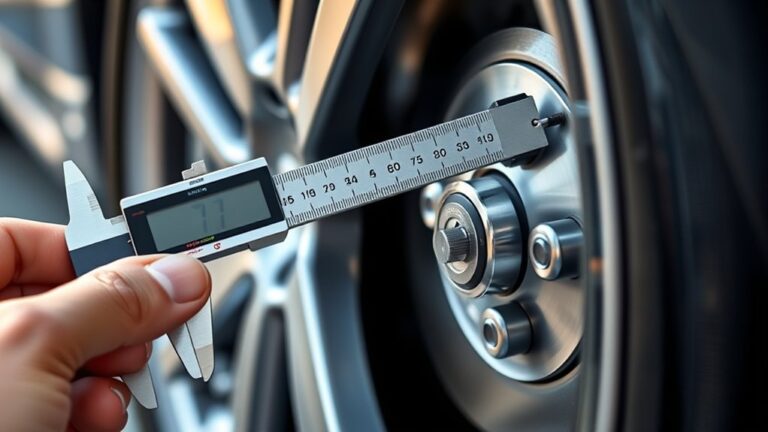
How do you guarantee your wheel measurements are accurate and reliable? It starts with proper tool selection. Choose precision instruments like a digital caliper and a measuring tape designed for automotive use. These tools minimize human error and improve measurement accuracy.
Avoid using worn or flexible tapes, as they distort readings. A flat, stable surface for the wheel is essential to prevent movement during measurement. Additionally, having a tire pressure gauge helps if you plan to measure the wheel with the tire mounted.
Ensure all tools are calibrated and in good condition before starting. By focusing on tool selection and maintaining their integrity, you set a solid foundation for precise wheel size measurement, ensuring your data is consistent and dependable for any application.
How to Measure Wheel Diameter and Width Step-by-Step
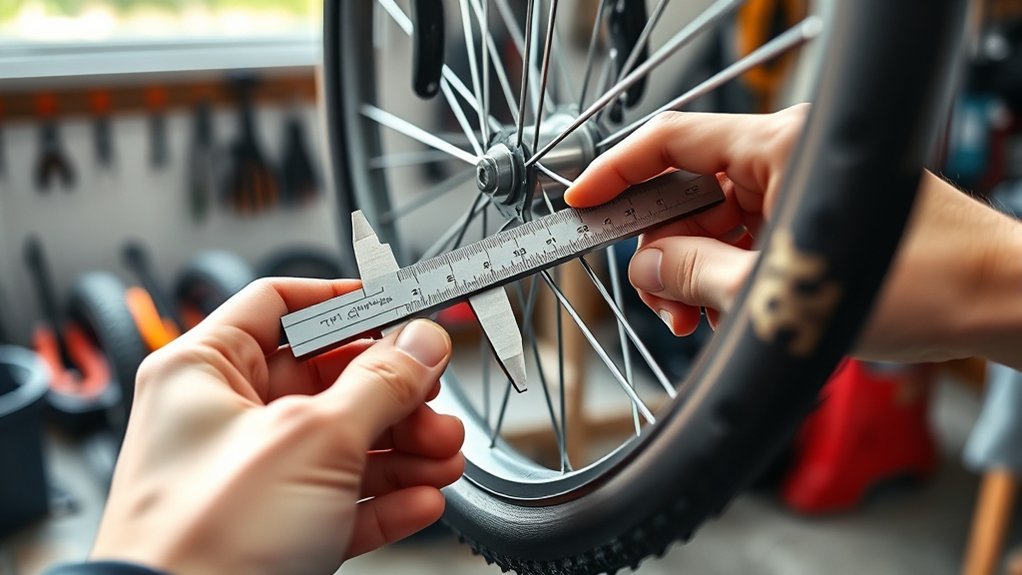
Although measuring wheel diameter and width might seem straightforward, following a precise method guarantees accuracy. First, measure the wheel diameter by placing a tape measure across the center of the wheel from bead seat to bead seat, not including the tire. This gives you the true diameter.
Next, measure the wheel width by spanning the inner edges where the tire beads seat. Ensure the tape measure is perpendicular to the wheel’s central axis for an accurate wheel width measurement. Avoid including the outer lip or flange.
How to Measure Bolt Pattern and Offset for a Perfect Fit
To ensure your wheels fit correctly, you need to measure the bolt pattern accurately by counting the number of lug holes and spacing between them. Next, understand the wheel offset, which determines how far the mounting surface sits from the wheel’s centerline. Getting these measurements right prevents clearance issues and maintains proper handling.
Measuring Bolt Pattern
Why does measuring the bolt pattern matter when fitting wheels? The bolt pattern ensures the wheel mounts securely to your vehicle’s hub without interference.
To measure it, count the number of lug holes, then measure the distance between them. For four or five lug wheels, measure from the center of one bolt hole to the center of the hole directly across. This pattern is usually noted as lug count × diameter in millimeters (e.g., 5×114.3).
Accurate bolt pattern measurement prevents wheel wobble and uneven wear. While bolt pattern is critical, understanding the offset definition, the distance between the hub mounting surface and wheel centerline, also impacts fitment.
Together, these measurements guarantee a perfect wheel fit and optimal vehicle performance.
Understanding Wheel Offset
Since the wheel offset directly affects how your wheel sits relative to the vehicle’s hub, you need to measure it accurately to assure proper fitment. Offset terminology defines the distance between the wheel’s mounting surface and its centerline.
Positive offset means the hub mounting surface is toward the wheel’s outer face, pushing the wheel inward. Negative offset places the mounting surface toward the back, pushing the wheel outward.
To measure offset, first determine the wheel’s width and find its centerline. Then, measure the distance from the hub bore, the wheel’s center hole, to the mounting surface. Subtracting the centerline from this distance gives you the offset value.
Understanding these factors ensures the wheel aligns correctly with suspension components and prevents issues like rubbing or poor handling.
Avoid Common Wheel Measurement Mistakes
Make sure you use accurate tools to measure wheel diameter and width, as incorrect instruments lead to errors. Don’t misread the dimensions by measuring from the wrong points or ignoring the wheel’s bolt pattern. Paying close attention to these details ensures a proper fit and safe performance.
Incorrect Measurement Tools
How do you ensure accurate wheel measurements? First, avoid using incorrect tools like flexible tape measures or household rulers, which can cause significant measurement errors. Instead, use precise instruments such as calipers or rigid steel rulers designed for wheel sizing.
Incorrect tools often bend or lack the necessary graduations, leading to inconsistent readings. Additionally, digital calipers provide enhanced accuracy by minimizing human error during measurement.
Always verify your tools are calibrated and in good condition before use. By selecting the proper measurement devices, you eliminate common sources of error that compromise wheel size accuracy.
This careful approach ensures your measurements reflect true wheel dimensions, facilitating proper fitment and performance. Avoid shortcuts with inadequate tools to maintain precision in your wheel sizing process.
Misreading Diameter And Width
Why do many wheel measurements go wrong? It often comes down to confusing the wheel’s diameter and width. A misleading diameter occurs when you measure the full wheel rim instead of the bead seat diameter, the actual size tires fit onto. This leads to incorrect sizing and fitment issues.
Similarly, ambiguous width measurements cause problems. If you measure the outer edges of the rim instead of the internal width between bead seats, you’ll get a misleading width that won’t match tire specifications.
To avoid these mistakes, always measure the bead seat diameter across the inside of the rim and the internal rim width between bead seats. This precision ensures accurate sizing and proper tire compatibility, preventing costly errors when selecting wheels or tires.
Ignoring Bolt Pattern
Where do many wheel measurement errors stem from? Often, they arise when you ignore the bolt pattern. The bolt pattern determines how the wheel mounts to your vehicle’s hub, affecting fitment and safety.
Overlooking this detail leads to improper installation, causing vibration and noise considerations that degrade driving comfort. Additionally, mismatched bolt patterns can compromise wheel aesthetics, as forced fitment may cause misalignment or damage.
To avoid these issues, measure the bolt pattern accurately by counting the lug holes and measuring the diameter of the circle they form. This ensures compatibility and preserves both function and appearance. Don’t let this common mistake undermine your wheel upgrade. Bolt pattern precision is crucial for reliable, quiet, and visually appealing wheels.
Using Your Measurements to Pick the Right Wheels
When selecting wheels, what measurements should you prioritize to guarantee compatibility and performance? Focus on diameter, width, bolt pattern, and offset. Diameter and width must match your vehicle’s specifications to ensure proper tire inflation and avoid clearance issues.
The bolt pattern must align perfectly with your hub to secure the wheel safely. Offset influences handling and suspension geometry, so choose one that maintains factory settings unless you understand the implications.
Use your precise measurements to narrow down compatible wheels, factoring in rim aesthetics without compromising safety or function. Avoid wheels that alter tire inflation requirements or cause rubbing against suspension components.
Frequently Asked Questions
How Does Wheel Size Affect Vehicle Fuel Efficiency?
You’ll find larger wheel size often reduces fuel efficiency because it increases rolling resistance and weight.
Smaller wheels generally improve fuel efficiency by requiring less energy to rotate, enhancing overall vehicle performance and reducing fuel consumption.
Can Wheel Size Impact Ride Comfort and Handling?
Think of wheel comfort and handling like tuning a guitar; bigger wheels often stiffen the ride and reduce comfort, while smaller ones improve cushioning but may compromise precise handling.
You’ll notice the trade-offs instantly.
Are Larger Wheels Better for Off-Road Driving?
Larger wheels can improve off-road traction by providing better ground clearance and stability, but they may reduce maneuverability and increase rotational mass.
You’ll want to balance wheel size with tire type and terrain for optimal performance.
How Do Tire Sizes Correlate With Wheel Sizes?
Tire sizes must match wheel compatibility to fit properly. You’ll want to ensure the tire’s rolling circumference aligns with the wheel size to maintain accurate speedometer readings and optimal vehicle performance without causing mechanical issues.
What Are the Legal Restrictions on Wheel Sizes?
Think of legal restrictions as guardrails guiding your wheel choice. You must ensure regulatory compliance with roadworthiness rules, as wheel size legality varies by region, affecting safety inspections and vehicle performance.
Always verify local standards before upgrading.
Conclusion
You might think measuring wheels is simple, but skipping details like bolt pattern or offset can lead to costly mistakes. Precision matters—diameter and width alone won’t guarantee a perfect fit.
By carefully gathering your tools and following each measurement step, you ensure your new wheels not only look right but function flawlessly. Don’t settle for guesswork; exact measurements transform a frustrating process into a smooth upgrade.
Your wheels depend on it, so mastering how to measure wheel size is essential for a successful and safe fit.