
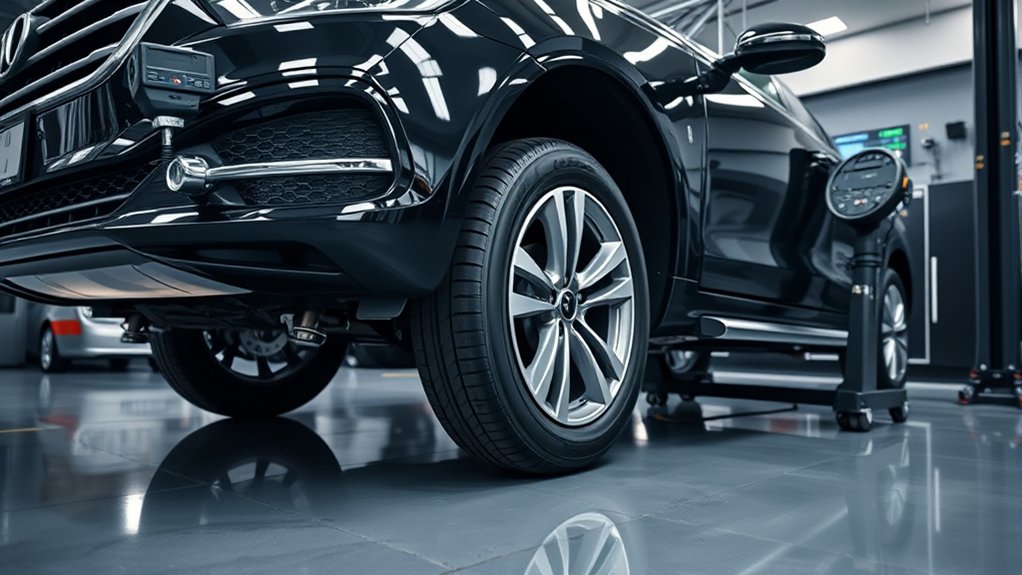
What Is a Wheel Alignment
A wheel alignment adjusts your vehicle’s camber, caster, and toe angles to match exact manufacturer specs, ensuring your tires contact the road correctly. This precision maintains steering stability, improves handling, and prevents uneven tire wear, which protects your tires and suspension.
Misaligned wheels can cause your car to pull, vibrate, or reduce fuel efficiency. Understanding how alignment works and the benefits it offers helps you keep your vehicle safe and performing optimally. Regular wheel alignment is essential for maintaining your vehicle’s overall health and driving comfort.
What Is Wheel Alignment and How It Works
How does wheel alignment impact your vehicle’s performance? Understanding wheel alignment basics helps you grasp how it ensures your wheels point in the optimal direction for smooth handling.
Alignment adjusts three key angles: camber, caster, and toe. Camber controls the inward or outward tilt of the wheel, caster influences steering stability, and toe determines wheel direction relative to the vehicle’s centerline.
These angles affect tire contact with the road, directly tying into tire wear mechanics. Misalignment causes uneven tire wear, reducing tire lifespan and compromising grip.
Why Proper Wheel Alignment Is Essential for Your Car
Why does proper wheel alignment matter so much for your car’s overall performance and safety? Misaligned wheels can cause handling issues, reduced steering responsiveness, and uneven tire contact with the road, compromising your control.
Proper wheel alignment ensures responsive steering, better handling, and consistent tire contact for safer driving control.
By maintaining proper alignment, you ensure your vehicle drives straight and true, enhancing stability during maneuvers and emergency situations. Proper maintenance of wheel alignment not only safeguards your car’s suspension components but also prevents premature wear, reducing the likelihood of costly repairs down the line.
Neglecting alignment can escalate long term costs due to accelerated parts deterioration and compromised safety systems. Regular alignment checks optimize your vehicle’s mechanical integrity, ensuring consistent performance and protecting your investment.
Prioritizing proper wheel alignment is essential to keep your car functioning reliably and safely over time.
How Wheel Alignment Affects Tire Wear and Fuel Efficiency
What impact does wheel alignment have on your tires and fuel consumption? Misalignment causes uneven tire wear patterns, such as excessive wear on the inner or outer edges, shortening tire lifespan.
When your wheels aren’t properly aligned, your vehicle experiences increased rolling resistance, forcing the engine to work harder. This directly translates to a negative fuel economy impact, reducing miles per gallon and increasing fuel costs.
Proper wheel alignment ensures tires maintain optimal contact with the road surface, promoting even tread wear and maximizing traction. Additionally, aligned wheels reduce strain on suspension components, enhancing overall vehicle efficiency.
Signs Your Vehicle Needs a Wheel Alignment
When should you consider scheduling a wheel alignment service? You’ll want to act if you notice uneven tire wear or your vehicle pulling to one side. Poor steering feedback, such as a loose or off-center steering wheel, also signals misalignment. Regular tire rotation helps, but it won’t fix alignment issues.
| Symptom | Cause | Effect on Vehicle |
|---|---|---|
| Uneven tire wear | Misaligned camber or toe angles | Reduced tire life |
| Pulling to one side | Incorrect caster or toe settings | Steering effort imbalance |
| Steering wheel off-center | Faulty alignment angles | Difficult to maintain straight line |
| Vibrations | Poor alignment or tire imbalance | Reduced ride comfort |
| Loose steering feedback | Misaligned suspension components | Decreased control precision |
Address these signs promptly to maintain safety and performance.
What to Expect From a Wheel Alignment Service
Noticing signs like uneven tire wear or a steering wheel that’s off-center means it’s time to have your vehicle’s alignment checked professionally. During a wheel alignment service, a technician will first inspect your tire pressure to ensure it’s within manufacturer specifications, as improper pressure can affect alignment accuracy.
Uneven tire wear or an off-center steering wheel signals it’s time for a professional alignment check.
Then, specialized alignment equipment measures the angles of your wheels, including camber, caster, and toe, and compares them to recommended settings. Adjustments are made to bring these angles into precise alignment, improving your steering feel and vehicle handling.
The technician will also verify that the steering wheel centers correctly when driving straight. After the service, expect improved tire longevity, enhanced steering response, and better fuel efficiency.
This precise calibration ensures your vehicle tracks properly, reducing uneven tire wear and improving overall safety.
Frequently Asked Questions
How Often Should I Get a Wheel Alignment?
You should get a wheel alignment every 12,000 miles or annually, whichever comes first. Regular alignment prevents uneven tire wear and improves handling.
This ensures optimum vehicle performance and safety through consistent suspension inspection and adjustment.
Can I Perform a Wheel Alignment at Home?
You can perform a wheel alignment at home with proper tools and knowledge, but it requires precise measurements and adjustments.
Master DIY basics and follow detailed guides, as improper alignment risks uneven tire wear and handling issues.
Does Wheel Alignment Affect Vehicle Handling in Snow?
When you navigate snowy roads, misaligned wheels reduce snow traction, causing unpredictable handling. Proper alignment guarantees even tire wear, maintaining grip and stability, so you drive confidently and safely through slippery, icy conditions without losing control.
What Tools Do Mechanics Use for Wheel Alignment?
You’ll find mechanics using wheel alignment tools like computerized alignment systems, camber gauges, turn plates, and steering angle sensors. These precise shop equipment help ensure accurate adjustments for optimal vehicle handling and tire wear.
Is Wheel Alignment Covered by Car Insurance?
Imagine your car’s wheels perfectly aligned, but insurance coverage rarely includes this. You’ll need to check policy requirements carefully, as wheel alignment is typically considered maintenance, not a covered repair under standard car insurance.
Conclusion
Keeping your wheels properly aligned is like giving your car a precise GPS fix—it ensures everything runs smoothly and efficiently. When your alignment is spot-on, you’ll enjoy even tire wear, better fuel economy, and improved handling.
Ignoring misalignment can cost you more in the long run, so don’t wait for signs like uneven tires or pulling. Regular alignment checks keep your ride safe and performing at its best.
In conclusion, maintaining correct wheel alignment is essential for both safety and vehicle efficiency. Make wheel alignment a priority to protect your investment and enjoy a smoother drive.