
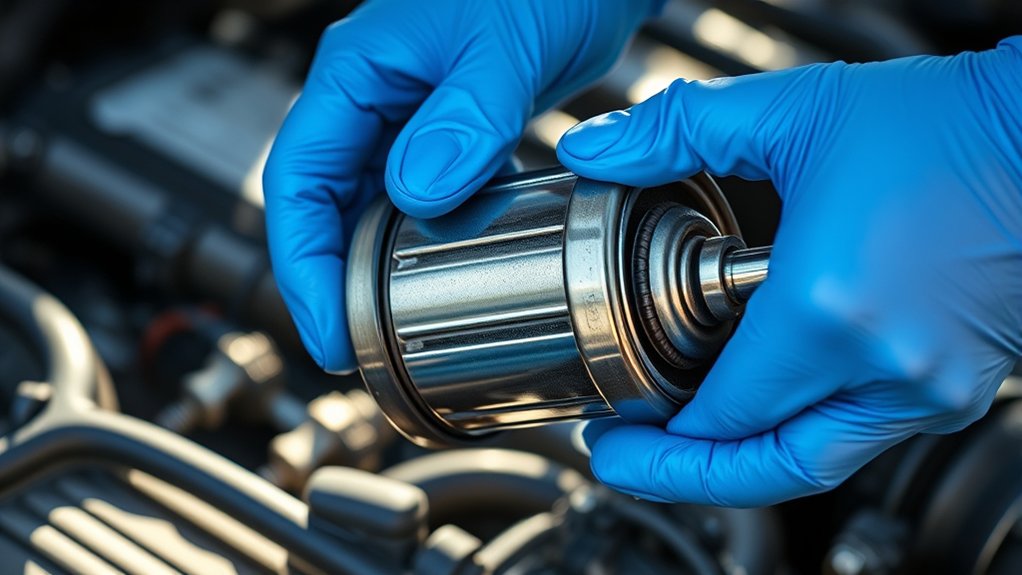
How to Unclog Fuel Filter
To unclog your fuel filter, start by relieving the fuel system pressure and disconnecting the battery. This step is crucial for safety and to prevent fuel spillage.
Next, remove the fuel filter carefully and inspect it for any visible debris or blockages.
Soak the filter in a specialized cleaning solvent or a fuel additive solution designed for this purpose. Gently agitate the filter to help dislodge contaminants trapped inside.
After soaking, rinse the filter thoroughly with clean fuel.
Allow the fuel filter to dry completely before reinstalling it.
Once reinstalled, use a fuel pressure gauge to confirm that fuel flow has been restored and check the system for any leaks.
Regular maintenance and timely replacement of the fuel filter will ensure optimal engine performance. Keep exploring for deeper troubleshooting tips and detailed replacement guidance.
How To Identify A Clogged Fuel Filter
How can you tell if your fuel filter is clogged? To identify this, start by noting engine performance issues such as hesitation, stalling, or difficulty starting. These symptoms often indicate restricted fuel flow.
Next, perform a fuel system diagnosis by checking fuel pressure with a gauge; a significant drop below manufacturer specifications signals a blockage. Also, inspect for unusual engine noises or reduced acceleration.
Keep an eye on your vehicle’s mileage since fuel filters typically require replacement every 20,000 to 30,000 miles. Remember, precise identification involves correlating these signs with diagnostic data.
Tools You’ll Need To Fix Your Fuel Filter
To properly fix your fuel filter, you’ll need a specific set of tools that guarantee safety and efficiency throughout the process. Start with a wrench set to loosen fuel line fittings without damage. A fuel pressure gauge is essential for two word discussion ideas like “pressure testing” to check system integrity.
Use a catch container to safely collect fuel during removal and prevent spills. Have replacement fuel additives on hand to enhance fuel system performance after reinstallation. Don’t forget a clean rag and safety gloves to avoid contamination and injury.
Finally, if your vehicle has engine sensors connected to the fuel system, use a diagnostic scanner to reset or monitor sensor status post-repair. With these tools, you’ll ensure a precise, effective fuel filter fix.
How To Clean A Clogged Fuel Filter
Once you’ve gathered the necessary tools, you can proceed with cleaning a clogged fuel filter to restore optimal fuel flow. First, relieve the fuel system pressure by disconnecting the battery and loosening the fuel lines carefully.
Remove the fuel filter and inspect it for debris buildup. Use a specialized fuel filter cleaning solvent or soak the filter in a container with fuel additives designed to dissolve deposits. Gently agitate to dislodge contaminants, then rinse thoroughly with clean fuel.
Allow it to dry completely before reinstalling. While cleaning, inspect and consider replacing air filters, as dirty air filters can contribute to fuel system inefficiency.
After reassembly, start the engine to check for proper flow and leaks. Regular maintenance with fuel additives can help prevent future clogging.
When To Replace Your Fuel Filter And How To Do It
When should you replace your fuel filter to maintain engine performance and prevent damage? You should replace it every 20,000 to 40,000 miles or sooner if inspection reveals clogging or damage.
How to inspect involves checking for sediment buildup, discoloration, or fuel flow restriction.
| Condition | Action |
|---|---|
| Clear fuel filter | No replacement needed |
| Sediment visible | Clean or replace |
| Discolored filter | Replace immediately |
| Reduced fuel flow | Replace immediately |
To replace, relieve fuel system pressure, disconnect fuel lines, remove the old filter, and install the new one following proper alignment. Ensure all fittings are secure before restoring pressure.
Proper timing and inspection prevent engine strain and fuel system damage.
Troubleshooting Common Fuel Filter Problems
Why does your engine hesitate or stall despite regular fuel filter maintenance? First, verify if clogged lines or debris bypassed the filter during replacement. Don’t fall for fuel filter myths suggesting extended intervals without inspection; contaminants vary by fuel quality.
Check for air leaks in fuel lines, which disrupt pressure and mimic filter problems. Ensure proper fuel system hygiene by using clean fuel and replacing filters with the manufacturer’s recommended type. Inspect the filter housing for cracks or improper sealing that allow contaminants entry.
Use a pressure gauge to confirm fuel flow; low pressure signals blockage or pump issues. If problems persist after filter replacement, test related components like the fuel pump and injector cleanliness. Accurate diagnosis prevents unnecessary replacements and maintains engine performance.
Frequently Asked Questions
What Type of Fuel Filter Is Best for My Vehicle?
You should choose a high-quality fuel filter compatible with your vehicle’s specifications to prevent fuel pump strain.
Replacing the filter regularly guarantees optimal flow and protects the fuel system from contaminants, maintaining engine performance efficiently.
Can a Clogged Fuel Filter Cause Engine Stalling?
Like a clogged artery, a clogged fuel filter can cause engine stalling by restricting fuel flow. Don’t confuse this with unrelated topics like fuel filter aesthetics; focus on maintaining proper filtration for optimal engine performance.
How Often Should I Check My Fuel Filter?
You should check your fuel filter every 12,000 to 15,000 miles, aligning with your vehicle’s maintenance cadence. Adjust the check interval based on driving conditions, ensuring excellent fuel flow and preventing engine performance issues.
Are Fuel Additives Effective in Preventing Clogs?
Fuel additives can prevent clogs by cleaning deposits and reducing buildup. If you want to avoid engine stalling, use them regularly.
However, they’re not foolproof, so combine additives with timely filter inspections and replacements for best results.
Can I Use Gasoline to Clean a Fuel Filter?
You shouldn’t use gasoline to clean a fuel filter; it’s unsafe and ineffective. This is an unrelated topic to proper cleaning methods, so avoid blank discussion and instead follow manufacturer guidelines for filter maintenance and replacement.
Conclusion
Now that you know how to spot and clear a clogged fuel filter, picture your engine breathing freely, fuel flowing smoothly like a clear stream. With the right tools and careful steps, you can keep your vehicle running at peak performance.
Remember, replacing the filter when needed prevents damage and costly repairs. Stay vigilant, and your fuel system will stay clean and efficient.
Ensuring you regularly unclog your fuel filter is key to maintaining power and reliability in every drive.