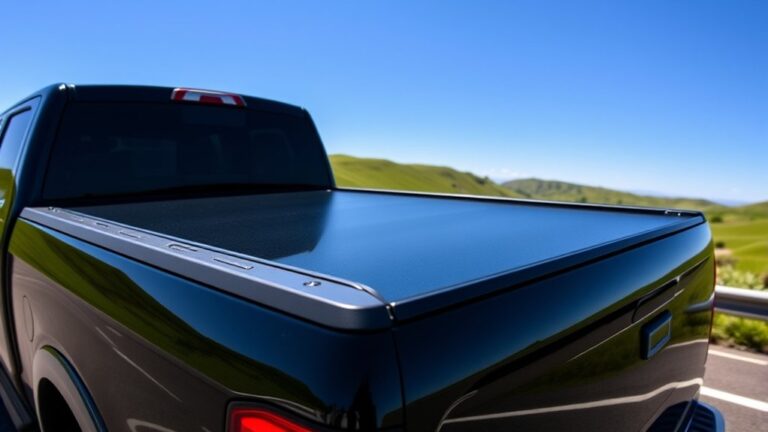
How to Install Tonneau Cover With Bed Liner
To install your tonneau cover with a bed liner, start by thoroughly cleaning and inspecting the truck bed for any damage or rust. This initial step ensures a solid foundation for your installation.
Next, carefully measure your bed to confirm that the tonneau cover fits your specific truck model.
Secure the frame aligned with your liner contours using the correct fasteners, taking care not to over-tighten and cause damage. Attach the cover using clamps and seals to achieve a tight, weatherproof fit.
Finally, adjust the tension and test the cover’s smooth operation. Following these precise steps ensures durable protection. Keep going to master detailed installation and maintenance tips.
How To Choose The Right Tonneau Cover And Bed Liner For Your Truck Model
How do you guarantee a perfect fit when choosing a tonneau cover and bed liner for your truck? Start by focusing on vehicle compatibility. Measure your truck bed accurately and cross-reference these dimensions with product specifications.
Not all covers and liners fit every model, so ensure the options you select are designed for your truck’s make and year. Next, consider choosing materials that balance durability and weight. Common materials include aluminum, vinyl, and fiberglass for covers, and spray-on or drop-in options for liners.
Each material offers distinct protective qualities and installation requirements. Prioritize materials that resist weather, corrosion, and impact while complementing your truck’s usage. By aligning material choice with exact vehicle compatibility, you’ll secure a seamless installation and optimal protection for your truck bed.
Get These Tools And Materials Ready First
Before you start installing the tonneau cover and bed liner, gather all essential tools like screwdrivers, wrenches, and a measuring tape. Make sure you have the required materials, including mounting hardware and sealant, ready for a smooth process. Preparing these items upfront will help you work efficiently and avoid interruptions.
Essential Tools Checklist
What tools do you need to ensure a smooth tonneau cover installation over your bed liner? Start with a cordless drill equipped with variable speed settings to avoid damaging the liner or cover. A tape measure ensures precise alignment, while a rubber mallet helps secure clamps without scratching surfaces.
Use a screwdriver set with both Phillips and flat-head bits for versatile fastening. Have a utility knife handy to trim any excess liner material if necessary. Gloves protect your hands during handling.
Keep a clean cloth nearby to wipe off debris, maintaining care tips for longevity. Finally, review your tonneau cover’s warranty options to confirm which tools and installation steps preserve coverage. Gathering these tools upfront streamlines installation and safeguards your equipment.
Required Materials Overview
A complete set of materials is essential to guarantee your tonneau cover installs securely and functions properly over your bed liner. Start by ensuring concept compatibility: confirm the cover model matches your truck bed liner’s dimensions and design.
You’ll need mounting brackets, clamps, screws, and rubber seals tailored for your specific cover and liner combination. Weatherproofing considerations are critical. Use weather-resistant fasteners and high-quality seals to prevent water intrusion and protect both the cover and liner.
Include a torque wrench for precise tightening and a clean cloth to prep surfaces before installation. Having these materials ready streamlines the process, reduces errors, and ensures a durable, secure fit that maintains your truck bed’s integrity and weather resistance over time.
Prepare Your Truck Bed For The Bed Liner Installation
Start by cleaning your truck bed thoroughly to remove dirt, debris, and grease that could interfere with the liner adhesion. Next, inspect the bed for any dents, rust, or damage that might require repair before installation. Ensuring a clean, smooth surface will optimize the liner’s fit and durability.
Clean Truck Bed Thoroughly
Before installing the bed liner, you’ll need to clean the truck bed thoroughly to guarantee proper adhesion and prevent debris from causing imperfections. This step also addresses nontechnical considerations like ensuring the bed liner looks smooth and maintains its aesthetic appeal. Follow these key cleaning steps:
- Remove all loose dirt, dust, and debris using a high-pressure washer or compressed air.
- Scrub the surface with a degreasing cleaner to eliminate oils, grease, and contaminants that may interfere with adhesion.
- Rinse thoroughly and dry completely, using microfiber towels or allowing air drying to avoid moisture trapping beneath the liner.
Completing these tasks ensures the bed liner bonds evenly, providing a durable, visually pleasing finish while preventing early failures caused by trapped dirt or moisture.
Inspect For Damage
Thoroughly inspecting your truck bed for damage ensures the bed liner adheres properly and performs optimally. Begin by visually examining the entire bed surface for dents, cracks, or deep scratches that could compromise liner adhesion.
Pay close attention to the corners and edges where damage often accumulates. While inspecting damage, evaluate corrosion by checking for rust spots or bubbling paint, which indicate underlying metal degradation.
Use a wire brush to remove loose rust and assess whether the corrosion has penetrated deeply, requiring repair or replacement. Address any identified issues before proceeding; unresolved damage or corrosion will lead to premature liner failure.
Your careful evaluation at this stage guarantees a smooth, durable liner installation and long-lasting protection for your truck bed.
How To Apply Your Bed Liner For Long-Lasting Protection
Applying your bed liner properly guarantees long-lasting protection against scratches, corrosion, and wear. To achieve this, focus on these critical steps:
Proper bed liner application ensures durable protection from scratches, corrosion, and wear for your truck bed.
- Surface Preparation: Clean the truck bed thoroughly to remove dirt, grease, and old paint color residues. A smooth, contaminant-free surface ensures _optimal_ adhesion and maintains warranty coverage.
- Primer Application: Use a compatible primer to seal the surface, especially if the original paint color is different from the liner. This step prevents peeling and extends durability.
- Even Coating: Apply the liner evenly with a spray or roller, maintaining consistent thickness. Avoid thin spots or drips to maximize resistance to impacts and environmental damage.
Following these techniques _ensures_ your bed liner performs reliably, protecting your truck bed under the tonneau cover for years.
Measure And Fit The Tonneau Cover
Start by measuring the exact dimensions of your truck bed to ensure the tonneau cover fits perfectly over the bed liner. Pay close attention to width, length, and any contours that could affect alignment. Then, carefully position and align each cover component to match your measurements before securing them in place.
Accurate Bed Measurements
How do you guarantee your tonneau cover fits perfectly? Accurate bed measurements are essential, especially when a bed liner is installed. The liner adds thickness, affecting the fit of the tonneau cover.
To ensure precision, follow these steps:
- Measure the interior length of the bed liner from bulkhead to tailgate, not the truck bed itself.
- Measure the width between the bed rails at the top edge, accounting for the liner’s thickness to avoid a tight fit.
- Confirm the height of the bed rails with the liner installed, as it influences mounting hardware compatibility.
Aligning Cover Components
Once you’ve confirmed your measurements, you’ll need to align the tonneau cover components carefully to ensure a secure and accurate fit. Start by positioning the frame rails parallel to the bed edges, then lay the cover panels evenly.
Pay close attention to aligning components so the cover sits flush without gaps. Next, engage the securing latches incrementally, checking for smooth operation and uniform pressure across the cover. Misalignment can cause latch failure or damage to the bed liner.
Use the table below to verify key alignment checkpoints:
| Component | Alignment Check | Securing Latch Status |
|---|---|---|
| Frame Rails | Parallel to bed edges | Fully engaged |
| Cover Panels | Flush with bed liner edges | Latches click tightly |
| Side Seals | Even contact with liner | No gaps or looseness |
| Latches | Operate smoothly | Secure and locked |
Secure The Tonneau Cover Frame Safely
A secure frame is essential for the proper function and durability of your tonneau cover. To ensure a reliable installation, focus on these critical steps:
- Check Alignment Confirm the frame aligns perfectly with the bed liner’s contours to prevent gaps and ensure a tight fit.
- Tighten Fasteners Use the recommended torque settings to secure clamps or bolts firmly. Avoid over-tightening, which can damage the structural integrity of the frame.
- Inspect Seals Verify that all seals and weatherstrips maintain consistent contact with the bed liner surface, ensuring effective leak prevention.
Following this precise process guarantees stability and long-term protection for your tonneau cover without compromising the bed liner’s integrity.
Attach The Cover And Seal It Tight
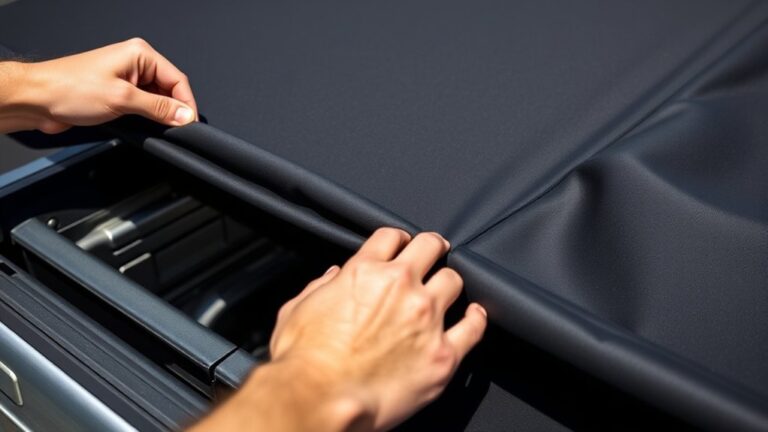
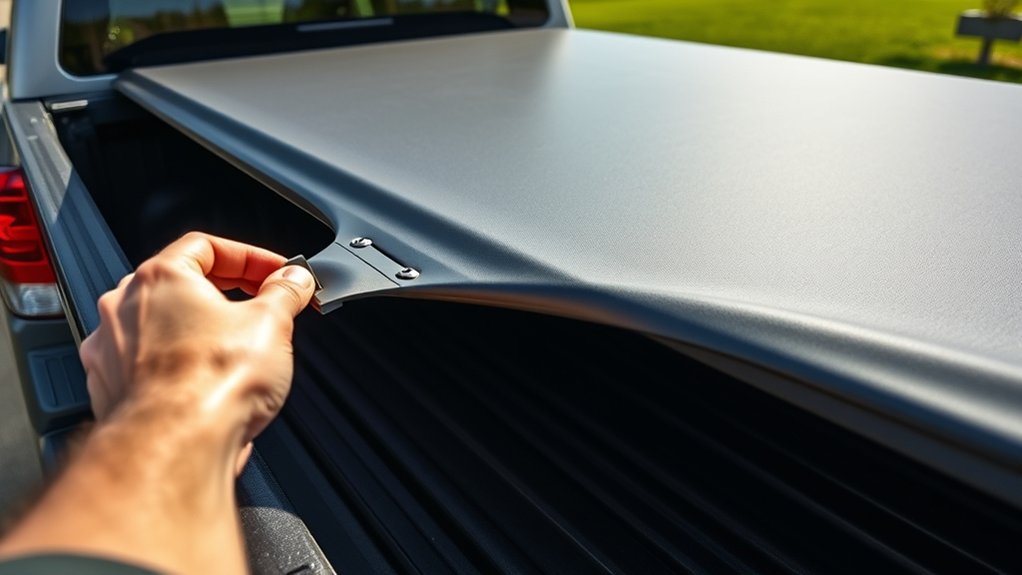
The cover must be carefully aligned and secured to the frame to guarantee a tight seal. Begin by positioning the cover evenly along the frame, ensuring no gaps exist between the cover and the bed liner’s edge.
Use the provided clamps or fastening system to attach the cover firmly, applying consistent pressure to avoid misalignment. Check that all seals, including weather stripping and rubber gaskets, are fully engaged to prevent water intrusion.
Avoid unrelated ideas like adjusting tension or testing functionality here, as they belong to the next subtopic. Focus solely on attaching the cover and confirming that the seal is tight and continuous.
This precise step maintains subtopic relevance, ensuring the cover’s protective function integrates seamlessly with your bed liner.
Adjust And Test The Tonneau Cover
After securing the cover and confirming a tight seal, you need to adjust the tension and alignment to guarantee smooth operation. Avoid introducing wrong topics or unrelated discussion that can complicate this step.
Follow these precise actions:
- Check Alignment: Ensure the cover edges sit flush with the bed liner edges to prevent gaps.
- Adjust Tension: Use the built-in tensioning mechanism or straps to tighten the cover without over-stressing it.
- Test Operation: Open and close the cover several times, verifying smooth movement and proper latching without resistance or looseness.
Focus strictly on these adjustments to avoid confusion. Only proceed when the cover functions seamlessly, maintaining a weatherproof seal and operational integrity. This step is critical before moving to maintenance or other unrelated topics.
Maintain Your Tonneau Cover And Bed Liner
Since proper upkeep extends the lifespan of your tonneau cover and bed liner, you should perform regular cleaning and inspections. Use mild soap and water, avoiding harsh chemicals to prevent damage. Inspect for tears, cracks, or loose fittings to ensure optimal protection.
| Maintenance Task | Recommended Action |
|---|---|
| Cleaning Tips | Wash monthly with mild detergent |
| Bed Liner Care | Remove debris and dry thoroughly |
| Tonneau Cover Inspection | Check seals and hardware monthly |
| Storage Ideas | Store in a cool, dry place off-truck |
Following these cleaning tips and storage ideas helps maintain flexibility and prevents mold or fading. Proper maintenance keeps your gear functional and extends its service life.
Troubleshoot Common Installation Issues
When you encounter issues during installation, identifying the root cause quickly prevents delays and damage. Start by reviewing the fit between your tonneau cover and bed liner; improper alignment often causes gaps or mounting problems. Next, check hardware tightness. Loose bolts can lead to instability or rattling during transit. Finally, verify that all components meet manufacturer specifications, which relates directly to drafting warranty terms and affects pricing comparisons when selecting parts or replacements.
- Inspect alignment carefully for seamless integration.
- Tighten all fasteners to manufacturer torque specs.
- Confirm component compatibility to avoid voiding warranty.
Addressing these points ensures a secure installation, optimal functionality, and preserves warranty coverage while helping you make informed pricing comparisons.
Frequently Asked Questions
Can a Tonneau Cover Improve My Truck’s Fuel Efficiency?
Yes, a tonneau cover can improve your truck’s fuel efficiency by enhancing aerodynamics and reducing drag.
Follow installation tips carefully to ensure safety and proper fit, maximizing aerodynamic benefits without compromising your truck’s security or performance.
Are Tonneau Covers Compatible With All Truck Bed Sizes?
Tonneau covers aren’t compatible with all truck beds due to size variance and incompatible bed designs. You’ll need to verify your truck’s exact dimensions and bed type before selecting a cover to guarantee proper fit and function.
How Does a Bed Liner Affect the Resale Value of My Truck?
A pristine bed liner boosts resale value by protecting your truck’s surface, while a worn one drags down tonneau value. You’ll increase your truck’s appeal and resale price by maintaining both components meticulously.
Can I Install a Tonneau Cover Myself Without Professional Help?
You can definitely handle DIY installation of a tonneau cover yourself. Just ensure you select a model compatible with your bed liner, follow manufacturer instructions precisely, and use proper tools to ensure a secure, professional fit.
What Are the Benefits of a Spray-On Bed Liner Versus a Drop-In Liner?
In the spray on vs drop in bed liner pros/cons, you’ll find spray-ons offer seamless, durable protection and better corrosion resistance. Drop-ins provide easy removal and impact absorption but risk trapping moisture and causing rust over time.
Conclusion
Installing your tonneau cover with a bed liner is like crafting a shield for your truck—each step builds a layer of protection. By choosing the right materials, preparing your bed properly, and fitting the cover precisely, you ensure durability and functionality.
Keep adjustments sharp and maintenance regular to avoid common pitfalls. With careful attention, your truck bed will stay safeguarded against wear and weather.
When done correctly, installing a tonneau cover with a bed liner enhances your truck’s longevity and performance, making it ready for every journey ahead.