How to Cut Bed Liner for Tonneau Cover
To cut your bed liner for a tonneau cover, start by measuring your truck bed and cover precisely, noting all contours and obstacles.
Accurate measurements are essential to ensure the liner fits well under the cover. Use a steel tape and fine-tip marker to mark cut lines aligned with the cover’s edges.
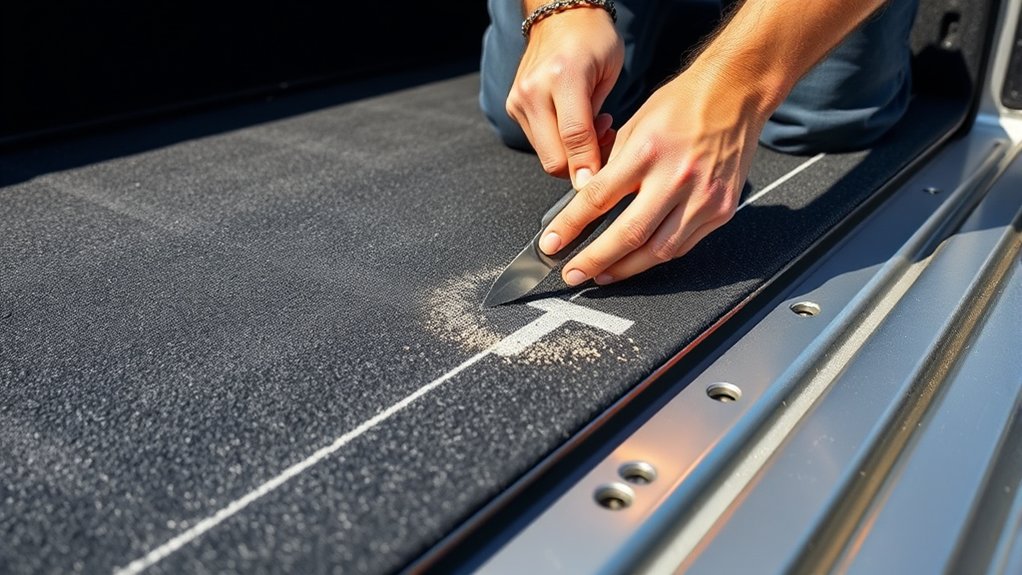
Wear gloves and use a sharp utility knife, cutting carefully along the marked lines. Take your time to avoid mistakes and ensure clean cuts.
Test fit the liner, trimming incrementally to achieve a flush seal without gaps or tears.
Proper preparation and adjustment guarantee a snug fit that protects your truck bed effectively. Exploring further will show how to maintain and optimize this setup.
Measure Your Truck Bed and Tonneau Cover Accurately
How do you guarantee a perfect fit when cutting your bed liner for a tonneau cover? You start by measuring your truck bed and tonneau cover accurately. Following the correct procedures is essential: measure the length, width, and depth of the bed precisely, accounting for any wheel wells or obstacles.
Also, measure the underside and edges of the tonneau cover to ensure alignment. Avoid common pitfalls like relying on approximate measurements or neglecting to double-check dimensions. Use a rigid tape measure for consistent results and record measurements carefully.
Accurate measuring prevents material waste and ensures the liner fits snugly, avoiding gaps or overlaps. Precision at this stage sets the foundation for a professional, durable installation without costly adjustments later.
Pick the Best Tools for Measuring and Cutting
After taking accurate measurements of your truck bed and tonneau cover, selecting the right tools for measuring and cutting becomes the next step. Prioritize tools that enhance measurement accuracy, such as a high-quality steel tape measure with clear, easy-to-read markings.
For cutting, choose a sharp utility knife or heavy-duty scissors designed for thick materials like bed liners. Ensure these tools offer good ergonomics; comfortable grips reduce fatigue and improve control during precise cuts.
A straightedge or metal ruler will help guide your cuts, maintaining clean lines. Avoid worn or dull blades, as they compromise accuracy and safety. By focusing on tool ergonomics and precision, you’ll streamline the cutting process, ensuring the bed liner fits perfectly without errors or material waste.
Mark Cut Lines to Match Your Tonneau Cover
Start by measuring your tonneau cover’s exact dimensions to ensure accuracy. Use a fine-tip marker or chalk to draw precise lines on the bed liner. Align these lines carefully with the cover’s edges to guarantee a perfect fit.
Measure Tonneau Cover Dimensions
Where exactly should you mark the cut lines on your bed liner to match the tonneau cover? Start by accurately measuring the cover’s length, width, and depth, applying metric conversion if needed for precision.
Account for the material density of the liner to ensure minimal stretching or compression during fitting. Record these dimensions clearly before transferring them onto the liner.
| Dimension | Measurement (cm) | Notes |
|---|---|---|
| Length | 150 | Convert inches to cm |
| Width | 120 | Measure widest points |
| Depth | 40 | Include side walls |
| Overlap Margin | 2 | Compensate for density |
| Cut Line Buffer | 1.5 | Prevent cutting errors |
Use this data to mark exact cut lines that correspond to your tonneau cover’s specifications.
Use Precise Marking Tools
How exactly do you guarantee your cut lines align perfectly with your tonneau cover’s dimensions? Start by selecting precise marking tools such as a fine-tip permanent marker or a mechanical pencil. These tools deliver sharp, clear lines essential for cutting accuracy.
Use a straightedge or metal ruler to guide your markings, ensuring they remain linear and exact. Avoid thick or smudgy markers that can distort your cut lines. Mark each measurement point clearly, then connect them with steady strokes.
Double-check all marked lines against your measurements before proceeding. This precise marking process minimizes errors and ensures the bed liner fits snugly under your tonneau cover.
Align Lines With Edges
Why must you align your cut lines precisely with the edges of your tonneau cover? Proper edge alignment ensures a snug fit and prevents gaps that could allow water or debris inside.
To align lines accurately, place the bed liner material over the tonneau cover, making sure it lies flat without wrinkles. Use a straight edge or ruler to mark cut lines directly along the cover’s perimeter.
Double-check measurements before marking to avoid errors. Align lines should follow the contour of the cover closely to maintain its protective function.
Any misalignment could cause the liner to shift or not seal properly. By focusing on precise edge alignment, you’ll achieve a clean cut that matches your tonneau cover perfectly, guaranteeing durability and optimal coverage.
Cut Your Bed Liner Safely and Neatly
Before you start cutting, equip yourself with essential safety gear like gloves and eye protection to prevent injuries. Use sharp, appropriate cutting tools to ensure clean, precise cuts along your marked lines. Double-check your measurements and markings to avoid errors that could compromise the fit of your tonneau cover.
Essential Safety Gear
Wearing the right safety gear is essential when cutting your bed liner to prevent injuries and guarantee precise work. Always use safety gloves to protect your hands from sharp edges and potential cuts. Eye protection is crucial to shield your eyes from debris and dust created during cutting. Choose snug-fitting gloves and impact-resistant goggles for optimal safety.
| Safety Gear | Purpose |
|---|---|
| Safety Gloves | Protect hands from cuts |
| Eye Protection | Prevent eye injury from debris |
| Dust Mask | Avoid inhaling dust particles |
Additionally, consider a dust mask to prevent inhaling fine particles. Ensuring proper safety gear minimizes risks and helps maintain focus, delivering cleaner, more accurate cuts for your tonneau cover installation.
Proper Cutting Tools
Selecting the right cutting tools is essential to achieve clean, precise cuts on your bed liner and ensure your tonneau cover fits perfectly. Use a sharp utility knife or a heavy-duty carpet knife for controlled, straight cuts.
For thicker bed liners, a rotary cutter or tin snips may offer better leverage and accuracy. Avoid dull blades, as they can cause jagged edges and compromise the fit of your tonneau cover.
Additionally, a straightedge or metal ruler helps guide your cuts for maximum precision. Ensure your workspace is stable and well-lit to maintain control while cutting.
Proper tools reduce material waste and improve the overall finish, ensuring your bed liner integrates seamlessly with your tonneau cover installation.
Measuring And Marking
Once you have the right cutting tools ready, focus on measuring and marking your bed liner accurately. Begin by following a thorough cleaning routine to remove dirt and debris, ensuring precise measurements.
Use a tape measure to record the exact dimensions of your truck bed, accounting for any contours or wheel wells. Mark the liner surface with a fine-tip marker or chalk, aligning your lines with the measurements.
Keep weather considerations in mind; avoid measuring on hot, sunny days when materials can expand, leading to inaccurate cuts. Work in a shaded, stable environment for consistent results.
Double-check all measurements before marking to prevent errors. This disciplined approach guarantees a clean, safe cut, ensuring your tonneau cover fits perfectly without compromising the liner’s integrity.
Test Bed Liner Fit and Adjust as Needed
How does the bed liner fit after your initial cuts? Place it carefully over the truck bed and under the tonneau cover to check alignment and coverage. Ensure the bed liner compatibility with the specific tonneau cover model by verifying that no edges interfere with the cover’s sealing mechanism.
Look for gaps or overlaps that could compromise protection or cause premature wear. If you notice any misfit, trim the bed liner incrementally, focusing on tight corners and edges. Adjustments should maintain a snug fit without buckling, which can reduce tonneau cover durability by creating stress points.
Once the bed liner sits flush and supports the cover’s closure evenly, you’ve achieved optimal compatibility. This precise fit enhances both protection and longevity.
Maintain Your Bed Liner and Tonneau Cover for Longevity
Achieving a precise fit between your bed liner and tonneau cover sets the foundation for long-term protection. To ensure bed liner maintenance, regularly clean debris and dirt using mild soap and water, avoiding harsh chemicals that degrade materials.
Inspect edges for wear or lifting and reseal with appropriate adhesive to maintain a tight seal. For tonneau cover longevity, lubricate hinges and locking mechanisms with silicone spray to prevent corrosion and ensure smooth operation.
Store the cover properly when not in use, preferably in a dry, shaded area to reduce UV damage. Routinely check for tears or punctures and repair immediately to prevent water intrusion.
Consistent maintenance preserves both components, extending their functional lifespan and protecting your truck bed effectively.
Frequently Asked Questions
What Types of Bed Liners Are Best for Tonneau Covers?
You’ll want spray-on or drop-in bed liners for optimal tonneau compatibility. Aftermarket options offer tailored fits, but consider installation ease and material thickness to ensure the bed liner doesn’t interfere with your tonneau’s function.
Can I Install a Bed Liner Without Removing the Tonneau Cover?
You can install bedliners without removing the tonneau cover, but you’ll need to ensure proper tonneau compatibility. Carefully measure and cut the liner to fit around the cover’s rails and hardware for seamless installation.
How Do Weather Conditions Affect Bed Liner Installation?
Weather impact affects bed liner adhesion and curing, so you should schedule installation during dry, moderate temperatures. Avoid extreme heat, cold, or humidity to ensure proper bonding and durability.
Proper installation timing maximizes liner performance.
Are There Specific Safety Gear Recommendations for Cutting Bed Liners?
Measure twice, cut once. You’ll need proper safety gear: gloves, safety glasses, and a dust mask.
PPE requirements ensure you avoid injury from sharp edges and airborne particles while cutting bed liners with precision and control.
Can I Reuse Cut Pieces of Bed Liner for Other Truck Parts?
Yes, you can reuse offcuts of bed liner for other truck parts. Consider alternative uses like patching scratches, lining toolboxes, or creating non-slip surfaces.
Proper cutting ensures these pieces fit your specific needs efficiently.
Conclusion
Now, picture your truck bed, perfectly lined and snug beneath the sleek tonneau cover, each cut edge clean and precise. By measuring carefully, marking clearly, and cutting with steady hands, you’ve transformed a rough liner into a seamless fit.
This attention to detail not only protects your bed but guarantees the cover closes flawlessly every time. Keep up regular maintenance, and you’ll enjoy a durable, professional finish that stands up to every drive.
Mastering how to cut bed liner for tonneau cover ensures your truck bed stays protected while providing a perfect fit for your cover.