How to Check Tire Pressure on Honda Civic
To check your Honda Civic’s tire pressure, first gather a reliable gauge and ensure the tires are cold for accuracy. Proper tire pressure is essential for safety and vehicle performance.
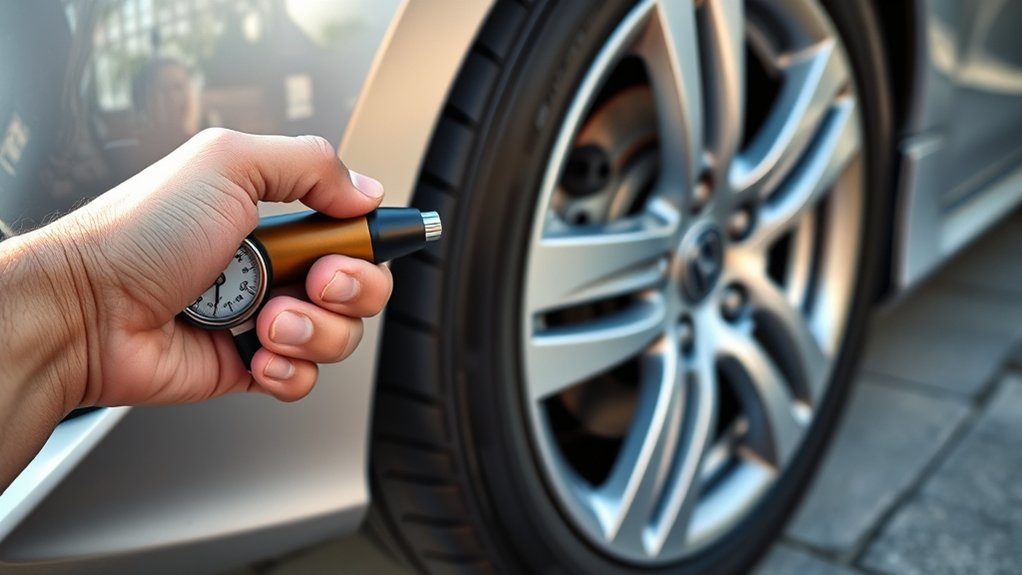
Remove the valve cap, press the gauge firmly on the valve stem without air leakage, and note the reading immediately. Compare it to the recommended PSI found on the driver’s door jamb label, not the tire sidewall.
Adjust the pressure as needed to match the recommended level. Regular checks improve safety, fuel efficiency, and tire life.
Learn how to troubleshoot and maintain proper pressure for optimal performance.
Key Takeaways
- Use a reliable tire pressure gauge and check the tires when they are cold for accurate readings.
- Remove the valve cap from the tire stem and press the gauge firmly to avoid air leakage.
- Find the recommended tire pressure on the driver’s side door jamb label of your Honda Civic.
- Compare the gauge reading to the recommended PSI and adjust by inflating or deflating as needed.
- Check tire pressure monthly, before long trips, and after temperature changes or impacts for safety.
Tools You’ll Need to Check Your Honda Civic’s Tire Pressure
To accurately check your Honda Civic’s tire pressure, you’ll need a reliable tire pressure gauge and an air compressor or access to a service station with one. Choose a gauge that provides precise readings in PSI or kPa, ensuring you avoid errors caused by water logging in digital models.
A dial or digital gauge with solar boost features offers enhanced battery life for uninterrupted use, especially if you frequently check your tires outdoors. Additionally, keep a tire valve stem cap wrench handy to remove and replace caps securely.
These tools help you maintain optimal tire inflation, which directly affects safety, fuel efficiency, and tire longevity. By preparing the right equipment, you eliminate guesswork and ensure your Honda Civic’s tires perform at their best under varying conditions.
How to Check Tire Pressure on a Honda Civic
Wondering how to accurately check the tire pressure on your Honda Civic? First, ensure the tires are cold for an accurate reading. Remove the valve cap from the tire stem. Note that if you’ve invested in wheel customization, the valve cap might differ from the standard.
Press your tire pressure gauge firmly onto the valve stem; a hissing sound means air is escaping, so adjust your angle. Read the pressure on the gauge immediately. Pay attention to tire branding on the sidewall to confirm you’re checking the correct tire, especially if you use mixed brands or sizes.
Repeat this process for all four tires to maintain optimal performance. Replace the valve caps securely to prevent dirt ingress, preserving tire integrity and your custom wheels’ appearance.
Where to Find Your Honda Civic’s Recommended Tire Pressure
After measuring your Honda Civic’s tire pressure, the next step is to verify the recommended pressure values for your specific model. You’ll find these values on a label located on the driver’s side door jamb.
Check your Honda Civic’s tire pressure against the recommended values on the driver’s side door jamb label.
This label provides precise tire pressure specifications tailored to the tire design and load capacity of your vehicle. Always rely on these manufacturer-recommended pressures rather than the maximum pressure listed on the tire sidewall.
Maintaining the correct pressure optimizes tread wear and ensures safe handling. If you’re unsure, consult your owner’s manual, which also details pressure adjustments based on driving conditions and tire type.
Using the correct pressure prevents uneven tread wear and extends tire life, enhancing both performance and fuel efficiency.
Interpreting Tire Pressure Readings Correctly
You need to compare your tire pressure readings to the Honda Civic’s recommended PSI to guarantee accuracy. Watch for signs of overinflation, such as a harsh ride or uneven tire wear, which can compromise safety. Likewise, recognize underinflation indicators like poor handling or increased tire heat, which can lead to premature tire damage.
Understanding Recommended PSI
How do you determine the correct tire pressure for your Honda Civic? First, locate the manufacturer’s recommended PSI, typically found on a sticker inside the driver’s door jamb or in the owner’s manual.
Avoid wrong subtopic ideas like guessing based on tire sidewall numbers or unrelated discussion about other vehicles’ PSI. The recommended PSI ensures optimal tire performance, safety, and fuel efficiency.
Use a reliable tire pressure gauge to measure your tires when they’re cold, as heat can inflate readings. Compare your measurements to the recommended PSI and adjust accordingly.
Maintaining this precise pressure prevents uneven tire wear and preserves handling. Remember, the recommended PSI is specific to your Honda Civic’s load and driving conditions, so always refer to this standard for accurate tire maintenance.
Identifying Overinflation Risks
Why does overinflation pose a risk to your Honda Civic’s tires? Overinflation increases tire pressure beyond manufacturer recommendations, leading to reduced tire contact with the road. This causes uneven tread wear, especially in the center, compromising traction and handling.
Overinflation risks also include a harsher ride and greater susceptibility to impact damage from potholes or debris. To avoid these issues, don’t rely on tire pressure myths like “higher pressure means better fuel economy” or “maximum pressure listed on the tire is safe.”
Always follow the PSI specified on your Civic’s placard, not the tire sidewall. When interpreting tire pressure readings, ensure your gauge is accurate and measure when tires are cold. This precision helps you identify overinflation promptly and maintain optimal tire performance.
Recognizing Underinflation Signs
When should you suspect underinflation in your Honda Civic’s tires? Check if the tire sidewalls appear bulged or if the tread wears unevenly, especially on the edges. These signs relate directly to tire anatomy, where insufficient air pressure causes excessive flexing of the sidewalls.
Avoid common inflation myths, like assuming a slight underinflation won’t affect performance; even a few PSI below the recommended level can compromise handling and fuel efficiency. Use a reliable gauge to measure pressure accurately, comparing it to the manufacturer’s specifications found on the driver’s door jamb.
Interpreting tire pressure readings correctly means recognizing that underinflated tires increase rolling resistance and heat buildup, accelerating wear. Regularly checking pressure ensures optimal safety and tire longevity for your Civic.
When and How Often to Check Honda Civic Tire Pressure
How frequently should you check your Honda Civic’s tire pressure to maintain optimal performance and safety? Check your tires at least once a month and before long trips. Pay attention to careful weather changes, as temperature fluctuations affect tire pressure. Also, inspect tire color for signs of wear or damage.
| Condition | Recommended Check Frequency | Notes |
|---|---|---|
| Regular driving | Monthly | Use a reliable tire gauge |
| After weather shifts | Every 2 weeks | Cold weather lowers pressure |
| Long trips | Before and after | Prevent unexpected flats |
| Visible tire wear | Immediately | Check for cracks or discoloration |
| After impacts | Immediately | Assess for potential leaks |
Consistent checks ensure your Civic’s tires stay properly inflated, improving fuel efficiency and safety.
Common Tire Pressure Issues and How to Fix Them
What causes common tire pressure problems in your Honda Civic, and how can you resolve them efficiently? Often, issues stem from incorrect tire naming or mismatched tire sizes, leading to improper inflation. Always verify the tire specifications on the driver’s door placard to ensure compatibility.
Weather effects play a significant role; temperature fluctuations cause pressure variations. Cold weather lowers pressure, while heat increases it. To fix these issues, use a reliable gauge to measure pressure when tires are cold.
Inflate or deflate to the manufacturer’s recommended PSI, considering the tire naming and load capacity. Regularly inspect for punctures or valve leaks using soapy water. Promptly address any damage by patching or replacing tires to maintain optimal performance and safety.
Tips to Maintain Proper Tire Pressure for Safety and Fuel Efficiency
Why should you consistently maintain proper tire pressure in your Honda Civic? Proper tire pressure ensures optimal contact between the tire and road, enhancing safety and fuel efficiency. Start by checking pressure monthly, using a reliable gauge when tires are cold.
Consistently maintaining proper tire pressure boosts safety and fuel efficiency—check monthly with a reliable gauge when tires are cold.
Adjust pressure according to your Civic’s recommended PSI, found on the door placard. Consider tire design; performance tires may require different pressures than all-season types, affecting handling and wear.
During seasonal storage, inflate tires slightly above recommended PSI to prevent flat spots and maintain shape. Always inspect tires for damage or uneven wear, which can indicate pressure issues or misalignment.
Maintaining correct pressure reduces rolling resistance, improving gas mileage while extending tire life. Regular monitoring safeguards your Civic’s performance and your safety on the road.
Frequently Asked Questions
Can Incorrect Tire Pressure Affect My Honda Civic’s Warranty?
Incorrect tire pressure generally won’t void your Honda Civic’s warranty unless tire risks cause damage linked to manufacturer defects.
You should maintain proper pressure to avoid unrelated warranty issues and ensure vehicle safety and performance.
How Does Tire Pressure Impact Honda Civic’s Ride Comfort?
Don’t think tire pressure’s trivial; it directly affects your Honda Civic’s ride comfort. Incorrect pressure causes harshness or sluggishness, so you must maintain recommended levels for precise handling, smoothness, and overall driving satisfaction every time you hit the road.
What Are the Symptoms of a Slow Tire Leak on a Honda Civic?
You’ll notice hidden leak signs like gradual tire deflation, uneven wear, or frequent pressure drops during wide tire maintenance. These symptoms signal a slow tire leak, so inspect valves, rims, and tread carefully to avoid safety risks.
Can I Use Nitrogen Instead of Air for My Honda Civic Tires?
You can use nitrogen instead of air for your Honda Civic tires; nitrogen reduces pressure loss by about 25%. For tire pressure maintenance, it offers more stability, but regular checks remain essential regardless of nitrogen vs air choice.
How Does Tire Pressure Vary With Seasonal Temperature Changes?
Tire pressure decreases as seasonal temperature drops because cold air contracts. You’ll need to check and adjust tire pressure regularly during seasonal temperature changes to maintain optimal performance and safety, preventing underinflation or overinflation issues.
Conclusion
Checking your Honda Civic’s tire pressure keeps you safe, saves fuel, and extends tire life. Use the right tools, follow recommended guidelines, and interpret readings accurately. Check pressure regularly, fix issues promptly, and maintain consistency for optimal performance.
By doing this, you protect your vehicle, improve handling, and avoid costly repairs. Stay proactive, stay precise, and stay prepared—because proper tire pressure is key to your Civic’s reliability and your peace of mind on every drive.
Remember, regularly checking tire pressure on your Honda Civic ensures the best performance and safety on the road.