
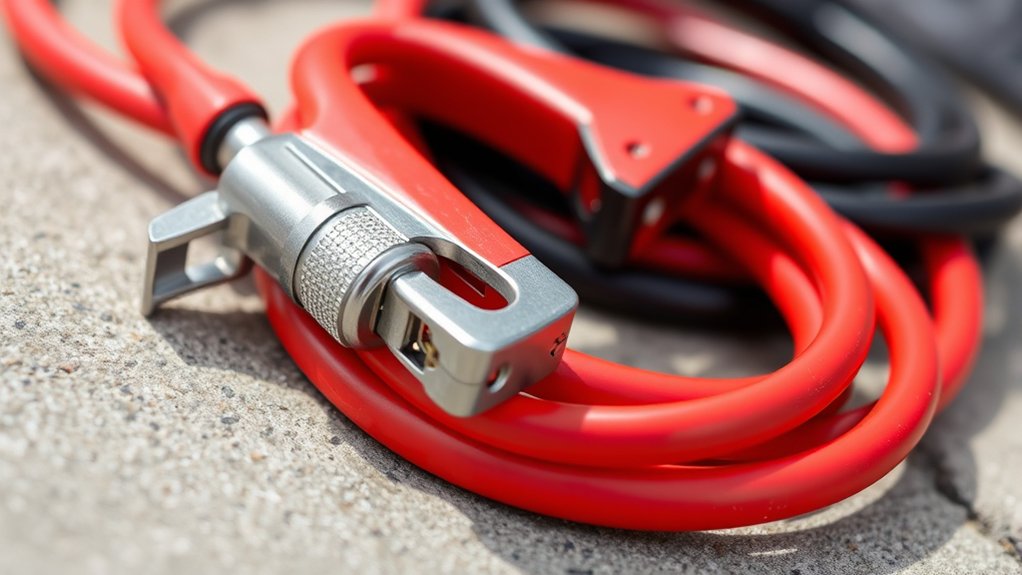
How Long Are Jumper Cables
Jumper cables typically range from 10 to 20 feet, with 12 to 16 feet being the most practical length for most vehicles. The length of jumper cables is important because it affects both performance and convenience. Short cables minimize voltage drop and heat but limit reach, while longer cables offer flexibility at the cost of increased resistance and power loss.
Choosing the right length depends on your vehicle size and parking situation, balancing safety and performance. Understanding these factors helps guarantee efficient, secure jump starts and proper cable management. Selecting the appropriate jumper cable length ensures you are prepared for various jump-start scenarios.
What Are the Standard Jumper Cable Lengths?
How long should jumper cables be to effectively jump-start a vehicle? Standard jumper cable lengths typically range from 10 to 20 feet.
Short cables, around 10 feet, are compact and easy to store but may limit your ability to position vehicles close enough, especially in tight spaces. Long cables, usually 16 to 20 feet, provide greater flexibility, allowing you to connect batteries without needing the vehicles to be extremely close.
However, excessively long cables can lead to increased resistance, reducing current flow. Most users find 12 to 16 feet optimal, balancing convenience and sufficient reach. When selecting jumper cables, consider typical vehicle spacing and storage constraints.
Understanding these standard lengths ensures you choose cables that meet your practical needs for effective jump-starting.
Why Jumper Cable Length Matters for Safety and Performance
Choosing the right jumper cable length doesn’t just affect convenience. It directly impacts safety and performance during a jump-start.
Short cables are essential because they reduce electrical resistance, minimizing voltage drop and heat buildup. This lowers the risk of overheating and sparks, making the jump-start safer for both you and your vehicle.
Long cables are crucial when you need flexibility to reach between vehicles parked farther apart. They allow you to maintain a proper connection without straining or compromising positioning.
However, longer cables increase resistance, potentially reducing current flow and effectiveness. Understanding this balance lets you select cables that ensure safe, efficient power transfer, optimizing jump-start success without compromising safety or performance.
Pros and Cons of Short, Medium, and Long Jumper Cables
Why does the length of jumper cables matter so much? The cable length directly affects usability, safety, and electrical performance. Short cables offer minimal voltage drop but limit vehicle positioning. Long cables increase flexibility but risk greater resistance and potential power loss.
Consider these key points:
- Short cables provide high conductivity and less power loss but restrict vehicle proximity.
- Medium cables balance length and performance, offering moderate flexibility with controlled voltage drop.
- Long cables enable greater distance between vehicles but increase resistance and heat generation.
- Cable thickness also impacts performance; longer cables require thicker gauge to maintain efficiency.
Understanding these pros and cons will help you evaluate jumper cable options effectively without compromising safety or performance.
Choosing the Right Jumper Cable Length for Your Vehicle
When selecting jumper cables, you need to consider your vehicle’s size, typical parking scenarios, and engine type to determine the optimal length. Short cables may suit compact cars parked close together but often limit reach, posing safety concerns during emergency use.
Longer cables enhance flexibility and accommodate larger vehicles or varied parking distances, but they can introduce voltage drop if not properly gauged. Prioritize vehicle compatibility by matching cable length with engine size and typical jump-start situations.
Ensure the cables are long enough to connect without strain yet not excessively long to avoid tangling or resistance. Balancing length with gauge and quality mitigates risks and optimizes performance.
Choosing the right jumper cable length safeguards both you and your vehicle during critical battery boosts.
Tips for Storing and Managing Jumper Cables by Length
Matching jumper cable length to your vehicle’s needs is only part of the equation; proper storage and management ensure the cables remain functional and ready when you need them. Whether you have short storage space or long jumpers, organizing your cables effectively prevents damage and tangling.
Consider these tips for optimal cable organization:
- Coil cables loosely to avoid internal wire stress, especially with long jumpers.
- Label cables by length to quickly identify vehicle compatibility during emergencies.
- Use a dedicated storage bag or case to protect cables from dirt and moisture.
- Store cables in a dry, accessible location within your vehicle to ensure quick retrieval.
Frequently Asked Questions
How Do Jumper Cables Work to Start a Dead Battery?
You instantly unleash a surge of life! How jumper cables work is by transferring electrical current from a charged battery to a dead battery, enabling dead battery recovery by jump-starting the engine with a powerful, precise energy flow.
Can Jumper Cables Damage My Vehicle’s Electrical System?
Yes, improper use of jumper cable materials can damage your vehicle’s electrical system. Use cables with quality copper or aluminum cores and corrosion prevention coatings to ensure safe, efficient current flow and avoid electrical shorts or damage.
What Gauge of Jumper Cable Is Best for Cold Weather?
Need reliable cold weather cabling? You’ll want 4 to 6-gauge jumper cables. They handle low temperatures and higher resistance efficiently.
Don’t let battery pricing tempt you to skimp; thicker cables ensure consistent performance and safety.
How Do I Safely Connect Jumper Cables Step-By-Step?
You connect jumper cables safely by choosing safe clamps, attaching red clamps to positive terminals first, then black clamps to the grounded negative terminal.
To prevent damage, coil cables neatly and store them in a dry, secure place.
Are There Alternatives to Jumper Cables for Jump-Starting a Car?
When push comes to shove, you can use portable jump starters or call roadside assistance.