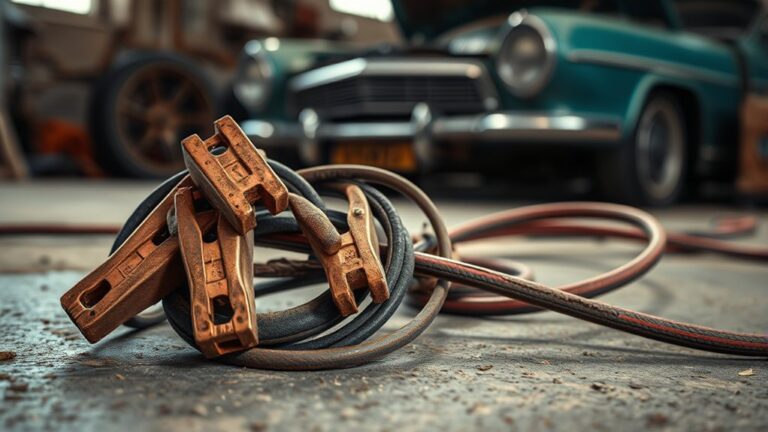
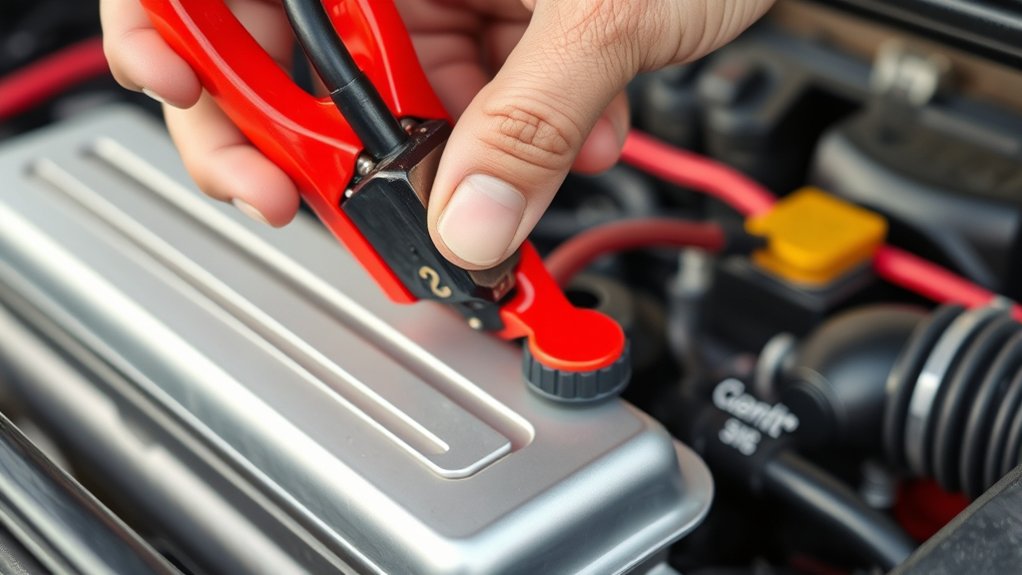
Where to Ground Jumper Cables
You should ground jumper cables by clamping the negative cable to a clean, unpainted metal surface on the engine block, chassis, or frame—well away from the battery and any fuel lines. This grounding technique is essential for a safe and effective jump-start.
Ensure the spot is free of paint, rust, and dirt to prevent sparking and ensure good conductivity. Avoid moving parts or damaged terminals, as these can cause hazards during the process.
Preparing the surface properly secures a safe, effective jump-start. Understanding safe grounding points and techniques can further protect your vehicle and yourself during the process.
Why Grounding Your Jumper Cables Right Matters
Properly grounding your jumper cables is essential for both safety and effectiveness when jump-starting a vehicle. Understanding grounding fundamentals ensures you connect the cables to appropriate metal surfaces, allowing electrical current to flow safely and efficiently.
Contrary to common safety misconceptions, you should avoid attaching the negative clamp directly to the battery’s negative terminal on the dead vehicle. Instead, ground it to an unpainted metal part of the engine block or chassis, which minimizes sparking risks near the battery.
This practice prevents hazardous situations like acid explosions and electrical shorts. By following correct grounding procedures, you optimize the jump-start process while protecting yourself and your vehicle.
What Can Go Wrong With Improper Grounding
If you don’t ground your jumper cables correctly, you risk causing an electrical short circuit that can damage both vehicles. Improper grounding can lead to sparks, blown fuses, or even battery explosions. You need to ensure a proper connection to avoid these hazards and protect your vehicle’s electrical system.
Electrical Short Circuit
How can improper grounding lead to an electrical short circuit? When you connect jumper cables incorrectly during a jump start procedure, you risk creating a direct path for current to bypass critical circuits.
Instead of safely transferring power from the donor battery to the dead battery, improper grounding can cause excessive current flow, generating heat and potentially melting insulation or damaging components. This short circuit interrupts the intended flow, risking sparks or electrical fires.
To prevent this, always attach the negative cable clamp to a clean, unpainted metal part away from the battery, not the negative terminal. This grounding point helps control current flow and avoids direct contact that could trigger a short circuit, ensuring a safe and effective jump start procedure without electrical hazards.
Vehicle Damage Risks
What happens when you ground jumper cables incorrectly? You risk causing severe vehicle damage risks, including a sudden electrical short circuit. Improper grounding creates unintended current paths, which can overload sensitive components like the alternator or electronic control units.
This two word idea 1 circuit failure often results from sparks or voltage spikes damaging critical wiring. Additionally, two word idea 2 battery rupture can occur if the cables create excessive heat during the jump-start process.
To avoid these issues, always connect the negative cable to an unpainted metal surface away from the battery, ensuring a proper ground. This method minimizes the chance of electrical shorts and protects your vehicle’s electronic systems from damage. Following precise grounding steps prevents costly repairs and ensures safe jump-starting.
Unsafe Negative Clamp Connection Points
Why should you avoid attaching the negative clamp to certain engine components when jump-starting a vehicle? Connecting to unsafe points can cause sparks, damage sensitive electronics like remote navigation systems, and compromise battery safety. You must know where not to connect to prevent hazards.
Avoid these unsafe negative clamp connection points:
- Fuel lines or near the fuel injection system. There is a risk of explosion from sparks.
- Moving parts such as belts or fans. This poses a danger of injury or cable damage.
- Battery terminals with corrosion or visible damage. These can cause poor connection and electrical shorts.
Finding Safe Metal Grounding Points on Your Car
Although it may seem straightforward, selecting a proper metal grounding point for your negative clamp is essential to a safe and effective jump-start. You want to identify a clean, unpainted metal surface firmly attached to the vehicle’s chassis or engine block.
Avoid bolts or parts that move or corrode easily, as they can interrupt the electrical flow. When choosing, focus strictly on relevant discussion ideas such as grounding locations that ensure a solid connection and minimize sparks.
Don’t get sidetracked by unrelated topics like battery maintenance or cable quality here; they’ll be covered elsewhere. Use a wrench or your fingers to verify the metal is free of paint, rust, or dirt.
This precision ensures a stable ground, reducing risks and improving jump-start efficiency every time you connect your jumper cables.
Best Engine Block Spots for Grounding Jumper Cables
When selecting grounding points on the engine block for jumper cables, you should target areas that provide a solid, clean metal contact directly connected to the vehicle’s chassis. Avoid painted or corroded surfaces to ensure effective conductivity.
Here are the best spots to ground your jumper cables:
- Engine Block Bolt Heads. These provide reliable contact points and are less likely to be coated with paint or grime.
- Unpainted Metal Brackets. Often found near the engine lubrication system, these brackets offer a sturdy grounding location.
- Exhaust Manifold Studs or Nuts. These are securely attached and provide a direct chassis connection but ensure the engine is cool to avoid burns.
How to Safely Use the Car Frame as Ground
– When using the car frame as a ground, pick a clean, unpainted metal surface to ensure a solid connection. Avoid any parts that look rusty, oily, or weak, as these can cause poor grounding or sparks. Always clamp away from the battery and fuel system to maintain safety during the jump-start.
Choosing Proper Ground Location
How do you guarantee a safe and effective ground connection when jump-starting your vehicle? Choosing the proper ground location is critical to avoid electrical faults and ensure a successful start. Use the car frame away from the battery and fuel system, preferably a clean, unpainted metal surface.
Before connecting, perform an engine inspection to confirm the grounding point is solid and corrosion-free.
Follow these steps for safety and reliability:
- Locate a sturdy, bare metal part on the engine block or frame.
- Ensure the grounding spot is distant from moving components and fuel lines.
- Double-check the connection for stability before attaching jumper cables.
If unsure, call roadside assistance to prevent damage or injury during the jump-start process.
Avoiding Unsafe Ground Points
Why must you avoid certain ground points while using the car frame as a ground? Unsafe grounding can cause sparks, damage electrical components, or risk personal injury. To ensure jump start safety and adhere to grounding ethics, select clean, unpainted metal surfaces bolted directly to the frame.
Avoid plastic, rusted, or moving parts.
Use this guide to identify safe and unsafe grounding points:
| Ground Point | Safe to Use | Reason |
|---|---|---|
| Unpainted frame metal | Yes | Direct, conductive contact |
| Painted metal | No | Insulates, poor conductivity |
| Engine block | Conditional | Use if clean and unpainted |
| Moving parts (e.g., suspension) | No | May cause disconnection |
Following these guidelines promotes jump start safety and respects grounding ethics.
Why You Should Never Ground Near the Battery
Although it might seem convenient, you should never ground jumper cables near the battery terminals because this area is highly prone to sparks and explosions. When performing engine maintenance or tire rotation, safety demands you minimize risks linked to electrical arcs near hydrogen gas emitted by the battery.
Never ground jumper cables near battery terminals to avoid sparks and explosions from hydrogen gas emissions.
Grounding near the battery can cause:
- Sparking that ignites flammable gases, risking explosion.
- Corrosion acceleration on terminals, reducing battery life.
- Damage to sensitive electronics due to unstable current flow.
Instead, always select a grounded metal part away from the battery. This precaution ensures your safety and protects your vehicle’s electrical system during jump-start procedures. Avoid shortcuts; proper grounding prevents hazards and maintains vehicle reliability.
Preparing the Grounding Surface for a Secure Connection
You need to locate a clean metal surface free of paint and rust to ensure a reliable ground connection. Use a wire brush or sandpaper to remove any corrosion or coatings that could obstruct conductivity. Make sure the area is dry before attaching the jumper cable clamp to prevent resistance or sparking.
Clean Metal Surface
Before attaching the jumper cable clamp, make sure to clean the grounding surface thoroughly. A clean metal surface ensures optimal conductivity and prevents sparking. Avoid distractions from irrelevant topics like unrelated concepts that don’t affect your connection quality.
Focus on these key steps:
- Use a wire brush or sandpaper to remove dirt and debris.
- Wipe the area with a clean cloth to eliminate loose particles.
- Confirm the metal is shiny and free of grease or oil for the best contact.
Remove Paint And Rust
How can you guarantee a reliable ground connection when jumper cables are involved? Start by removing any paint and rust from the grounding surface. These layers act as insulators, disrupting electrical flow and compromising the connection.
Using grounding basics, select a wire brush or sandpaper to strip the area until bare metal is visible. This ensures optimal conductivity. Follow safety guidelines by wearing gloves and eye protection to prevent injury from debris.
Avoid using harsh chemicals that might damage the vehicle’s frame. Focus on a spot close to the battery but away from moving parts or fuel lines. A clean, rust-free, unpainted metal surface is critical for a secure, efficient ground connection when jump-starting a vehicle.
Ensure Dry Contact
After removing paint and rust to expose bare metal, make sure the grounding surface is completely dry. Moisture can compromise the electrical connection, causing sparks or failure to start. Don’t let irrelevant topics or unnecessary details distract you from this critical step.
Follow these three precise actions:
- Use a clean, dry cloth to thoroughly wipe the surface.
- Allow the metal to air dry if it’s damp from rain or washing.
- Avoid touching the cleaned area with your hands, as oils can reintroduce moisture.
How to Tell If Your Grounding Spot Isn’t Working
Wondering whether your grounding spot is effective? Start by checking for obvious signs like corrosion, paint, or dirt that can hinder conductivity. If the jumper cable’s clamp feels loose or the engine fails to start despite proper connections, your grounding spot might be off point.
Use a multimeter to measure voltage drop between the grounding clamp and the negative battery terminal; a reading above 0.2 volts indicates resistance, meaning the spot isn’t working properly. Avoid choosing unrelated topic surfaces like plastic or painted areas, as these won’t conduct electricity and are completely off topicpoint for grounding.
If you detect any issues, reposition the clamp to a clean, unpainted metal part of the vehicle’s frame or engine block. This ensures a solid ground, preventing failed jump starts and electrical risks.
Grounding Jumper Cables: Gas vs. Electric Vehicles
When jump-starting a vehicle, do you know the critical differences in grounding procedures between gas and electric vehicles? Ignoring these distinctions can lead to damage or safety hazards. Here’s what you must remember:
- Gas vehicles require grounding to the engine block or chassis to prevent sparks near the battery, a potential explosion risk.
- Electric vehicles use high-voltage battery packs isolated from the chassis, so grounding there is ineffective and possibly harmful.
- Always consult the electric vehicle’s manual before attempting jump-starting, as improper grounding can void warranties or cause electrical failures.
Avoid confusing these steps with unrelated topic advice or off topic tips meant for traditional engines. Grounding approach varies significantly. You must treat gas and electric vehicles differently for safe, effective jump-starting.
Safe Jump-Starting Tips With Proper Grounding
How do you guarantee a safe jump-start with proper grounding? First, connect the positive jumper cable to the dead battery’s positive terminal, then to the donor battery’s positive terminal. Next, attach the negative cable to the donor battery’s negative terminal.
Significantly, connect the other end of the negative cable to a solid, unpainted metal surface on the dead vehicle’s chassis, away from the battery and fuel system, to prevent sparks near flammable vapors. Avoid using starter fluid before jump-starting, as improper grounding can ignite fuel vapors.
Ensure the fuel system is intact and free from leaks before proceeding. Once grounded correctly, start the donor vehicle, then the dead vehicle. Remove cables in reverse order, maintaining secure connections throughout to prevent electrical hazards and protect both vehicles’ electrical systems.
Frequently Asked Questions
Can Jumper Cables Damage My Car’s Electrical System?
Yes, jumper cables can damage your car’s electrical system if you ignore grounding concerns. Always guarantee proper grounding to maintain electrical safety, prevent voltage spikes, and avoid short circuits that could harm sensitive components.
How Long Should I Leave the Cables Connected When Jump-Starting?
Carefully consider caution steps: once connected, keep cables clamped for about three to five minutes with the idle engine running. This guarantees sufficient power flow while preventing damage, letting your battery safely stabilize before disconnecting cables.
Is It Safe to Jump-Start a Car in the Rain?
Yes, you can jump-start a car in the rain, but prioritize battery safety. Avoid direct water contact with terminals, wear insulated gloves, and ensure cables stay dry.
Always consider weather conditions to prevent electric hazards during the process.
Can I Use Jumper Cables on Motorcycles or Other Vehicles?
You can use jumper cables on motorcycles, but ensure jumper cables compatibility with the bike’s 12V system. For motorcycle charging safety, connect carefully to avoid sparks, and avoid using cables designed solely for cars or larger vehicles.
What Should I Do if My Car Still Won’T Start After Jump-Starting?
If your car still won’t start after jump-starting, you likely have a dead battery or a faulty charging system. Test the battery voltage and inspect the alternator to diagnose the issue precisely before proceeding.