
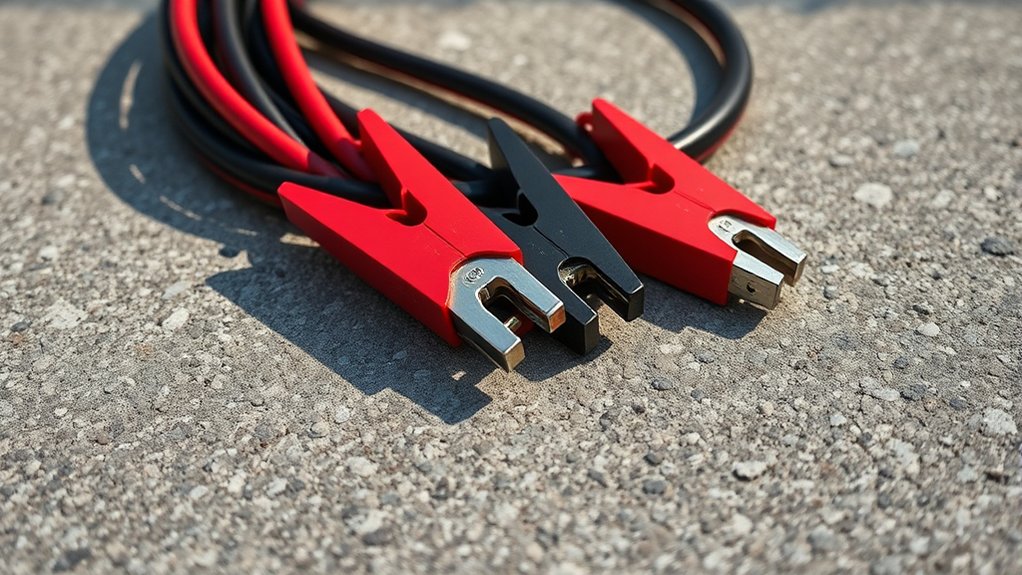
What Gauge Is Best for Jumper Cables
You should choose jumper cable gauge based on your vehicle size and cable length for optimal performance and safety. Selecting the best gauge for jumper cables ensures efficient current flow and reduces the risk of damage to your vehicle’s electrical system.
For compact cars, 8-gauge cables typically work well. Mid-sized vehicles and light trucks benefit from 6-gauge cables, while heavy-duty trucks or SUVs need 4-gauge or thicker. Longer cables require thicker gauges to reduce resistance.
Also, consider cable material—copper offers better conductivity than aluminum. Getting the right gauge balances current flow, weight, and handling for safer, reliable jump starts. Explore further to understand all key factors.
How Jumper Cable Gauge Impacts Power and Safety
Although you might not think about it often, the gauge of jumper cables directly affects both the power they deliver and your safety during use. The jump gauge refers to the thickness of the cable’s wire, measured in American Wire Gauge (AWG).
Lower gauge numbers mean thicker cables, which reduce resistance and allow higher current flow. This ensures faster, more reliable power transfer to the dead battery. However, choosing a gauge involves safety tradeoffs: cables that are too thin can overheat, posing fire risks, while unnecessarily thick cables can be bulky and harder to handle.
You need to balance adequate current capacity with manageable weight and flexibility. Understanding these safety tradeoffs helps you select a jump gauge that optimizes both performance and your personal safety during jump-starting tasks.
Best Jumper Cable Gauges for Different Vehicle Sizes
Which jumper cable gauge suits your vehicle depends largely on its size and engine type. For compact cars with smaller engines, 8-gauge cables typically offer sufficient current flow without excessive weight.
Mid-sized vehicles and light trucks benefit from 6-gauge cables, balancing power delivery and flexibility. For heavy-duty trucks, SUVs, or diesel engines, 4-gauge or thicker cables ensure adequate amperage and minimize voltage drop.
When selecting cables, consider vehicle color coordination for easy identification and proper connection during emergencies. Additionally, verify that your choice aligns with your vehicle’s warranty implications; using cables that don’t meet manufacturer specifications could void coverage.
Matching gauge to vehicle requirements optimizes jump-start performance, safety, and compliance with warranty terms, ensuring reliable starts across different vehicle sizes.
When Thicker Jumper Cables Aren’t the Best Choice
Why might thicker jumper cables not always be your best option? While thicker cables offer lower resistance and better current flow, they come with safety tradeoffs you need to consider.
Thicker cables are heavier and less flexible, making them cumbersome to handle, especially in tight engine compartments. This can increase the risk of accidental contact with moving parts or hot surfaces.
Thicker cables can be bulky and stiff, raising the risk of hitting hot or moving engine parts.
For many situations, shorter options with slightly thinner cables provide a safer, more manageable solution without significantly compromising performance. Weight considerations are crucial if you plan to carry jumper cables regularly; excessively heavy cables can be inconvenient.
Ultimately, balance thickness with cable length and your specific needs to ensure safety and practicality rather than defaulting to the thickest cables available.
How Cable Length and Material Affect Gauge Selection
Balancing cable thickness with length and handling needs requires understanding how both length and material influence the appropriate gauge choice. The length effect is significant: longer cables increase resistance, so you’ll need a thicker gauge to maintain efficient current flow and prevent voltage drop.
For typical jumper cables, lengths over 12 feet demand a lower gauge number (thicker wire) to compensate for this added resistance. The material effect also plays a crucial role. Copper cables offer superior conductivity, allowing for slightly thinner gauges compared to aluminum or copper-clad options, which require thicker wires to achieve the same performance.
When selecting gauge, consider both the cable’s length and its material to ensure optimal conductivity and safe, reliable jump starts.
How to Pick Durable, Easy-To-Use Jumper Cables
How can you guarantee your jumper cables withstand frequent use while remaining manageable? Focus on short cable handling and corrosion resistance. Choose cables with durable insulation to resist wear and flexibility to prevent kinks.
Prioritize corrosion-resistant clamps made from materials like copper or nickel-plated steel to ensure reliable connections over time.
| Feature | Benefit |
|---|---|
| Short Cable Handling | Easier storage and quick setup |
| Corrosion Resistance | Maintains strong electrical flow |
| Durable Insulation | Prevents damage and extends life |
Selecting cables with these traits ensures you get durable, easy-to-use jumper cables that perform well under repeated use and challenging conditions. This combination reduces maintenance and enhances safety during jump-starts.
Frequently Asked Questions
Can Jumper Cables Be Used on Electric Vehicles?
You can’t use jumper cables directly on EV batteries because they’re high voltage and incompatible. Instead, you focus on 12V auxiliary batteries, ensuring alternator compatibility when jump-starting electric vehicles safely and effectively.
How Do I Safely Store Jumper Cables in My Car?
Think of your jumper cables as serpents; coil them tightly to avoid tangles. For safe storage, use cable ties or a dedicated pouch to maintain cable organization, preventing damage and ensuring quick access during emergencies.
Are There Any Risks Using Jumper Cables in Cold Weather?
Yes, cold weather increases risk awareness because cables can become brittle and connections may freeze. You should follow safety practices like wearing insulated gloves, ensuring secure clamps, and avoiding sparks to prevent accidents in cold weather.
Can Jumper Cables Damage a Car’s Electrical System?
About 30% of electrical failures during jump-starts stem from incorrect cable rating. You shouldn’t worry much about electrical risk if you use jumper cables with proper cable rating and connect them correctly. Avoiding voltage spikes protects your car’s system.
How Often Should Jumper Cables Be Replaced?
You should replace jumper cables every 3-5 years or sooner if you notice wear, corrosion, or damage. Regularly inspect cables to guarantee jumper cables durability and maintain proper battery compatibility for safe, effective use.