Can You Charge a Battery With Jumper Cables
You can charge a battery with jumper cables to start a dead battery temporarily, but they don’t actually charge it fully. Jumper cables allow electrons to flow briefly from a charged battery, powering the starter motor and bypassing the dead battery’s low charge.
However, they lack voltage regulation and steady current control, so they can’t safely restore full battery capacity. To fully recharge, your battery needs a controlled charge or alternator support.
Keep going to understand why and when proper charging is necessary.
How Jumper Cables Work to Jump-Start a Battery
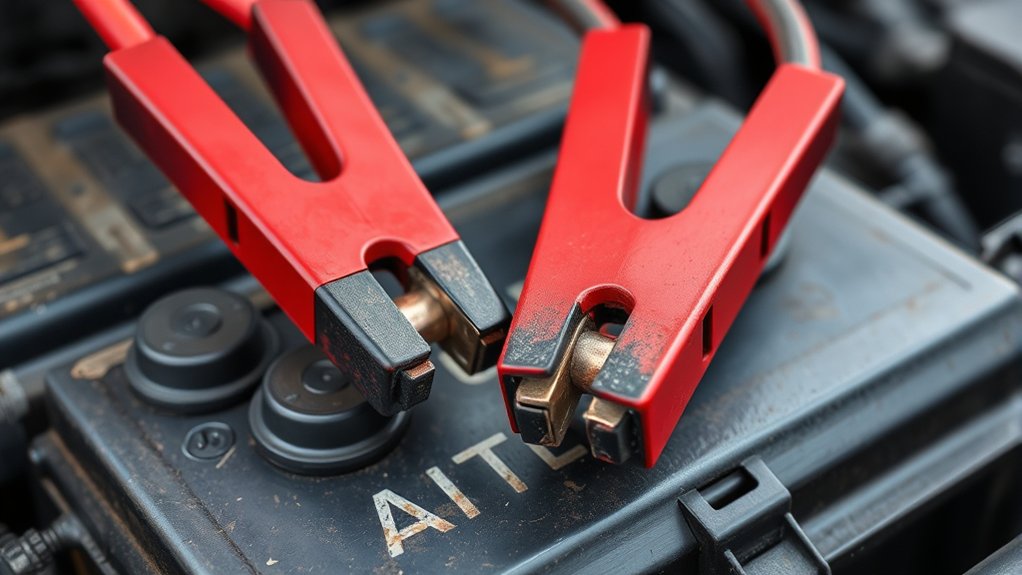
How exactly do jumper cables work to jump-start a battery? You rely on jump starting physics, where the cables act as conductors connecting a charged battery to a depleted one. This connection allows electrons to flow, providing the necessary current to power the dead battery’s starter motor.
However, conductor limitations play a crucial role; the cable’s thickness and material determine how much current it can safely carry without excessive resistance or heat buildup. If the cables are too thin or damaged, they won’t deliver sufficient current, failing to start the engine.
Jump-Starting vs. Charging a Battery
Understanding the difference between jump-starting and charging a battery is essential for proper vehicle maintenance. When you use jumper cables, you’re temporarily providing the dead battery with enough power to start the engine. This process bypasses the battery’s current charge state but doesn’t replenish its capacity.
Jump-starting supplies temporary power to start the engine but doesn’t restore the battery’s full charge.
Charging a battery, on the other hand, involves supplying a controlled current over time to restore its energy fully.
Many charging misconceptions arise from confusing these two actions. Jump-starting isn’t a substitute for proper charging; it only gets the vehicle running briefly.
To effectively charge a battery, you need a dedicated charger that regulates voltage and current, ensuring the battery regains its full charge and avoids damage. Jumper cables facilitate starting but don’t perform the charging function.
Why Jumper Cables Can’t Fully Charge a Battery
While jumper cables provide the necessary surge of power to start a vehicle, they don’t deliver the controlled electrical flow required to replenish a battery’s charge. When you rely solely on jumper cables, you risk damaging the battery or vehicle electronics due to inconsistent current spikes, especially if you rev the engine excessively. This poses notable revving risks.
Additionally, jumper cables offer only a temporary connection; the limited time they remain connected restricts the amount of charge transferred. Unlike a dedicated charger, jumper cables lack voltage regulation and current control, preventing the battery from safely accepting a full recharge.
Therefore, jumper cables are designed for immediate power boost, not sustained charging, making them ineffective for fully restoring a depleted battery’s capacity.
Safe Methods to Charge a Battery After Jump-Starting
Where should you begin once your car starts after a jump-start? Prioritize quick safety by disconnecting the jumper cables carefully to avoid sparks or shorts. Then, focus on optimal charging to restore your battery’s capacity efficiently.
Follow these steps:
- Keep your engine running to allow the alternator to charge the battery.
- Drive for at least 20-30 minutes at highway speeds to ensure sufficient charge.
- Avoid turning off the engine abruptly; gradual engine shutdown helps stabilize battery voltage.
- Monitor the battery and electrical system for any signs of malfunction or insufficient charge.
Following these precise steps ensures your battery receives a safe, effective charge post jump-start, minimizing risks and improving longevity.
When to Use a Battery Charger Instead of Jumper Cables
How do you know when a battery charger is a better choice than jumper cables? If your dead battery repeatedly fails to start your vehicle, relying on jumper cables only provides a temporary fix.
A battery charger delivers a controlled, steady current that fully restores battery capacity, unlike jump-starting, which bypasses charging. Additionally, if you want to perform an alternator test or suspect charging system issues, using a charger allows you to isolate the battery from the vehicle’s electrical system.
This prevents misdiagnosing alternator failure when the battery is the actual problem. Use a charger when the battery is deeply discharged or when you need a thorough charge cycle. In contrast, jumper cables are best for quick emergency starts, not comprehensive battery restoration or diagnostics.
Frequently Asked Questions
Can Jumper Cables Damage My Vehicle’s Electrical System?
Yes, jumper cables can damage your vehicle’s electrical system if connected improperly. Electrical system concerns include voltage spikes or reversed polarity.
Always follow correct procedures to protect sensitive electronics and prevent costly repairs.
How Do I Properly Maintain Jumper Cables for Longevity?
Think of jumper cables as lifelines. Proper maintenance tips like cleaning clamps and checking insulation guarantee conductivity.
Adopt storage practices such as coiling cables loosely in a dry, cool place to prevent damage and extend their lifespan effectively.
Are There Different Types of Jumper Cables for Various Vehicles?
Yes, different cables suit various vehicle types. Heavier gauge cables handle larger engines or trucks, while lighter ones fit smaller cars.
Choose cables based on your vehicle’s size and battery specifications for safe, efficient jump-starting.
What Safety Gear Should I Wear When Using Jumper Cables?
You should wear safety gloves and eye protection to prevent acid burns and sparks. Also, check warranty considerations on your vehicle; improper use of jumper cables might void coverage, so follow manufacturer guidelines strictly.
Can Jumper Cables Be Used in Extreme Weather Conditions?
You shouldn’t worry about extreme weather if your jumper cables meet proper electrical compatibility standards. Ensure cables are insulated and rated for temperature extremes. Keep connections secure to maintain safe, effective performance in harsh conditions.