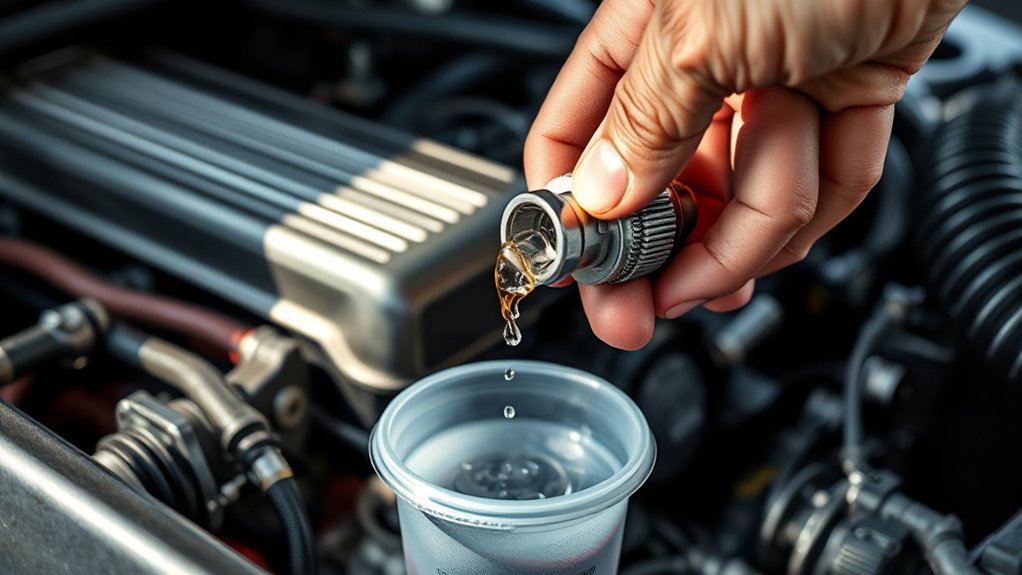
How to Bleed Coolant System
To bleed your coolant system, first ensure your engine is cool before starting the process. Remove the radiator cap carefully, then warm the engine to its normal operating temperature.
Next, open the bleed valve while adding coolant through a funnel. Allow air to escape until you no longer see bubbles coming out.
Once the air is fully bled, close the valve securely and replace the radiator cap. Monitor the temperature gauge to ensure it remains stable.
If necessary, use a pressure tester to check for leaks or trapped air. Keep following along for tips on preparation, the tools you’ll need, and how to handle common issues.
Signs Your Coolant System Needs Bleeding
How can you tell when your coolant system needs bleeding? First, monitor the temperature gauge closely. If it fluctuates abnormally or rises faster than usual, trapped air might be disrupting coolant flow.
You may also notice the heater output is inconsistent or weak, indicating air pockets restricting coolant circulation. Another sign is unusual noises, such as gurgling or sputtering sounds from the radiator or heater core, caused by air bubbles moving through the system.
Additionally, uneven engine temperature or hotspots can occur because air pockets prevent efficient heat transfer. If you experience any of these symptoms, it’s crucial to bleed the coolant system promptly to restore proper coolant flow and maintain engine temperature stability, preventing overheating and potential engine damage.
Tools and Materials Needed for Bleeding
To bleed your coolant system effectively, you’ll need a specific set of tools and materials to assure safety and efficiency. Begin with a manual pump designed for coolant extraction; this tool allows you to remove trapped air and old fluid without introducing contaminants.
A pressure tester is essential for checking the system’s integrity both before and after bleeding, ensuring no leaks compromise the process. Additionally, have a clean container ready for catching drained coolant and a funnel to refill the system without spillage.
Use gloves and safety glasses to protect yourself from hot coolant and chemicals. Finally, keep the manufacturer-recommended coolant on hand to top off the system accurately. These tools and materials will allow you to perform a thorough and safe bleeding procedure.
Preparing Your Car for Bleeding
Once you have gathered the necessary tools and safety equipment, focus on preparing your car for the bleeding process. Begin by ensuring the engine is cool to prevent burns and inaccurate readings.
Gather tools, wear safety gear, and ensure the engine is cool before starting the bleeding process.
Locate the coolant reservoir and radiator cap, removing the latter carefully. Check your vehicle’s service manual for the specified bleed sequence, as following this order is essential for effective air removal.
Consider the climate impact on your system; colder climates may require additional steps to prevent freezing during bleeding. Position your car on a level surface to facilitate proper fluid flow.
Finally, confirm that all heater controls are set to maximum heat to open the heater core valves, optimizing coolant circulation before you start bleeding. Proper preparation minimizes errors and enhances system efficiency.
How to Bleed Air From Your Coolant System
Why does bleeding air from your coolant system matter? Air pockets reduce coolant circulation, causing overheating and inefficient engine cooling.
To perform effective air removal, start by warming your engine to operating temperature with the radiator cap off, allowing trapped air to rise. Next, open the bleed valve or petcock, if available, to release air while adding coolant to maintain the proper level. Use a funnel to prevent spills.
Monitor the coolant flow until no air bubbles appear, indicating successful bleeding coolant. Close the valve securely and replace the radiator cap. Finally, run the engine and check the temperature gauge to confirm proper cooling.
Bleeding air ensures optimal coolant flow and prevents engine damage, so follow these steps carefully for safe and efficient coolant system operation.
Troubleshooting Coolant Bleeding Problems
How can you identify and resolve issues when bleeding your coolant system doesn’t go as planned? First, check for trapped air pockets that disrupt coolant flow, causing overheating or erratic temperature readings. Ensure all bleed valves are open and positioned correctly.
If coolant flow remains restricted, inspect hoses for kinks or blockages. Use a pressure tester to verify system integrity.
| Problem | Solution |
|---|---|
| Persistent air pockets | Reopen bleed valves, gently tap hoses |
| No coolant flow | Check for clogs, straighten hoses |
| Overheating engine | Confirm complete air removal |
| Coolant leaks | Tighten fittings, replace seals |
Frequently Asked Questions
How Often Should I Bleed My Coolant System?
You should check your bleed frequency every 12,000 miles or annually, ensuring efficient cooling system air removal. Always bleed after coolant replacement or overheating to maintain optimal system performance and prevent air pockets that cause overheating.
Can Bleeding the Coolant System Improve Engine Performance?
Think of your engine as a well-tuned orchestra; proper bleed procedure removes air pockets, ensuring smooth coolant flow. This debunks cooling system myths and can improve engine performance by preventing overheating and maintaining optimal temperature control.
Is It Safe to Drive Immediately After Bleeding the Coolant?
You shouldn’t drive immediately after bleeding due to bleeding dangers like trapped air causing overheating risks. Always verify no air pockets remain, coolant levels are stable, and the engine reaches operating temperature before driving to ensure safety and performance.
What Type of Coolant Is Best for My Car?
Choosing the right coolant chemistry is like picking a puzzle piece. Your hybrid engine demands a specific formula to prevent corrosion and overheating. Always consult your owner’s manual for the exact type compatible with your car’s cooling system.
Can a Professional Mechanic Perform Coolant Bleeding for Me?
Yes, a professional mechanic can perform coolant bleeding for you. They use precise tools and techniques to remove air pockets from the system, ensuring optimal coolant flow.
This process helps prevent engine overheating or damage effectively.