How to Check Coolant Level
To check your coolant level, first ensure the engine is cold and off for at least 30 minutes. This helps avoid burns and ensures accurate readings. Wear protective gloves and goggles before proceeding.
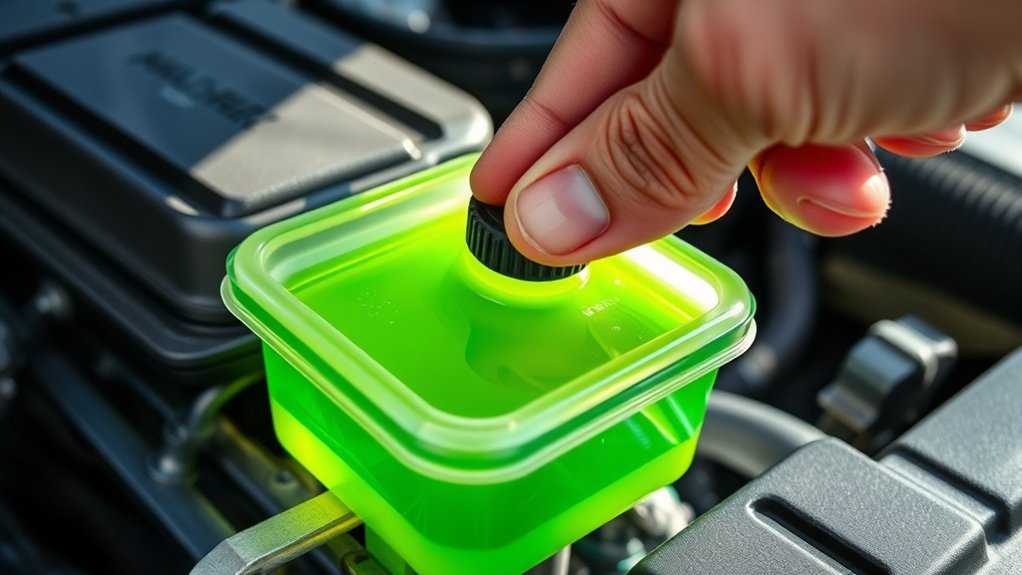
Next, locate the translucent coolant reservoir near the radiator. Inspect the fluid level to see if it is between the “MIN” and “MAX” marks. If the level is low, carefully top up with the recommended coolant type.
Following these steps helps prevent engine damage and overheating. For detailed guidance on maintenance and troubleshooting, keep exploring.
Why Your Engine Needs You to Check Coolant
Why should you regularly check your engine’s coolant level? Because proper coolant maintenance is essential for effective engine cooling. The coolant regulates your engine’s temperature, preventing overheating that can cause severe damage.
Regularly checking your engine’s coolant level is crucial for preventing overheating and protecting your engine from severe damage.
When coolant levels drop, the cooling system can’t function efficiently, leading to increased engine wear and potential failure. You need to monitor coolant levels to ensure the system maintains optimal pressure and temperature balance.
Checking coolant regularly helps you identify leaks, contamination, or degradation early. This proactive step preserves engine performance and extends its lifespan.
Neglecting coolant maintenance risks costly repairs due to overheating or corrosion inside the cooling system. Make checking your coolant level a routine task to keep your engine running smoothly and reliably.
When’s the Best Time to Check Your Coolant Level?
When should you check your coolant level to guarantee accurate readings and avoid injury? Timing is critical due to coolant chemistry and system pressure. Avoid common novice misconceptions that checking immediately after driving is safe; hot coolant expands, causing false high readings and potential burns.
Check coolant level only when the engine is cold and has been off for at least 30 minutes. This ensures pressure has dissipated, preventing dangerous spray. Coolant has settled, giving an accurate level. Temperature-sensitive coolant chemistry remains stable for correct assessment.
Which Tools Do You Need to Check Coolant Safely?
You’ll need specific tools to check your coolant safely, including protective gloves and eye protection to prevent contact with harmful fluids. A flashlight or inspection mirror helps you clearly see the coolant reservoir and its level markings. Always follow safety precautions when handling coolant to avoid burns or exposure to toxic substances.
Protective Gear Essentials
How exactly can you protect yourself while checking your vehicle’s coolant level? Prioritizing safety means equipping yourself with the right protective gear to prevent chemical exposure and burns. Always wear:
- Safety gloves made of chemical-resistant material to avoid skin contact with coolant.
- Safety goggles to shield your eyes from splashes or steam.
- Long sleeves or a protective apron to protect your arms and clothing.
These items minimize risks when handling hot or pressurized coolant. Remember, coolant contains toxic substances, so avoid direct contact. Never attempt to check or open the coolant reservoir while the engine is hot. Protective gear is your first defense, but safe timing is equally crucial. By preparing properly, you ensure a safer, more effective coolant level check.
Coolant Reservoir Inspection Tools
Wearing proper protective gear sets the foundation for a safe coolant check, but having the right tools guarantees accuracy and efficiency. To inspect the coolant reservoir effectively, you’ll need a clean flashlight to illuminate the translucent tank, enabling precise level readings.
A rag or lint-free cloth helps wipe the reservoir cap and surrounding areas, preventing contamination. Use a coolant tester or hydrometer to assess the coolant’s freeze and boil points, ensuring it meets manufacturer specifications.
Keep a notepad or digital device handy for memory recall, documenting your observations for future reference. While nutrient timing relates to biological processes, the principle of timely checks applies here: regular inspections at proper intervals optimize engine performance and safety.
These tools streamline your coolant reservoir inspection process with technical accuracy.
Safety Precautions for Handling
Why must you prioritize safety when handling tools to check coolant? Because coolant is toxic and can cause burns or environmental harm if mishandled. Always use proper tools and protective gear to avoid exposure and accidents.
Essential items include:
- Gloves and safety goggles to protect skin and eyes from splashes.
- A clean funnel or coolant tester to prevent contamination and spills.
- A secure container for proper coolant disposal, respecting disposal methods and recycling options.
After checking, never pour used coolant down drains or soil. Follow local regulations for disposal methods or take it to a recycling center.
How to Locate Your Car’s Coolant Level Reservoir
Where exactly do you find the coolant reservoir in your car? Typically, it’s a translucent plastic tank located near the radiator or along the engine bay’s side. Look for a cap labeled “coolant” or “engine coolant.”
This reservoir connects to the radiator and stores coolant that helps regulate engine temperature. The tank is designed to accommodate changes in fluid viscosity caused by temperature fluctuations, ensuring proper coolant flow.
To identify it precisely, consult your vehicle’s owner manual, which details the reservoir’s exact location. Avoid confusing it with the windshield washer fluid container; coolant reservoirs often have measurement markings labeled “MIN” and “MAX” to indicate safe fluid levels. Proper identification ensures you can accurately monitor coolant and maintain optimal engine performance.
Step-by-Step Guide to Checking Coolant
Once you’ve located the coolant reservoir, you’re ready to check the coolant level accurately. First, ensure the engine is cool to avoid injury and inaccurate readings. Next, visually inspect the reservoir’s markings, usually labeled “MIN” and “MAX.” Avoid falling for common coolant myths, such as needing to open the radiator cap when the engine is hot.
Follow these steps carefully:
- Confirm the coolant level is between the “MIN” and “MAX” marks.
- Check for discoloration or debris, which may indicate contamination.
- Use a flashlight if visibility is poor inside the reservoir.
This method prevents misinterpretation caused by radiator myths, ensuring you get reliable results without risking damage. Always handle coolant with care, as improper checking can lead to faulty diagnostics.
How to Interpret Coolant Levels
You need to compare the coolant level against the marked normal range on the reservoir. If the level falls below the minimum indicator, it signals a low coolant condition that requires immediate attention. Conversely, a coolant level above the maximum mark can indicate overfilling or other issues that may affect system performance.
Normal Coolant Range
How do you determine if your coolant level falls within the normal range? First, locate the coolant reservoir and observe the markings labeled “MIN” and “MAX.” Your coolant level should sit between these two points to ensure optimal engine performance.
Maintaining this range helps preserve proper coolant chemistry and supports accurate leak detection.
Keep these points in mind:
- Check coolant level when the engine is cold to avoid pressure-related inaccuracies.
- Ensure the coolant color remains consistent with manufacturer specifications, signaling proper coolant chemistry.
- Regularly inspect for leaks that could cause the level to drop below normal.
Low Coolant Indicators
Why does your coolant level matter beyond just staying between “MIN” and “MAX”? Low coolant can signal leaks or system inefficiencies that may cause engine overheating.
When you notice the level near or below “MIN,” inspect the coolant reservoir and hoses for cracks or drips. Don’t ignore warning lights tied to coolant temperature or check engine oil levels, as both can indicate engine stress related to cooling problems.
Just as you regularly check tire pressure to maintain vehicle performance, monitoring coolant ensures your engine runs within safe parameters. If low coolant is frequent, have the system tested for leaks or thermostat issues.
Addressing low coolant promptly prevents damage and maintains optimal engine function. Always top up with the recommended coolant type and avoid mixing fluids.
High Coolant Concerns
When should you be concerned about coolant levels rising above the “MAX” mark? Excess coolant can indicate system malfunctions or overfilling, which may cause pressure build-up and damage. You need to act promptly to avoid costly repairs.
Check for these signs:
- Engine oil contamination: Milky oil suggests coolant mixing with oil, a serious issue.
- Radiator overflow: Coolant spilling from the reservoir signals overpressure.
- Unusual tire tread wear: While unrelated directly, uneven tire tread can indicate improper vehicle maintenance, including engine cooling system neglect.
If you notice any, avoid driving and consult a mechanic immediately. Maintaining correct coolant levels protects your engine’s integrity and ensures safe, efficient performance. Regular checks, alongside monitoring engine oil and tire tread, help prevent unexpected breakdowns.
What to Do If Your Coolant Level Is Low: Steps and Safety Tips
What should you do if you find your coolant level is low? First, ensure the engine is completely cool to prevent burns from hot coolant or steam. Open the radiator cap slowly, using a cloth for protection.
Check the coolant type and verify coolant compatibility with your vehicle’s specifications before adding any fluid. Use a 50/50 mix of antifreeze and distilled water unless your vehicle requires a different ratio.
After refilling, monitor thermostat behavior; improper coolant levels can cause it to malfunction, leading to overheating. Finally, inspect for leaks that may cause low coolant levels.
If you’re unsure about the coolant type or notice persistent drops, consult a professional. Following these steps maintains engine temperature control and prevents damage.
How to Avoid Common Mistakes When Checking Coolant Level
After addressing low coolant levels safely and correctly, it’s equally important to recognize and avoid common errors during the checking process. Avoid confusing coolant level inspection with an irrelevant topic, such as checking oil or unrelated concept like tire pressure. Here are key mistakes to avoid:
Checking when the engine is hot: Always check coolant level when the engine is cold to prevent inaccurate readings and injury.
Ignoring reservoir markings: Only rely on the minimum and maximum marks on the coolant reservoir to assess levels precisely.
Opening the radiator cap improperly: Never open the radiator cap when the engine is hot to avoid burns and coolant spray.
How Often Should You Check and Refill Coolant?
How frequently should you check and refill your vehicle’s coolant to maintain optimal engine performance? You should inspect the coolant level at least once a month and before any long drive. Think of this routine like maintaining an art gallery’s climate control system; precision matters to protect valuable machinery.
Regular checks prevent overheating and corrosion, ensuring your engine operates smoothly, much like the exact calculations in space travel. Always check the coolant when the engine is cold to get accurate readings. If the level drops below the minimum mark, top it up with the recommended coolant type.
Staying consistent with this schedule helps you avoid costly repairs and extends your engine’s lifespan, maintaining optimal thermal regulation just as carefully as managing sensitive environments in an art gallery or spacecraft.
Frequently Asked Questions
What Type of Coolant Is Best for My Vehicle?
You should always choose coolant based on your vehicle’s manufacturer recommendations, ensuring coolant compatibility with your engine.
Check brand labeling carefully for specifications, and avoid mixing types to maintain optimal performance and prevent corrosion or damage.
Can Coolant Affect My Car’s Heating System?
Oh sure, your heater loves it when coolant filtration fails, clogging the system. You’ll notice poor heat because a heater core blockage restricts flow.
Regular coolant checks prevent this, ensuring your car’s heating system runs efficiently.
How Do I Know if My Coolant Is Contaminated?
You’ll know your coolant is contaminated if its color changes from bright green, orange, or pink to rusty brown or cloudy.
Look for contamination indicators like debris, oil film, or a sour smell, signaling immediate replacement.
Are There Any Symptoms of a Failing Coolant System?
You’ll notice symptom variation like engine overheating, temperature gauge spikes, or heater malfunction.
Coolant leaks often appear as puddles under your car. Address these signs quickly to prevent severe engine damage and ensure system reliability.
Can I Mix Different Brands or Colors of Coolant?
You shouldn’t mix colors or brands without checking compatibility first. Different formulations can cause chemical reactions, reducing effectiveness and damaging your system.
Always consult your vehicle manual or manufacturer to ensure proper brand compatibility before mixing coolant.