How Do Fuel Cards Work
Fuel cards let you manage fleet fuel expenses by offering specialized payment cards that integrate with fleet systems for real-time tracking of fuel volume, cost, location, and time. These cards provide a convenient way to control and monitor fuel spending across your entire fleet.
Transactions use encryption, PINs, and spend controls to prevent fraud. This ensures that only authorized purchases are made, protecting your business from unauthorized expenses.
You get detailed data to monitor per-vehicle fuel use, automate expense oversight, and optimize costs with discounts and rewards. Understanding these capabilities helps you maximize efficiency and security in your fuel management.
What Is a Fuel Card and How Does It Work?
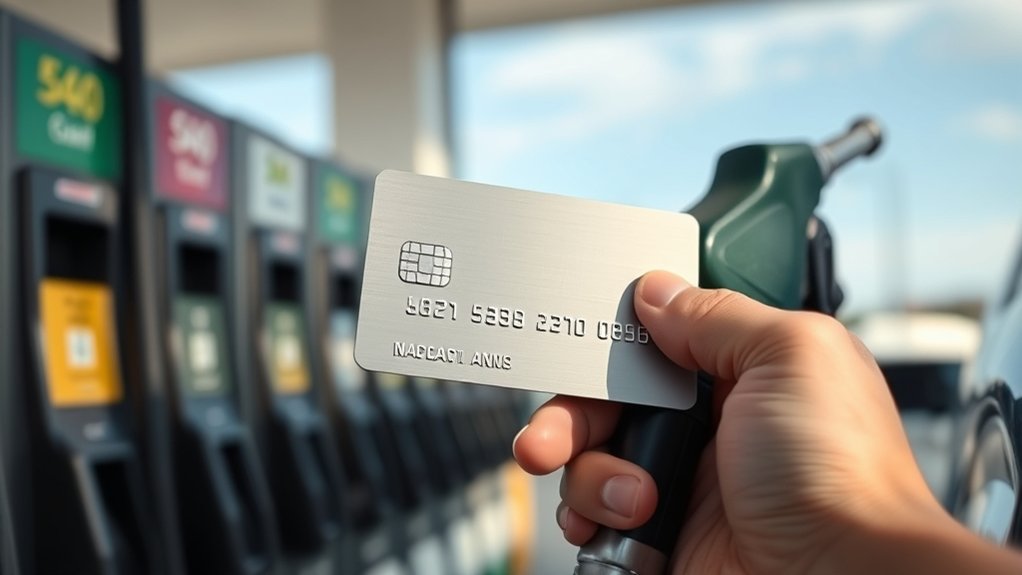
How exactly does a fuel card function within fleet management? Fuel card basics reveal that these specialized payment cards enable you to purchase fuel exclusively for fleet vehicles. They integrate with your fleet management system, allowing you to monitor and control fuel expenses in real time.
Fuel cards track fuel consumption by recording transaction data such as fuel volume, cost, location, and time. This data is transmitted electronically to your management platform, enabling precise tracking of fuel usage per vehicle. By automating fuel expense monitoring, fuel cards help reduce fraud and unauthorized purchases.
You can set consumption limits and restrict certain fuel types, enhancing operational control. Overall, fuel cards provide a data-driven method to manage fuel procurement efficiently, ensuring accurate tracking and accountability across your fleet.
Who Benefits From Fuel Cards?
If you manage a fleet of vehicles, fuel cards help you track expenses and control costs efficiently. They also benefit frequent long-distance travelers by providing access to a broad network of fuel stations and reducing out-of-pocket spending. Using fuel cards can improve operational transparency and optimize fuel purchase management for these users.
Businesses With Fleet Vehicles
Why do businesses with fleet vehicles benefit considerably from fuel cards? Fuel cards streamline fuel expense management by integrating directly with your payment systems, reducing administrative overhead by up to 30%. They provide real-time transaction data, enabling precise tracking of fuel consumption across your fleet.
This visibility supports eco friendly trucking initiatives by identifying inefficient routes or vehicles, helping you reduce carbon emissions. Additionally, fuel cards offer controls such as spending limits and authorized fuel types, minimizing fraud and unauthorized purchases.
The integration with your accounting software simplifies reconciliation, cutting manual errors by 25%. By leveraging these features, you optimize operational efficiency and cost control, making fuel cards a critical tool for managing fleet expenses systematically and sustainably.
Frequent Long-Distance Travelers
Where can frequent long-distance travelers find the most value in fuel cards? You benefit significantly by leveraging fuel cards to optimize fuel expenses, control spending, and access real-time data.
Addressing common fuel card misconceptions is crucial; many assume limited acceptance or hidden fees, but modern cards offer extensive network coverage and transparent pricing. By scrolling fuel trends and analyzing usage patterns, you can adjust routes and refueling strategies effectively.
Key advantages include:
- Access to discounted fuel rates nationwide
- Detailed transaction monitoring and reporting
- Enhanced security controls to prevent unauthorized use
- Integration with GPS and telets for route optimization
- Simplified expense management with consolidated billing
These features make fuel cards an essential tool for anyone frequently traveling long distances.
What Types of Fuel Cards Are Available?
You’ll find three main types of fuel cards designed to optimize fuel management: fleet fuel cards, corporate fuel cards, and retail fuel cards. Each type offers specific controls and reporting features tailored to different operational needs. Understanding these distinctions helps you select the most efficient solution for your fuel expenditures.
Fleet Fuel Cards
How do fleet fuel cards differ, and which type suits your operation best? Fleet fuel cards streamline payment reconciliation and enhance fleet efficiency by offering tailored controls and reporting features. You can optimize fuel management by selecting cards based on your specific needs.
Key types include:
- Branded cards: Accepted at specific fuel chains, ideal for predictable fueling locations.
- Universal cards: Offer broader acceptance, supporting diverse routes.
- Restricted cards: Limit purchases to fuel only, reducing unauthorized expenses.
- Multi-product cards: Cover fuel, maintenance, and tolls, consolidating expenses.
- Virtual cards: Provide secure, digital payment options, enhancing transaction tracking.
Choosing the right fleet fuel card depends on your operational scale, geographic coverage, and desired control level to maximize cost-efficiency and data accuracy.
Corporate Fuel Cards
Which corporate fuel card type aligns best with your company’s spending patterns and control requirements? Corporate fuel cards vary to optimize fleet management and enhance fuel efficiency by controlling expenses and tracking usage. Here’s a data-driven overview:
| Card Type | Features |
|---|---|
| Universal | Accepted at multiple fuel stations |
| Branded | Restricted to specific fuel brands |
| Fleet-Specific | Customized for fleet needs |
| Expense-Control | Spending limits & detailed reports |
| Integrated | Syncs with fleet management software |
Choosing the right card lets you monitor fuel consumption, enforce spending policies, and improve fuel efficiency. Cards integrated with fleet management platforms provide real-time data, enabling precise cost control and operational insights.
Evaluate your fleet size, fuel usage patterns, and required control levels to select the optimal corporate fuel card for your business.
Retail Fuel Cards
Where can you use retail fuel cards, and what options are available? Retail fuel cards primarily operate through extensive retail programs and loyalty partnerships, giving you access to a wide network of fueling stations. These cards allow you to manage fuel expenses efficiently while benefiting from negotiated discounts and rewards.
Common types of retail fuel cards include:
- Single-brand cards tied to specific fuel retailers
- Multi-brand cards providing access across various networks
- Fleet-focused cards with integrated expense tracking
- Prepaid fuel cards for controlled budgeting
- Loyalty program cards offering points or cashback incentives
How Do Fuel Cards Help Control Your Fuel Spending?
Numerous businesses rely on fuel cards to monitor and regulate their fuel expenses with accuracy. You can implement cost controls by setting spending limits and restricting fuel types, ensuring drivers only purchase authorized items.
Spend tracking is streamlined through detailed transaction reports, enabling you to analyze fuel usage patterns and identify anomalies quickly. This data-driven approach helps reduce unauthorized purchases and optimize budget allocation.
| Feature | Benefit | Impact on Spending |
|---|---|---|
| Spending Limits | Caps on fuel expenses | Prevents overspending |
| Transaction Data | Detailed fuel use reports | Enhances transparency |
| Fuel Type Control | Restricts fuel purchases | Avoids non-fuel expenses |
| Real-time Alerts | Immediate notifications | Enables prompt action |
Fuel cards empower you with precise control over fuel costs through actionable analytics and enforced policies.
How Do Discounts and Rewards Work With Fuel Cards?
Beyond controlling expenses, fuel cards also offer opportunities to reduce overall costs through discounts and rewards programs. Understanding the discount mechanics and reward structures helps you maximize savings efficiently. Discounts typically apply as per-gallon price reductions or percentage-off deals, directly lowering your fuel expenses at the pump.
Rewards programs accumulate points based on fuel volume or purchase frequency, which you can redeem for cash back, gift cards, or service discounts.
Key discount and reward features include:
- Tiered discount rates based on monthly fuel consumption
- Point accrual per gallon or dollar spent
- Redemption options tailored to fleet needs
- Time-limited promotional bonuses enhancing reward value
- Integration with fleet management software for tracking
These data-driven incentives optimize your operational costs while maintaining accountability.
How Do Fuel Cards Keep Your Transactions Secure?
How exactly do fuel cards protect your transactions from fraud and unauthorized use? Fuel cards rely on advanced card network encryption protocols to secure transactions at the point of sale. This encryption scrambles your card data, making it unreadable to potential interceptors during transmission.
Additionally, fuel cards often incorporate multi-factor authentication and PIN verification, ensuring only authorized users can complete purchases. Real-time transaction monitoring uses data analytics to flag unusual spending patterns, enabling rapid fraud detection and prevention.
Moreover, many fuel card programs allow you to set spend limits and restrict usage by time, location, or fuel type, further reducing risk. Through these integrated security measures, fuel cards maintain secure transactions, minimizing exposure to fraud and unauthorized access while providing you with controlled, traceable fuel expenses.
How Do You Choose the Right Fuel Card?
Securing your fuel transactions is only part of the equation; selecting a fuel card that aligns with your specific operational needs optimizes both control and cost-efficiency. When choosing a card, you need to analyze your fleet size, fuel consumption patterns, and preferred fuel networks.
Balancing perks such as discounts, rebates, and reporting tools against fees and acceptance constraints ensures you maximize value without hidden costs. Consider these critical factors:
Weigh discounts, fees, and acceptance carefully to optimize value and avoid unexpected expenses.
- Network coverage relative to your routes
- Fee structures, including monthly and per-transaction charges
- Integration capabilities with your existing fleet management software
- Detailed reporting for expense tracking and fraud prevention
- Rewards and discounts aligned with your fuel usage volume
Frequently Asked Questions
Can Fuel Cards Be Used for Non-Fuel Purchases?
You can use fuel cards for non fuel purchases only if your card provider allows transactions outside fuel merchant categories. Restrictions often apply, so check your card’s terms for permitted non merchant categories and spending limits.
Are There Fees Associated With Fuel Card Usage?
Yes, you’ll encounter fees and surcharges depending on the provider. Fuel card vs. fleet card fees vary; fleet cards often include maintenance costs, while fuel cards focus mainly on fuel transactions.
Review terms carefully for precise data.
How Quickly Are Fuel Card Transactions Processed?
As your card swipes, fast transaction times kick in, often within seconds, thanks to offline processing that verifies data without delay. This ensures swift authorizations even in low connectivity, keeping your fuel stops efficient and uninterrupted.
Can Fuel Cards Be Used Internationally?
Yes, you can use fuel cards internationally, but international limits often apply. Managing cross-border logistics requires ensuring your card supports foreign transactions and complies with regional restrictions to avoid declined transactions or additional fees.
What Happens if a Fuel Card Is Lost or Stolen?
Like a security alarm, lost or stolen card protocols trigger immediate deactivation to prevent misuse. You’ll follow verification steps, then receive a replacement within 3-7 business days, ensuring minimal disruption to your fuel purchasing operations.
Conclusion
A fuel card acts like a key, unlocking control and savings on your fuel expenses. By choosing the right card, you harness precise data to monitor spending, secure transactions, and access targeted discounts. This tool transforms fuel management from guesswork into a streamlined process, empowering you to drive efficiency and reduce costs.
Embrace fuel cards as your navigation system in the complex journey of fuel budgeting and operational control. Ultimately, understanding how fuel cards work can make all the difference in optimizing your fuel expenses and operational efficiency.