How to Remove Tonneau Cover Rails
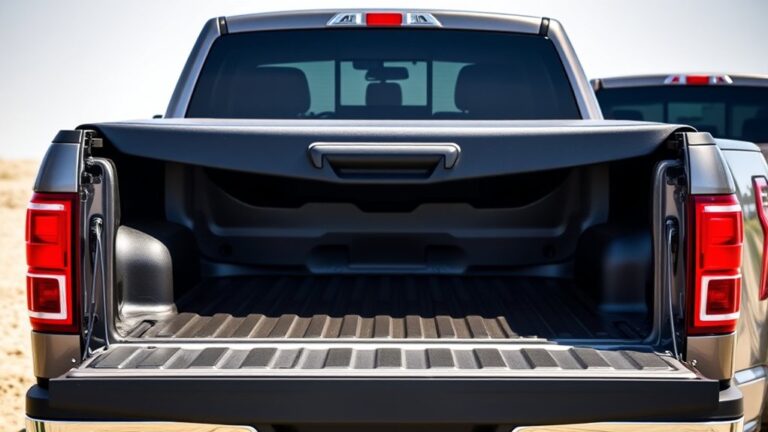
To remove tonneau cover rails, first gather tools like screwdrivers, an adjustable wrench, and a flashlight. Clear your truck bed and inspect it for any damage. Identifying your rail type—clamp-on, bolt-on, or rail-less—is essential before proceeding.
Carefully loosen clamps or bolts without damaging seals or paint. Keep all hardware organized and handle the rails gently to preserve mounting points.
After removal, clean and dry the truck bed thoroughly to prevent rust. Following the right process ensures safe removal and prepares you to explore upgrading or reinstalling options.
Gather Tools to Remove Tonneau Cover Rails
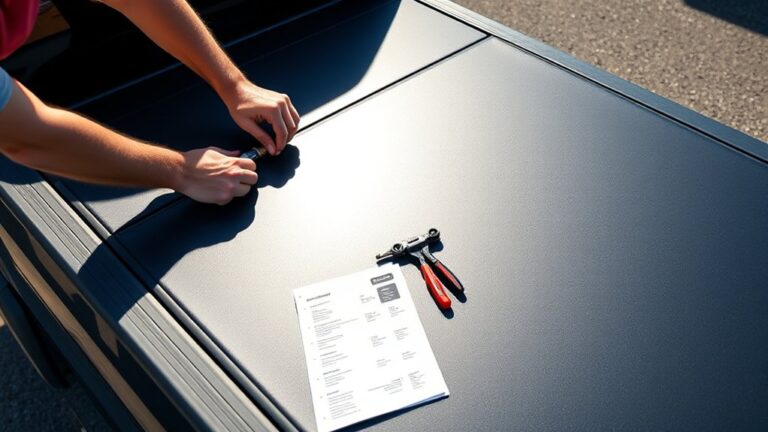
Before you begin removing the tonneau cover rails, gather all necessary tools to guarantee a smooth process. You’ll need a set of screwdrivers, both Phillips and flathead, since rail attachments vary. Include an adjustable wrench and socket set to handle bolts securely.
Avoid distractions or off topic ideas like unrelated topic discussions during this preparation phase; focus strictly on tool assembly. Have a flashlight handy to inspect hidden fasteners, and keep a magnetic tray nearby to prevent losing screws.
Don’t overlook safety gear such as gloves and safety glasses to protect your hands and eyes. By collecting these tools first, you eliminate delays and maintain workflow efficiency. Skipping this step can lead to interruptions and frustration, so stay on task with the right equipment before starting rail removal.
Prepare Your Truck Bed for Rail Removal
A clean and clear truck bed provides optimal access for removing tonneau cover rails. Begin by removing debris, tools, or any unrelated topic items that might obstruct your workspace. Avoid off topic distractions to maintain focus.
Clear the bed thoroughly to prevent damage or interference during rail removal. Inspect the bed for any damage or rust that could affect rail detachment. Use a damp cloth to wipe surfaces clean.
Here’s a quick checklist:
| Step | Action |
|---|---|
| 1 | Remove loose items |
| 2 | Clear dirt and debris |
| 3 | Inspect bed condition |
| 4 | Wipe down surfaces |
| 5 | Organize tools nearby |
Avoid stray thoughts or irrelevant concepts during preparation to keep the process efficient and safe.
Remove Different Types of Tonneau Cover Rails
How do you approach removing different types of tonneau cover rails? Each rail system varies, so you’ll need to adjust your method accordingly to avoid damage or complications.
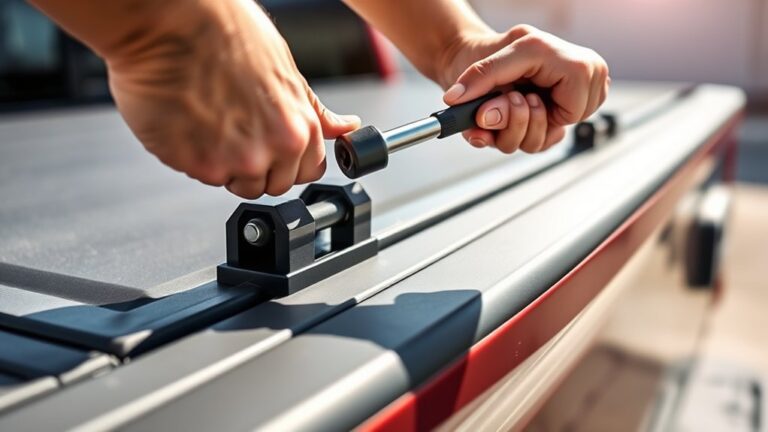
- Clamp-On Rails: Loosen the clamps carefully to avoid harming your truck bed or any chrome accessories. Use a wrench to undo bolts, then slide rails off.
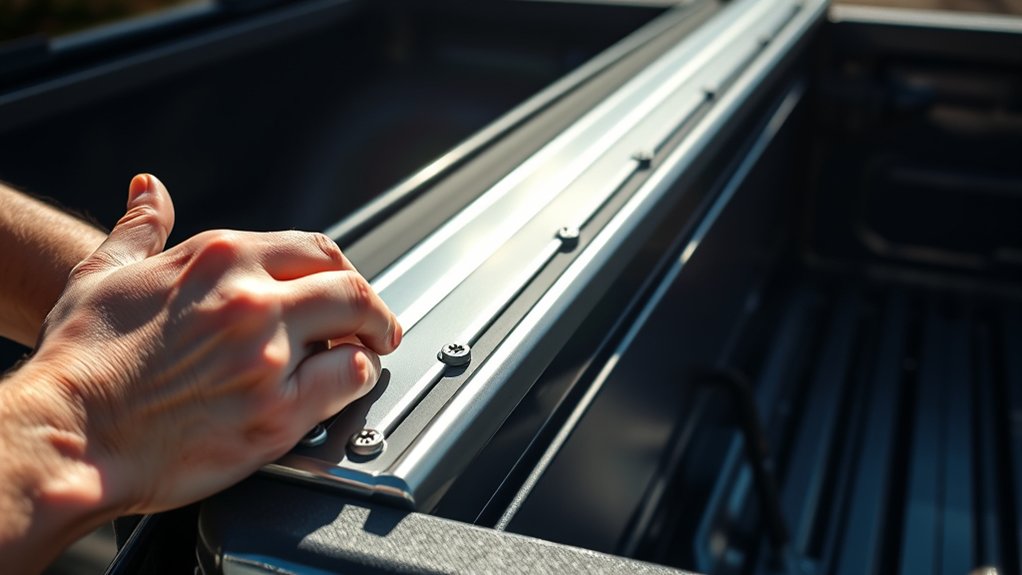
- Bolt-On Rails: Remove bolts with a socket wrench. Keep battery installation wires clear if rails are near electrical components to prevent shorts.
- Rail-less Systems: These secure directly to the bed with minimal hardware. Gently pry rails free after removing fasteners, ensuring no clips or seals are broken.
Familiarize yourself with your rail type before starting to ensure a smooth, damage-free removal process.
Follow Step-by-Step Removal Instructions
You’ll need specific tools like screwdrivers or wrenches to safely remove the rails. Follow each step carefully to avoid damaging your truck or the cover. This process ensures a clean, efficient removal with minimal effort.
Necessary Tools Overview
Which tools do you need to remove tonneau cover rails efficiently? Ensuring tools compatibility is critical to avoid damage and simplify the process. You’ll want to select tools that fit the specific fasteners used in your tonneau cover’s alternative mounting system.
Typically, you’ll need:
- Socket wrench set to handle bolts securing the rails; choose sizes matching your hardware.
- Screwdrivers (Phillips and flathead) for clips or screws that hold trim or brackets.
- Trim removal tool to safely pry off plastic components without scratching surfaces.
Using these tools correctly guarantees a smooth removal without harming the truck bed or rails. Avoid improvising with incompatible tools, as they may strip fasteners or damage mounting points, complicating reinstallation or replacement.
Stepwise Removal Process
Before starting the removal, ensure all necessary tools are at hand and properly fitted to the fasteners on your tonneau cover rails. Begin by loosening the clamps or bolts securing the rails to the truck bed. Use consistent pressure to avoid stripping screws.
Next, carefully detach the rails from the mounting brackets, ensuring you don’t damage the sealant or paint. As you proceed, keep track of hardware for reinstallation or disposal. The relevant discussion here involves handling weather stripping carefully to maintain its integrity.
Finally, lift the rails off, inspecting for any hidden clips or connectors. Following this stepwise removal process ensures a smooth, damage-free detachment. These two word ideas “stepwise removal” highlight the importance of order and precision throughout the procedure.
Avoid Damage When Removing Tonneau Cover Rails
How can you prevent scratches and warping when removing tonneau cover rails? To protect your truck bed and cover, you need a careful approach that avoids unnecessary force or improper tools. Think of it like managing short term financing; you want to avoid costly mistakes by planning ahead. Similarly, just as plant based diets require precise balance, removing rails demands precision to maintain integrity.
Follow these steps to avoid damage:
- Use soft protective padding between tools and surfaces to prevent scratching.
- Apply even pressure when loosening fasteners to avoid bending or warping the rails.
- Keep components organized and handle them gently to prevent dents or misalignment.
This methodical care ensures your rails stay intact and your truck remains pristine.
Fix Stuck or Hard-to-Remove Tonneau Cover Rails
If your tonneau cover rails are stuck, start by identifying common issues like corrosion or debris buildup. Use appropriate lubricants to loosen tight spots without damaging the rails. Then, apply gentle tools to carefully pry the rails free without causing harm.
Identify Common Rail Issues
Why do tonneau cover rails sometimes get stuck or become difficult to remove? It often comes down to structural and environmental factors affecting the rails and mounting hardware.
When identifying rail corrosion, focus on rust buildup that can fuse components together. Inspecting mounting brackets is crucial since bent or damaged brackets will obstruct smooth rail removal. Common issues include:
- Corrosion along the rail edges and attachment points, causing rigidity.
- Warped or misaligned mounting brackets preventing proper disengagement.
- Accumulated dirt and debris in track grooves locking the rails in place.
Use Proper Lubrication Techniques
A well-applied lubricant can considerably ease the removal of stuck tonneau cover rails by reducing friction and loosening debris buildup. To follow lubrication best practices, choose a lubricant designed for metal and plastic components, such as a silicone-based or lithium grease.
Apply it sparingly along the rail edges and sliding mechanisms, ensuring even coverage without excess buildup that could attract dirt. Allow the lubricant to penetrate for several minutes before attempting removal.
Incorporate lubrication into your maintenance scheduling, treating rails at least twice a year or after exposure to harsh weather. Regular lubrication prevents corrosion and seizing, simplifying future removal tasks.
Avoid over-lubricating, which can cause grime accumulation and impair function. Using proper lubrication techniques extends the lifespan of your tonneau cover rails and ensures a smoother removal process.
Apply Gentle Removal Tools
How can you safely free tonneau cover rails that won’t budge despite lubrication? Use gentle removal tools designed for delicate automotive parts to avoid damage. Ensure tool compatibility with the rail material to prevent scratches or deformation.
Follow these steps:
- Select plastic or nylon pry tools that won’t mar the rail surface.
- Insert the tool carefully between the rail and truck bed, applying steady, controlled pressure.
- Gradually work along the rail’s length, easing it free without forcing or twisting.
Avoid metal tools unless specifically recommended, as they can damage the rails. Prioritize gentle removal to preserve the integrity of mounting points and surrounding paint. Proper tool compatibility ensures effective leverage while minimizing risks during stubborn rail removal.
Clean and Maintain Your Truck Bed After Removing Rails
When was the last time you thoroughly cleaned your truck bed? After removing tonneau cover rails, it’s essential to eliminate all cleaning residue to prevent rust and corrosion. Start by washing the bed with a mild detergent and rinsing thoroughly.
Dry it completely to avoid moisture buildup, which accelerates rust. Inspect the bed for scratches or exposed metal; apply a rust prevention spray or touch-up paint as needed.
| Step | Tool/Material | Purpose |
|---|---|---|
| Wash | Mild detergent | Remove dirt, residue |
| Dry | Microfiber cloth | Prevent moisture |
| Inspect & Treat | Rust spray/paint | Protect exposed metal |
Maintaining a clean, dry truck bed extends its lifespan and ensures peak performance after rail removal.
Store or Dispose of Old Tonneau Cover Rails
What should you do with old tonneau cover rails after removal? You have two main paths: storage or disposal. Consider storage ideas if you plan to reuse or sell the rails. Otherwise, evaluate disposal options to avoid clutter.
Here are three practical steps:
- Storage Ideas: Clean the rails, wrap them in protective material, and store in a dry, accessible location to prevent damage.
- Donation or Sale: If rails are in good condition, donate to local automotive shops or list them online for resale.
- Disposal Options: Check with local waste management for metal recycling programs or follow hazardous waste guidelines if applicable.
Choosing the right approach ensures efficient use of space and environmentally responsible handling of your old tonneau cover rails.
Upgrade or Reinstall New Tonneau Cover Rails
After clearing out your old tonneau cover rails, you can focus on upgrading or reinstalling new ones to enhance your truck bed’s protection and functionality. Explore compatible rail options to ensure a precise fit.
Consider alternatives for rails that offer improved durability, easier installation, or enhanced weather resistance. Measure your truck bed carefully, and verify compatibility with your tonneau cover model.
| Feature | Compatible Rail Options | Alternatives for Rails |
|---|---|---|
| Material | Aluminum, Steel | Composite, Reinforced Plastic |
| Installation Method | Clamp-On, Bolt-On | Magnetic, Adhesive Mount |
| Weather Resistance | Powder-Coated, Anodized | Rubber Sealed, UV-Resistant |
| Cost | $$ | $ to $$$ |
Choose rails that match your usage needs and budget for optimal performance.
Frequently Asked Questions
Can Tonneau Cover Rails Improve My Truck’s Fuel Efficiency?
You might see minor aerodynamic savings from tonneau cover rails, but don’t believe fuel economy myths. They rarely improve your truck’s fuel efficiency substantially. Real gains depend on overall vehicle design and driving conditions.
Are Tonneau Cover Rails Compatible With All Truck Models?
About 70% of trucks have tonneau cover rails compatible with their models, but you’ll want to review discussion ideas on packaging compatibility carefully.
Always check specific model specs to ensure proper fit and function.
How Long Does It Typically Take to Install New Rails?
You’ll typically spend 30 to 60 minutes on new rails installation, depending on your truck model and tools. Proper installation ensures a tight fit, which minimizes drag and helps maintain your fuel efficiency impact.
Can I Paint Tonneau Cover Rails to Match My Truck Color?
Of course, you can paint tonneau cover rails to match your truck, assuming you enjoy extra install time and the challenge of ensuring paint compatibility with metal and weather exposure.
Proper prep and curing are essential for lasting results.
Do Tonneau Cover Rails Affect My Truck’s Resale Value?
Tonneau cover rails have minimal resale impact unless damaged or poorly maintained. They slightly improve fuel efficiency by reducing drag, which can be a selling point.
Keep them clean and intact to preserve your truck’s value.
Conclusion
Removing your tonneau cover rails doesn’t have to feel like defusing a bomb—just follow the right steps with care. Gather your tools, prepare your truck bed, and tackle each rail type methodically. Avoid damage by working patiently, and don’t let stuck rails hold you hostage.
Once removed, clean and maintain your bed to keep it in top shape. Whether you’re upgrading or reinstalling, precision and patience are your best allies.
Remember, proper technique is key when you remove tonneau cover rails to ensure a smooth and damage-free process.