How to Change Fuel Filter Diesel
To change your diesel fuel filter, start by gathering the correct replacement filter, wrench set, drain pan, gloves, and safety goggles. Working in a well-ventilated area is important, so wear protective gear to stay safe.
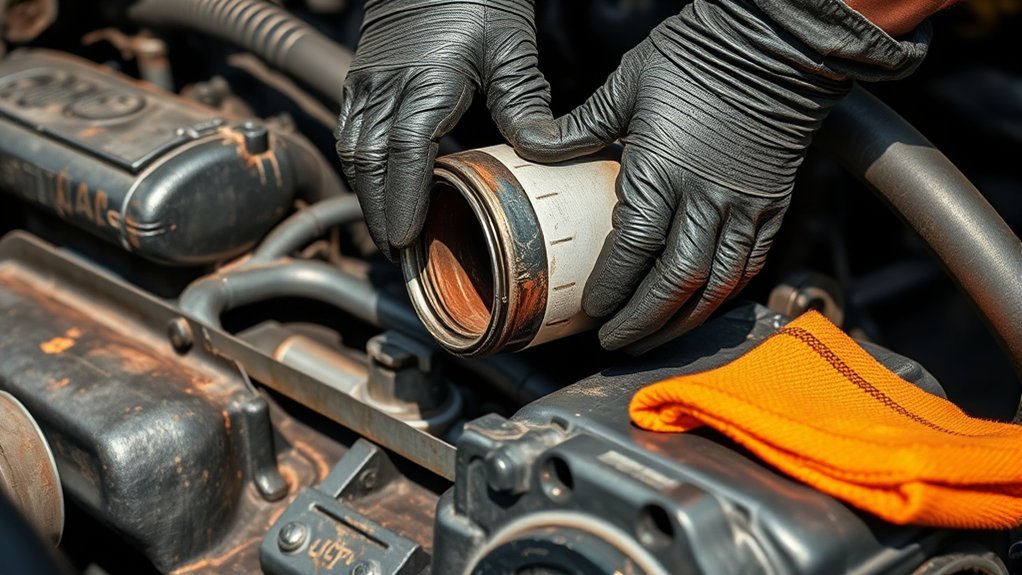
Loosen the filter housing bolts carefully, then drain any fuel into the pan. Remove the old filter once all fuel is drained.
Install the new filter that matches your engine specifications. After installation, perform the essential bleeding procedure by loosening the bleed screw to expel air until fuel flows steadily.
Following these proper steps keeps your diesel fuel system safe and efficient. Explore further for detailed maintenance and troubleshooting tips.
Identifying When Your Diesel Fuel Filter Needs Changing
How do you know when your diesel fuel filter needs changing? Start by identifying signs such as reduced engine performance, difficulty starting, or unusual engine noises. These often indicate fuel flow restriction.
Look for reduced engine performance, difficulty starting, or unusual noises as signs your diesel fuel filter needs changing.
Another key indicator is the presence of contaminants or water in the fuel, which can be traced back to fuel quality issues. If you notice black smoke from the exhaust or decreased fuel efficiency, these symptoms also signal a clogged filter.
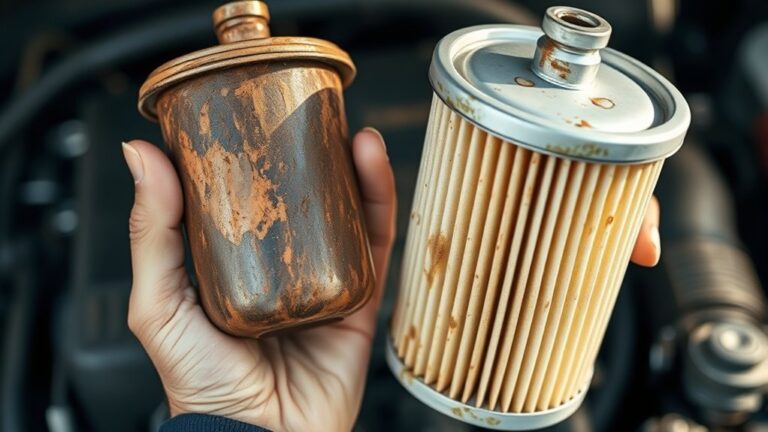
Regularly inspect the filter for visible dirt accumulation or discoloration. Monitoring the filter’s condition helps prevent damage to the fuel injection system.
Addressing these identifying signs promptly ensures optimal engine performance and longevity by maintaining proper fuel flow and quality.
What Tools and Parts You’ll Need for Diesel Fuel Filter Replacement
You’ll need a specific set of tools, including wrenches and a fuel line disconnect tool, to handle the diesel fuel filter replacement efficiently. Selecting the correct filter for your engine model assures proper fit and performance. Don’t forget safety gear like gloves and eye protection to prevent exposure to diesel and fuel system components.
Essential Tools Checklist
What tools and parts do you need to replace a diesel fuel filter efficiently? First, ensure you have the correct replacement filter matching the required filter material specified by your vehicle’s manufacturer, considering the recommended change interval.
Next, gather the following essential tools:
- Wrench set to loosen and tighten filter housing bolts securely without damage.
- Drain pan to catch diesel fuel draining during removal, preventing spills.
- Clean rags and gloves to keep the work area and your hands clean, avoiding contamination.
Having these ready will streamline the replacement process, maintain fuel system integrity, and ensure optimal filter performance. Avoid skipping any tool to prevent procedural delays or improper installation.
Choosing The Right Filter
Selecting the correct diesel fuel filter is essential to maintain engine efficiency and prevent contaminants from damaging fuel injectors. When choosing filters, consider compatibility with your engine model, filtration rating, and environmental impact.
Using the wrong filter can reduce performance and increase emissions.
Here’s a quick reference for selecting filters:
| Filter Type | Filtration Rating (Microns) | Environment Impact |
|---|---|---|
| Standard | 10-30 | Moderate waste |
| High-Efficiency | 2-10 | Lower emissions, recyclable |
| Water Separator | N/A | Prevents water contamination |
Choose a filter that balances fine filtration with sustainable disposal options to minimize environmental harm while ensuring optimal diesel engine function.
Safety Gear Requirements
How should you prepare to safely replace a diesel fuel filter? Prioritizing safety gear and protective equipment is essential to prevent injury and contamination. You’ll need to wear gloves resistant to fuel, safety goggles to protect your eyes from splashes, and a long-sleeve shirt to minimize skin exposure.
Here’s a practical checklist:
- Nitrile or chemical-resistant gloves to shield your hands from diesel and contaminants.
- Safety goggles to prevent fuel from splashing into your eyes during removal or installation.
- Protective clothing such as long sleeves or a mechanic’s coverall to protect your skin from fuel exposure.
Equipping yourself with appropriate safety gear ensures a safer, more efficient diesel fuel filter replacement process.
How to Change Your Diesel Fuel Filter Safely (Including Bleeding)
Before you start, make sure you wear protective gloves and eye protection to avoid contact with diesel fuel. After removing the old filter, properly bleed the system to eliminate air pockets that can cause engine issues. Following these safety steps ensures a smooth, effective fuel filter replacement.
Safety Precautions Overview
Why must you prioritize safety when changing a diesel fuel filter? Diesel fuel is flammable and handling it improperly exposes you to safety hazards and environmental impact. Taking precautions minimizes risks and ensures a secure working environment.
Follow these key safety steps:
- Wear protective gear: gloves and safety goggles shield you from fuel splashes and harmful fumes.
- Work in a well-ventilated area: this prevents inhalation of diesel vapors and reduces fire risk.
- Contain and dispose of used fuel and filters properly: avoid spills and environmental contamination by using approved containers and following local disposal regulations.
Fuel Filter Bleeding Steps
After taking the necessary safety precautions, you’re ready to focus on the fuel filter bleeding process. Start by locating the bleed screw on the fuel filter housing. Loosen it slightly to allow trapped air to escape without fully removing it.
Next, use the manual primer pump or crank the engine to push fresh diesel through the fuel system. Continue pumping until you see a steady stream of fuel without air bubbles, indicating that the system is properly bled.
Tighten the bleed screw securely to prevent leaks. This step is critical for clog prevention, as air pockets can cause fuel starvation and damage injectors.
Always check for leaks afterward and ensure the engine runs smoothly before completing the task. Proper bleeding maintains optimal fuel flow and system reliability.
Tips to Maintain Your Diesel Fuel Filter Longer
Maintaining your diesel fuel filter requires regular attention to prevent clogging and ensure peak engine performance. To extend its lifespan and optimize fuel economy, follow these tips:
- Use High-Quality Fuel: Avoid contaminants by choosing reputable fuel sources. Keep in mind, biodiesel risks include increased microbial growth, so treat biodiesel blends with appropriate additives to minimize filter clogging.
- Drain Water Regularly: Water separation is crucial since excess moisture accelerates corrosion and filter blockage. Drain the water trap frequently to maintain filter efficiency.
- Inspect and Replace Timely: Check the filter condition during routine maintenance. Replace it according to manufacturer guidelines or sooner if performance drops, ensuring uninterrupted fuel flow and engine reliability.
Troubleshooting Diesel Fuel Filter Problems
A clogged or malfunctioning diesel fuel filter can cause a range of engine issues, from reduced power to stalling. You need to closely monitor symptoms like unusual diesel expansion in the fuel lines or erratic fuel injector timing, which often indicate filter problems.
Begin troubleshooting by checking for contaminants or water buildup inside the filter. Ensure the fuel system is properly bled to avoid airlocks affecting injector timing.
| Symptom | Possible Cause |
|---|---|
| Engine power loss | Restricted fuel flow |
| Rough idling | Air in fuel lines |
| Hard starting | Water in fuel filter |
When to Seek Professional Help for Diesel Fuel Filter Issues
How do you know when diesel fuel filter issues require professional attention? Avoid wasting time on irrelevant topic or unrelated discussion; focus on clear signs demanding expert help.
You should seek professional service if you encounter:
- Persistent engine hesitation or stalling after multiple filter replacements, indicating deeper fuel system problems.
- Visible fuel leaks or damage to fuel lines and filter housing, which require specialized tools and skills to fix safely.
- Repeated clogging despite using quality fuel, suggesting contamination beyond the filter or pump failure.
Attempting complex repairs without proper expertise risks further damage. When these conditions arise, entrust the diagnosis and repair to a qualified diesel mechanic to ensure system reliability and avoid costly mistakes.
Frequently Asked Questions
Can Using the Wrong Fuel Filter Harm My Diesel Engine?
Yes, using the wrong filter can harm your diesel engine by causing poor fuel compatibility, leading to clogging, reduced flow, and contamination.
Always use the specified fuel filter to ensure optimal performance and protect your engine components.
How Often Do Diesel Fuel Filters Vary by Vehicle Type?
Diesel fuel filter replacement intervals vary by vehicle type due to different filtration requirements and fuel quality. You’ll need to follow manufacturer guidelines closely, as some engines demand more frequent changes for ideal performance and protection.
Are Aftermarket Fuel Filters as Effective as OEM Filters?
When it comes to aftermarket vs OEM, you shouldn’t put all your eggs in one basket. OEM filters usually offer better reliability and filter warranty considerations.
Aftermarket options vary, so choose carefully to avoid engine damage or voided warranties.
What Environmental Impact Does Disposing of Diesel Fuel Filters Have?
You must handle diesel fuel filter environmental disposal carefully, as improper disposal contaminates soil and water. Always use designated recycling streams to separate hazardous components, ensuring safe processing and minimizing environmental harm in compliance with regulations.
Can Additives Affect the Lifespan of a Diesel Fuel Filter?
Imagine your diesel filter as a sponge. Additives can either strengthen or degrade it. You’ll want to ensure additive compatibility with your filter material choices to avoid premature wear and extend your filter’s efficient lifespan practically and precisely.
Conclusion
Changing your diesel fuel filter keeps your engine running smoothly, prevents costly damage, and improves fuel efficiency. You’ll save time by spotting problems early, save money by doing it yourself safely, and save stress by maintaining your vehicle properly.
Follow the steps carefully, use the right tools, and don’t hesitate to seek professional help when needed. Stay proactive, stay precise, and keep your diesel engine performing at its best. Remember, regularly changing your diesel fuel filter is key to ensuring optimal engine health and performance.