Are Honda Cvt Transmissions Reliable
You can count on Honda CVT transmissions for reliable, smooth, and efficient performance if you maintain proper fluid levels and monitor belt tension.
Honda CVTs use variable-diameter pulleys and a steel belt to provide seamless ratio changes, enhancing fuel economy and reducing shifting friction.
While overheating and belt wear are potential concerns under heavy loads, regular maintenance minimizes these risks.
Understanding how Honda CVTs differ from traditional automatics and their specific reliability nuances will help you make an informed decision.
Key Takeaways
- Honda CVTs generally offer reliable performance with smooth acceleration and improved fuel efficiency when properly maintained.
- Common reliability issues include rare belt or pulley wear, overheating, and occasional hesitation under heavy loads.
- Proper CVT fluid maintenance and timely software updates are crucial to ensure transmission longevity and prevent failures.
- Compared to traditional automatics, Honda CVTs have unique wear patterns but benefit from fewer complex mechanical parts.
- Overall, Honda CVTs balance low maintenance costs and strong resale value, making them a practical choice for many owners.
What Is a Honda CVT and How It Works
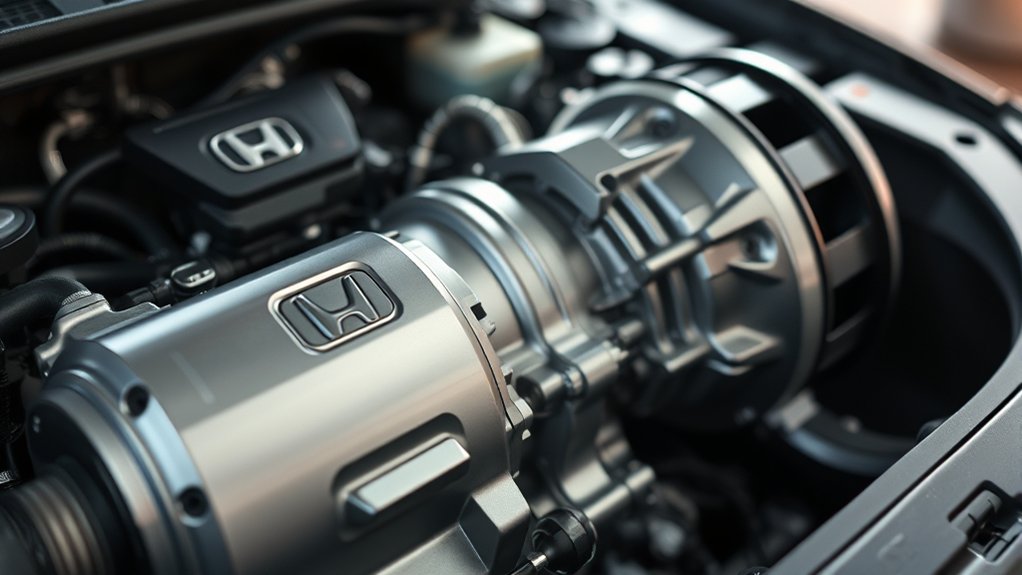
How does a Honda CVT differ from traditional transmissions? Unlike conventional gearboxes, a Honda CVT uses a system of variable-diameter pulleys connected by a steel belt. This design eliminates fixed gear ratios, allowing seamless adjustments for optimal engine performance and fuel efficiency.
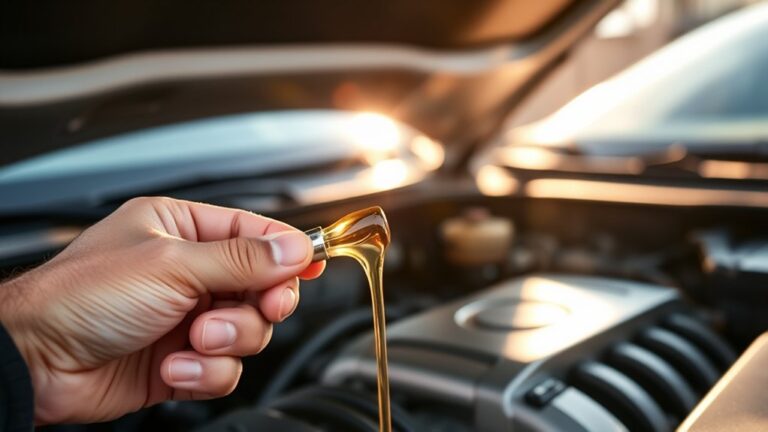
You’ll notice that maintaining proper CVT lubrication is critical because it reduces friction and dissipates heat, ensuring the belt and pulleys operate smoothly. Additionally, precise control of belt tension is vital; too much tension accelerates wear, while too little causes slippage.
Honda’s engineering balances these factors to enhance durability and performance. Understanding this mechanism clarifies why CVTs deliver a smoother, more efficient driving experience compared to traditional stepped transmissions, due to continuous ratio changes rather than discrete gear shifts.
Common Honda CVT Reliability Issues
Why do some Honda CVTs experience reliability problems despite advanced engineering? While Honda’s CVTs are designed for smooth operation and optimal fuel economy, certain issues can arise, impacting performance and longevity.
You might notice a rare noise indicating belt or pulley wear, which can escalate if ignored. Additionally, overheating under heavy loads may degrade transmission fluid, reducing efficiency and lifespan.
Some users report hesitation during acceleration, often tied to software calibration or mechanical stress.
Here are three common concerns:
- Rare noise from the transmission signaling mechanical wear.
- Reduced fuel economy due to slipping or improper belt tension.
- Overheating and fluid degradation affecting durability.
Understanding these issues helps you maintain your Honda CVT proactively and avoid costly repairs.
How Honda CVTs Compare to Traditional Automatics
What sets Honda CVTs apart from traditional automatic transmissions lies in their mechanical design and operational efficiency. Unlike the fixed-gear ratios in traditional automatics, Honda’s CVTs use a belt and variable-diameter pulleys to provide a continuously variable ratio, optimizing engine speed and fuel economy.
When you evaluate reliability, comparing CVTs directly to conventional automatics can be an not relevant pair, as their failure modes and maintenance needs differ significantly. Addressing them as an unrelated topic clarifies their distinct engineering challenges.
You’ll notice that while traditional automatics rely on complex planetary gearsets, Honda CVTs prioritize smooth acceleration and efficiency but may experience belt wear or sensor issues unique to their design. Understanding these differences helps you assess which transmission aligns best with your driving priorities.
Buying a Honda CVT: Is It Worth It?
Considering a Honda with a CVT means weighing its benefits against potential drawbacks specific to this transmission type. When deciding if buying a Honda CVT is worth it, focus on key factors impacting ownership satisfaction and long-term value.
- Low cost maintenance: Honda CVTs generally require less frequent servicing than traditional automatics, reducing upkeep expenses.
- Performance consistency: The CVT’s smooth acceleration enhances driving efficiency but may feel less engaging compared to conventional transmissions.
- Resale value: While some buyers might hesitate due to CVT concerns, Hondas maintain strong resale retention, partly due to brand reliability.
Given these points, if you prioritize efficiency and manageable maintenance costs, a Honda with a CVT can be a practical investment despite some reservations in perceived driving dynamics.
Owner Experiences With Honda CVT Driving and Maintenance
How do owners rate the real-world performance and upkeep of Honda CVTs? Most report smooth acceleration and improved fuel efficiency, confirming Honda’s engineering precision. You’ll notice that regular maintenance, such as fluid changes at recommended intervals, is critical to prolonging CVT lifespan and preventing premature wear.
However, some owners mention offbeat concerns like unusual noises or hesitation under heavy load, which can indicate early belt or pulley issues. While these cases are relatively rare, they highlight the importance of attentive diagnostics.
Notably, some feedback veers into an unrelated topic: software updates influencing transmission behavior. Staying current with Honda’s technical service bulletins can mitigate these anomalies.
Frequently Asked Questions
Can I Manually Shift Gears on a Honda CVT?
You can manually shift gears on some Honda CVT models using paddle shifters or a manual mode. This feature enhances control without compromising transmission reliability.
It blends smooth CVT operation with manual shift precision for optimized driving.
Do Honda CVTS Affect Fuel Efficiency?
Yes, Honda CVTs improve CVT fuel economy by optimizing engine RPMs continuously. Don’t buy into maintenance myths claiming CVTs reduce efficiency; proper upkeep guarantees consistent performance and fuel savings over traditional automatic transmissions.
Are Honda CVTS Covered Under Extended Warranties?
You probably won’t find Honda CVT transmissions magically covered under every extended warranty. Those reliability myths won’t fix warranty gaps. You’ll need to scrutinize specific plans carefully to avoid unexpected exclusions and ensure precise coverage.
How Expensive Is CVT Repair Compared to Regular Transmissions?
CVT repairs tend to cost more than manual transmission alternatives due to complex components and specialized labor. You won’t find cheap repairs easily, so weigh long-term expenses when choosing between CVTs and manuals for reliability and cost.
Can I Tow Heavy Loads With a Honda CVT Vehicle?
You can’t exactly manual shift a CVT, so heavy towing isn’t its forte. Honda CVT vehicles handle light loads well, but for heavy towing, you’d risk transmission strain and reduced efficiency. It’s technically not designed for that stress.
Conclusion
If you’re weighing Honda CVT reliability, keep in mind they offer smooth, efficient power delivery but aren’t without quirks—like an old pocket watch needing careful maintenance. You’ll want to monitor for common issues such as belt wear and software glitches. Compared to traditional automatics, they save fuel but may require more attentive care.
Regular maintenance and timely servicing are key to avoiding costly repairs. Paying attention to your vehicle’s performance and addressing any unusual noises or behaviors early on can extend the lifespan of your transmission.
Ultimately, if you stay proactive with servicing, a Honda CVT can deliver dependable performance worth your investment. Honda CVT transmissions are reliable when properly maintained, making them a solid choice for many drivers.