Is Antifreeze and Coolant the Same Thing
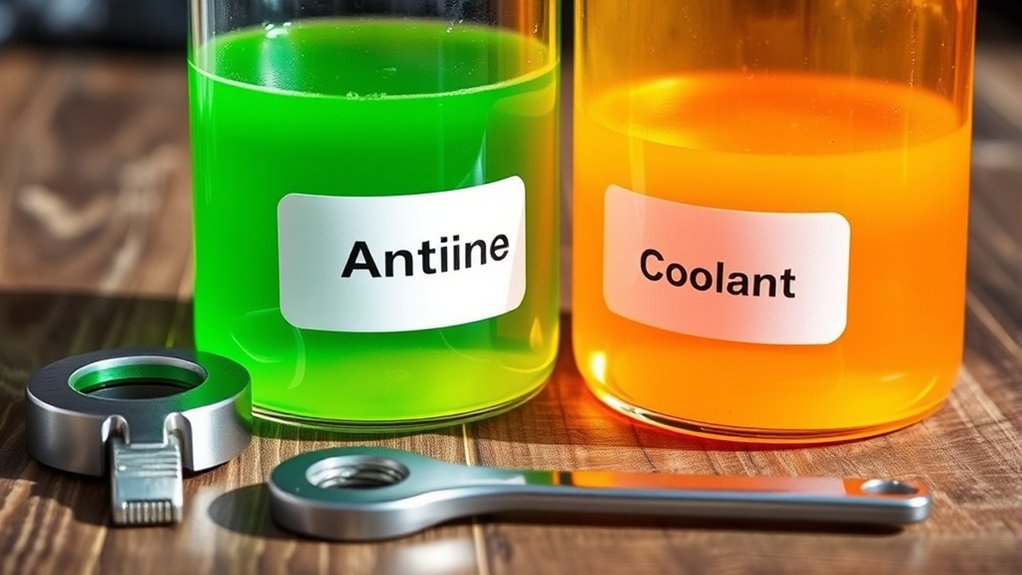
Antifreeze and coolant aren’t exactly the same, though they’re closely related. Antifreeze is a concentrated chemical, usually ethylene or propylene glycol, that raises your engine fluid’s freezing and boiling points.
Coolant is a premixed solution combining antifreeze with water and additives to optimize heat transfer and protect your engine from corrosion. Using antifreeze alone won’t provide full protection or cooling efficiency.
To understand how these mixtures work and when to use each, keep exploring the details.
How Antifreeze and Coolant Differ
How exactly do antifreeze and coolant differ? Antifreeze is a concentrated chemical, primarily ethylene glycol or propylene glycol, designed to prevent freezing in your engine’s cooling system.
Coolant, however, is typically a premixed solution of antifreeze and water formulated to transfer heat efficiently. Understanding coolant chemistry is crucial because additives like corrosion inhibitors and anti-foaming agents enhance performance and protect engine components.
When handling antifreeze, antifreeze safety is paramount: it’s toxic and requires careful storage and disposal. You’ll never use antifreeze alone in your engine. It must be diluted to create coolant.
How Antifreeze and Coolant Mixtures Keep Your Engine Cool
Why does the mixture of antifreeze and coolant play a critical role in maintaining your engine’s temperature? This blend optimizes heat transfer within the engine block, preventing overheating and freezing.
Antifreeze, typically ethylene glycol or propylene glycol, raises the boiling point and lowers the freezing point of the fluid, while coolant, usually water with additives, facilitates efficient heat absorption and dissipation.
Antifreeze elevates boiling and lowers freezing points, while coolant ensures effective heat absorption and dissipation.
Together, they ensure the thermostat function operates correctly by maintaining fluid temperatures within an ideal range. The thermostat regulates the flow of the mixture through the engine block and radiator, activating cooling only when necessary.
Without this precise balance, your engine could overheat or suffer cold-start damage. Using the proper antifreeze-coolant ratio is essential for consistent thermal management and engine longevity.
Why Antifreeze Alone Can’t Fully Protect Your Engine
You can’t rely on antifreeze alone because it needs to be properly mixed with water to optimize heat transfer and prevent engine overheating. Antifreeze by itself doesn’t provide sufficient corrosion protection, which is critical for extending engine life. Understanding these limitations helps you maintain the right balance for effective cooling and durability.
Importance Of Proper Mixture
When should you consider the balance between antifreeze and water in your engine’s cooling system? Proper mixing chemistry is critical because antifreeze alone doesn’t optimize heat transfer or prevent corrosion effectively. Water improves thermal conductivity, while antifreeze provides freeze and boil protection.
Striking the right ratio ensures your engine remains safe under varying temperatures.
Here’s a quick brand comparison illustrating typical mixture effects:
| Mixture Ratio | Freeze Protection | Boil Protection |
|---|---|---|
| 50/50 (Antifreeze/Water) | -34°F (-37°C) | 265°F (129°C) |
| 70/30 (Antifreeze/Water) | -84°F (-64°C) | 270°F (132°C) |
| 100% Antifreeze | -50°F (-45°C) | 265°F (129°C) |
Use the recommended 50/50 ratio to maximize protection and efficiency.
Heat Transfer Limitations
Balancing antifreeze and water mixtures not only prevents freezing and boiling issues but also considerably impacts your engine’s heat transfer efficiency. Antifreeze alone has a lower thermal conductivity than water, which means it can’t absorb and dissipate engine heat as effectively.
If you use pure antifreeze, your cooling system struggles to transfer heat away from critical components, increasing the risk of overheating and compromising system safety. Water’s high heat capacity complements antifreeze by improving heat absorption and circulation.
Consequently, a proper mixture is essential to maintain optimal engine temperature and prevent thermal stress. Relying solely on antifreeze neglects this balance, limiting your engine’s ability to manage heat efficiently and ultimately undermining the cooling system’s protective function.
Corrosion Prevention Needs
How effectively does antifreeze alone protect your engine from corrosion? Antifreeze primarily lowers freezing and raises boiling points but lacks sufficient corrosion inhibitors.
You need coolant, a mixture of antifreeze and water with additives, to prevent rust and corrosion effectively. Without these inhibitors, metal components degrade, risking engine damage.
Proper antifreeze safety mandates careful handling and responsible coolant disposal to avoid environmental harm. Below is a comparison of key corrosion prevention factors:
| Factor | Antifreeze Alone | Coolant (Antifreeze + Additives) | Importance |
|---|---|---|---|
| Corrosion Inhibitors | Minimal | Included | High |
| Heat Transfer | Moderate | Optimized | Medium |
| Freezing Protection | Yes | Yes | High |
| Boiling Protection | Yes | Yes | High |
| Environmental Impact | Toxic; careful disposal | Less toxic with proper disposal | Critical |
Use coolant for comprehensive engine protection.
When to Use Antifreeze, Coolant, or Both
You need antifreeze to lower the freezing point and raise the boiling point of your engine fluid, preventing temperature extremes. Coolant, on the other hand, circulates heat away from the engine to maintain optimal operating temperature. Using both together ensures your engine stays protected against freezing, overheating, and corrosion.
Antifreeze Purpose Explained
When should you use antifreeze, coolant, or a mixture of both in your vehicle’s cooling system? Antifreeze primarily serves to lower the freezing point of the liquid, preventing ice formation in cold temperatures.
Idea one: you use pure antifreeze in extreme cold conditions to guarantee your engine doesn’t freeze. However, antifreeze alone doesn’t efficiently transfer heat. That’s where coolant, usually a mixture of antifreeze and water, comes in.
Idea two: this blend optimizes thermal conductivity, protecting your engine from overheating and freezing. Using only coolant without antifreeze risks freezing damage, while pure antifreeze can cause overheating.
Consequently, you should rely on a properly balanced mixture to maintain engine temperature stability and prevent corrosion. Understanding antifreeze’s purpose ensures you select the correct fluid for your vehicle’s climate and operating conditions.
Coolant Function Overview
Why does choosing the right mixture of antifreeze and coolant matter for your engine’s performance? Properly balanced coolant prevents overheating and freezing, ensuring optimal temperature regulation.
You typically use coolant, a water-based fluid mixed with antifreeze additives, in moderate climates, while pure antifreeze is reserved for extreme cold to lower freezing points. Maintaining antifreeze safety is critical; its toxic ethylene glycol can harm humans and animals, so handle it with care.
Also, never pour old coolant down drains. Follow local coolant disposal regulations to protect the environment. Using the correct ratio enhances heat transfer, prevents corrosion, and extends engine life.
Using Both Together
Balancing antifreeze and coolant in your engine’s cooling system optimizes temperature control across diverse conditions. You should use antifreeze primarily to prevent freezing and boiling, while coolant manages heat dissipation and corrosion control.
Combining both addresses temperature rise and avoids pressure buildup by maintaining stable fluid properties under thermal stress.
| Condition | Recommended Use |
|---|---|
| Cold climates | Use antifreeze-rich mix |
| Hot climates | Use coolant-heavy mix |
| Variable conditions | Balanced antifreeze-coolant |
Signs Your Cooling System Needs Antifreeze or Coolant
How can you tell if your vehicle’s cooling system requires antifreeze or coolant? First, watch for engine overheating or temperature gauge fluctuations, which indicate insufficient fluid levels or degraded antifreeze properties.
Check for visible leaks under the vehicle; a sweet smell or colored residue often signals coolant loss. Additionally, inspect the fluid’s clarity—cloudy or rusty coolant compromises heat transfer and corrosion protection.
Regular maintenance intervals also guide timely replacement to maintain antifreeze safety and optimal performance. Neglecting these signs risks engine damage and inefficient cooling.
Safe Handling and Replacement of Antifreeze and Coolant
When handling and replacing antifreeze and coolant, what safety precautions should you prioritize to protect yourself and your vehicle? First, always work in a well-ventilated area and wear protective gloves and goggles to prevent skin and eye contact, essential for antifreeze safety.
Never open the radiator cap when the engine is hot to avoid severe burns. Use a proper container for draining old coolant to prevent spills. For coolant disposal, never pour it down drains or onto the ground; instead, take it to a certified recycling center or hazardous waste facility.
Properly flush the cooling system before adding new antifreeze or coolant to avoid contamination. Following these precise steps ensures your safety and maintains your vehicle’s cooling system efficiency.
Frequently Asked Questions
Can I Use Any Brand of Antifreeze or Coolant in My Vehicle?
Think of your engine as a finely tuned orchestra; not every instrument (brand) fits perfectly. You must check brand compatibility and engine compatibility to guarantee your antifreeze or coolant performs harmoniously and protects effectively.
How Long Does Antifreeze or Coolant Typically Last Once Opened?
Once opened, antifreeze or coolant typically lasts about 1 to 3 years before its expired shelf life affects performance.
You should store it properly to minimize contamination risk and guarantee it remains effective for your vehicle.
Are There Environmental Risks Associated With Disposing of Antifreeze?
You must handle environmental disposal carefully and avoid spill hazards because antifreeze contains toxic chemicals. Improper disposal contaminates soil and water, harms wildlife, and violates regulations.
Always use designated recycling centers or hazardous waste facilities for safe disposal.
Can Pets Be Poisoned by Antifreeze or Coolant Spills?
Yes, pets can be poisoned by antifreeze or coolant spills. You must avoid careless handling and act quickly during spill response, as even small amounts are toxic.
They can cause severe kidney damage or death in animals.
Does Antifreeze or Coolant Affect Fuel Efficiency?
You’ll see up to a 10% fuel efficiency decline if your coolant’s heat transfer is compromised. Proper antifreeze maintains optimal engine temperature, ensuring efficient combustion and preventing energy loss. This directly impacts your vehicle’s fuel economy.