How to Change Coolant
To change your coolant, first gather tools like a socket wrench, screwdrivers, drain pan, funnel, and safety gear including gloves and goggles.
Changing coolant is essential for maintaining your vehicle’s engine health and preventing overheating.
Ensure the engine is cool and the vehicle is securely elevated before starting.
Drain old coolant via the radiator drain plug into the pan, then flush the system with distilled water.
Refill with the correct coolant and bleed air using the bleeder valve while running the engine.
Checking for leaks and proper coolant level completes the process.
Following these steps supports engine health and system efficiency—explore further to master each stage in detail.
What Tools You Need to Change Coolant
What tools do you need to change coolant effectively? Start with a reliable set of budget tools, including a socket wrench set and screwdrivers, which help you access and remove the radiator drain plug and clamps.
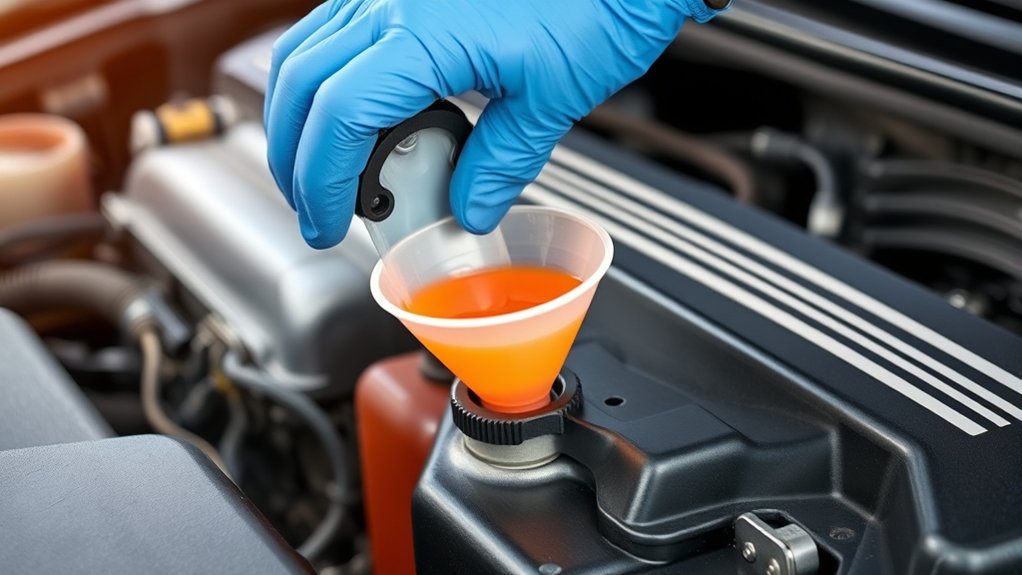
You’ll also need a drain pan to catch old coolant and a funnel to pour new coolant without spills. Don’t forget safety gear: wear gloves and safety goggles to protect your skin and eyes from harmful chemicals.
A pair of pliers can assist in loosening stubborn hose clamps, and a turkey baster or a coolant tester helps check fluid levels and quality. Having these essential, affordable tools and safety gear at hand ensures a smooth, efficient coolant change while keeping you protected throughout the process.
How to Safely Drain Old Coolant
Start by ensuring your engine is cool and the vehicle is securely elevated. Locate the radiator drain plug or petcock to control the coolant flow safely. Always wear gloves and use a proper container to catch the old coolant, avoiding spills and exposure.
Preparing Your Vehicle
Before draining the old coolant, make certain the engine is completely cool to prevent burns and system damage. Avoid starting the engine or leaving it on idle engine mode before you begin.
Ideally, park your vehicle in a flat, safe parking lot to stabilize the car and provide easy access to the drain points. Follow these steps to prepare:
- Engage the parking brake to secure the vehicle.
- Place wheel chocks behind tires to prevent movement.
- Open the hood and locate the coolant reservoir cap.
- Wear protective gloves and eyewear to handle coolant safely.
- Have a container ready to catch the old coolant.
These precautions make certain safe and efficient coolant draining without risking injury or spills.
Locating Drain Points
Once your vehicle is securely prepared and the engine has cooled, you can locate the drain points to safely remove the old coolant. Start by consulting your vehicle’s service manual to identify the exact drain point placement, which varies by make and model.
Typically, the radiator drain plug is positioned at the bottom of the radiator, ensuring complete fluid evacuation through gravity. Check for drain plug visibility, which is crucial for safe and efficient draining.
Some drain plugs are easily accessible, while others may require you to remove protective covers or undercarriage panels. Additionally, locate the engine block drain plug if applicable, to fully drain coolant from the engine itself.
Clear visibility and easy access to these drain points will streamline the draining process and minimize spillage.
Handling Coolant Safely
How exactly do you handle coolant to guarantee safety during draining? First, equip yourself with proper safety PPE: gloves, goggles, and protective clothing to prevent skin and eye contact. Work in a well-ventilated area to avoid inhaling fumes.
Prepare for chemical spill response by having absorbent materials and a containment tray ready. Carefully open the drain points to control flow and prevent splashing. Finally, dispose of old coolant according to local hazardous waste guidelines.
- Wear appropriate safety PPE at all times
- Use a drip pan or containment tray under drain points
- Keep absorbent spill kits nearby for immediate chemical spill response
- Avoid draining coolant on bare ground or near water sources
- Seal and label coolant containers before disposal
Following these steps ensures safe, efficient coolant draining and environmental protection.
How to Flush the Cooling System
Why is flushing the cooling system essential? It removes contaminants, old coolant, and buildup that reduce efficiency and cause corrosion. Begin by consulting your vehicle’s engine diagrams to locate the drain plugs and heater core connections accurately.
Safely drain the old coolant into a container for proper disposal. Next, flush the system with distilled water, using a garden hose to introduce water through the radiator. For thorough cleaning, some professional shops employ high pressure steam to dislodge stubborn deposits.
After flushing, drain the water completely. Repeat if necessary until the drained water runs clear. This ensures your cooling system is free of debris and ready for fresh coolant, maintaining optimal engine temperature and preventing overheating or damage.
Follow your vehicle’s specifications closely during this process.
How to Choose the Right Coolant for Your Car
Which coolant suits your vehicle best depends on several key factors, including the engine type, manufacturer recommendations, and climate conditions. When choosing formulations, prioritize those compatible with your vehicle’s materials and engine design.
EPA classifications also matter; select coolants meeting environmental and safety standards. Vehicle compatibility ensures optimal performance and prevents corrosion or damage.
Consider these for accurate selection:
- Verify OEM or manufacturer specs for coolant type.
- Check EPA classifications to meet regulatory guidelines.
- Evaluate coolant formulations for your engine’s material compatibility.
- Compare brand warranties for reliability and support.
- Assess climate influences like freezing and boiling points.
How to Refill Your Vehicle With New Coolant
Where do you start when refilling your vehicle with new coolant? Begin by ensuring the engine is cool to prevent injury. Open the radiator or coolant reservoir cap carefully.
Pour the new coolant slowly to avoid air pockets. Fill to the manufacturer’s recommended level, which you can find in your owner’s manual or on the reservoir.
Pay attention to the coolant’s color change, as many coolants are dyed to indicate type and age. Regularly follow the recommended change interval to maintain optimal system performance.
| Task | Detail |
|---|---|
| Coolant Type | Match manufacturer’s specification |
| Fill Level | Fill to indicated max or recommended level |
| Change Interval | Typically 2-5 years or as per manual |
This ensures proper cooling and prevents overheating or corrosion issues.
How to Bleed Air From the Cooling System
After refilling your vehicle with new coolant, removing trapped air from the cooling system is necessary to ensure optimal circulation and prevent overheating. Air pockets can cause hot spots, impairing the coolant’s flow. To bleed air effectively, follow these steps:
Locate the bleeder valve or screw near the thermostat housing. With the engine cold, open the valve slowly to release trapped air.
Start the engine and let it reach operating temperature to allow the thermostat to open. Keep the radiator cap off and top off coolant as air escapes.
Close the valve once a steady stream of coolant flows without bubbles.
Avoid confusing this process with unrelated topic procedures like oil changes. This two word discussion idea ensures you focus solely on proper coolant air removal.
How to Check for Coolant Leaks
How can you quickly identify if your cooling system has a leak? Start with a thorough leak inspection by visually checking the radiator, reservoir, and engine block for any signs of coolant residue or wet spots.
Next, perform a hose inspection by examining all hoses for cracks, bulges, or loose clamps, which are common leak sources. Use a clean cloth to wipe suspected areas, then monitor for fresh coolant reappearing.
If visible leaks are absent, consider using a pressure tester to pressurize the system; this will help reveal hidden leaks by forcing coolant out of weak points. Always conduct these inspections on a cool engine to avoid injury.
Identifying leaks early prevents engine overheating and costly repairs.
Why Changing Coolant Keeps Your Engine Healthy
Detecting leaks is just one part of maintaining your cooling system; regularly changing the coolant is equally important to keep your engine running efficiently. Over time, coolant degrades, losing its ability to regulate temperature and protect metal surfaces.
Fresh coolant ensures your radiator fan operates under optimal conditions, preventing overheating. Monitoring coolant color helps you spot contamination or breakdown, signaling it’s time for a change.
Regular coolant replacement:
- Maintains consistent engine temperature
- Prevents corrosion inside the radiator and engine block
- Enhances radiator fan efficiency by reducing strain
- Removes accumulated debris and contaminants
- Preserves coolant’s freeze and boil-over protection
Frequently Asked Questions
How Often Should I Change My Car’s Coolant?
Think of your coolant like a watch’s gears. Precise timing keeps everything running smoothly. You should change it every 2-5 years, balancing time management and tool selection to maintain ideal engine performance and prevent overheating.
Can I Mix Different Types of Coolant?
You shouldn’t mix different types of coolant due to coolant compatibility issues. Always follow color coding tips on labels to ensure chemical consistency, preventing corrosion or engine damage.
Use manufacturer-recommended coolant for optimal performance.
What Are the Symptoms of Low Coolant Levels?
You’ll notice low coolant levels cause your engine to overheat 30% faster, leading to low impact performance issues like temperature spikes, steam, or warning lights. Never confuse these with unrelated topics like oil or brake problems.
Is It Safe to Drive Immediately After Changing Coolant?
It’s not safe driving immediately after changing coolant without properly bleeding the system and checking for leaks. You must ensure the engine reaches operating temperature and verify coolant circulation to prevent overheating or damage.
How Do I Dispose of Old Coolant Properly?
You should dispose of old coolant properly because over 50% of automotive fluids cause environmental pollution when mishandled.
Take it to a recycling center or hazardous waste facility to minimize environmental impact and comply with regulations.