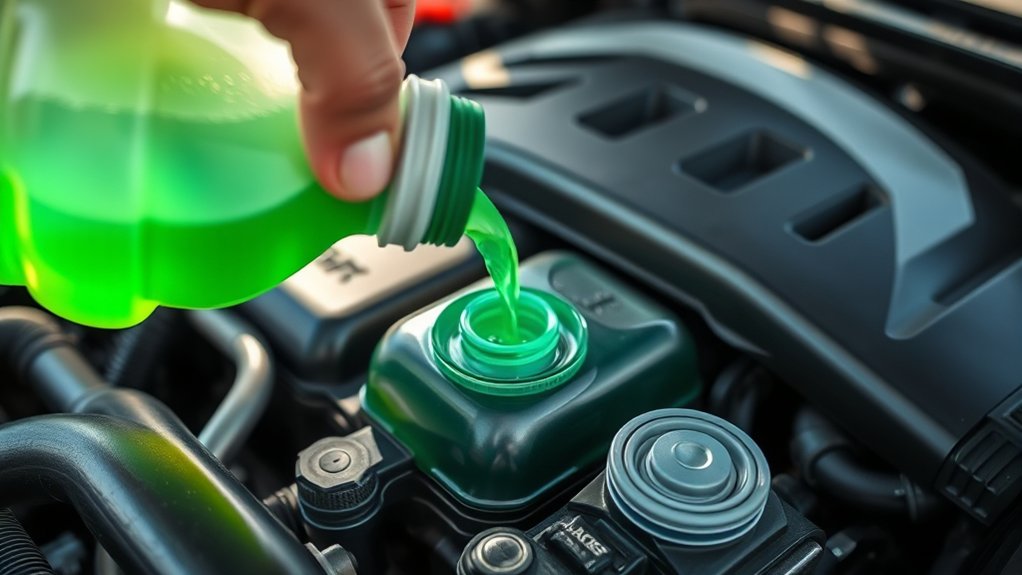
Where to Put Coolant in Car
You put coolant into the translucent plastic reservoir tank, which is usually located near the radiator or along the engine bay’s side. This is the proper place to put coolant in your car. Look for a marked cap, often with a temperature symbol, and check coolant levels against the MIN and MAX marks on the reservoir.
Always ensure the engine is completely cool before opening the cap to avoid injury. Using the right coolant type and adding it carefully prevents damage and leaks.
Learn more about proper checking, filling, and maintenance to keep your cooling system reliable.
How to Locate Your Car’s Coolant Reservoir
Finding your car’s coolant reservoir is essential for proper maintenance and preventing engine overheating. Typically, the coolant reservoir is a translucent plastic tank located near the radiator or along the engine bay’s side.
Locating your car’s translucent coolant reservoir near the radiator is key for maintenance and avoiding engine overheating.
It often has a clearly marked cap, sometimes labeled with a temperature warning or a symbol resembling a thermometer submerged in liquid. When identifying the reservoir, consult your vehicle’s manual for exact location and appearance.
Before opening the cap, ensure the engine is cool to maintain safety while handling. You don’t want pressurized hot coolant to cause injury.
Once located, you can label coolant levels accurately by observing the minimum and maximum marks on the reservoir. Proper labeling helps you monitor coolant levels effectively, preventing potential engine damage.
What Type of Coolant Should You Use?
You need to select the proper coolant type based on your vehicle’s specifications and climate conditions. Common options include ethylene glycol-based, propylene glycol-based, and extended-life coolants, each with different chemical properties. Using the right coolant guarantees ideal engine temperature regulation and prevents corrosion or damage.
Coolant Types Explained
How do you determine which coolant is best suited for your vehicle? Understanding coolant types involves recognizing their chemical composition and thermal properties.
Most coolants use ethylene glycol or propylene glycol bases, designed to prevent irreversible compression and maintain optimal engine temperature under varying conditions. You’ll find inorganic additive technology (IAT), organic acid technology (OAT), and hybrid organic acid technology (HOAT) coolants, each formulated for specific engine materials and longevity requirements.
While coolant alternatives like distilled water or homemade mixes exist, they lack corrosion inhibitors and may compromise system integrity. Choosing the right coolant type ensures compatibility with your engine’s materials and prevents damage from overheating or freezing.
Always consult your vehicle’s manual to match coolant specifications precisely, optimizing performance and durability.
Choosing The Right Coolant
Which coolant type fits your vehicle’s needs depends largely on its engine design and manufacturer recommendations. You should consult your owner’s manual to identify the correct coolant formulation, as mixing incompatible types can cause corrosion or reduce cooling efficiency.
Common coolant colors—green, orange, pink, or blue—indicate different chemical compositions like IAT, OAT, and HOAT. These colors offer useful discussion ideas when selecting coolant, but always verify compatibility rather than relying solely on color.
For example, older vehicles often require inorganic additive technology (IAT), while newer engines prefer organic acid technology (OAT) coolants. Using the wrong coolant type may void warranties or cause engine damage.
Ultimately, choose a coolant that matches your car’s specifications and adhere to recommended maintenance intervals for optimal performance.
Signs Your Car’s Coolant Level Is Low
When does your vehicle signal that the coolant level is dangerously low? Recognizing these signs early helps you avoid engine overheating and costly repairs.
Despite common coolant myths, don’t rely solely on temperature gauges; they may not immediately reflect low coolant levels. Instead, watch for these clear indicators:
- Engine temperature rises above normal range on the gauge.
- Visible coolant leaks or puddles under the car.
- Steam or unusual odors from under the hood, signaling overheating.
- Heater malfunction or insufficient cabin heat during cold weather.
These symptoms point to insufficient coolant, which compromises your engine’s cooling system. Staying alert to these signs allows you to act promptly before serious damage occurs.
How to Check Coolant Levels Safely
Before checking your coolant level, make certain the engine is completely cool to prevent burns from hot liquid or steam. Locate the coolant reservoir, usually a translucent plastic tank near the radiator with markings indicating minimum and maximum levels. Always inspect the fluid level against these marks to ensure accurate assessment.
Engine Cooldown Importance
How do you ensure your engine is safe to inspect after driving? Understanding engine cooldown is critical to safely checking coolant levels. Many fall for coolant myths, like opening the reservoir immediately after driving, risking burns from pressurized steam.
To avoid danger and correctly interpret cooling system jargon, follow these steps before inspection:
- Turn off the engine and allow it to cool for at least 30 minutes.
- Check the radiator cap only when the engine is cold to prevent pressure release injuries.
- Observe coolant color and level through the reservoir’s translucent walls, not the radiator.
- Use a flashlight for better visibility, ensuring accurate level assessment without opening the system prematurely.
These precautions help you maintain safety and prolong cooling system integrity.
Locating Coolant Reservoir
The coolant reservoir, a translucent plastic tank connected to the radiator, serves as the primary point for checking coolant levels safely. During car maintenance, always inspect this reservoir when the engine is cool to avoid burns from hot coolant.
The location varies but is usually near the radiator or along the engine bay’s side. Checking levels against marked “MIN” and “MAX” lines helps ensure optimal coolant volume, critical for adapting to outside temperature changes.
| Step | Detail |
|---|---|
| 1. Locate tank | Near radiator or engine bay side |
| 2. Wait engine cool | Prevent burns and pressure issues |
| 3. Inspect level | Between “MIN” and “MAX” marks |
| 4. Add coolant if low | Use recommended coolant type |
| 5. Close securely | Prevent leaks and contamination |
How to Add Coolant Step-by-Step
Where should you start when adding coolant to your car? Begin by ensuring the engine is cool to prevent burns or pressure-related injuries. Proper car maintenance requires attention to engine chemistry, so use the recommended coolant type for your vehicle.
Follow these steps to add coolant precisely:
- Open the coolant reservoir cap slowly after confirming the engine is cool.
- Check the coolant level against the minimum and maximum markers on the reservoir.
- Pour the coolant into the reservoir until it reaches the maximum fill line.
- Securely replace the reservoir cap and inspect for leaks.
Adding coolant correctly maintains optimal engine temperature and prevents overheating, which is crucial for engine chemistry stability and overall vehicle performance.
How Often Should You Check and Top Off Coolant?
After adding coolant, you’ll want to establish a routine for checking and topping it off to maintain proper engine temperature and prevent system failures. Check your coolant level at least once a month and before long trips.
Always inspect the coolant color: clear, bright green, orange, or pink. Use established tips for coolant color to detect contamination or degradation. Avoid relying on coolant brand myths; compatibility matters more than brand loyalty.
Mixing different brands can be safe if they share the same chemical base, but always consult your owner’s manual. During checks, ensure the coolant level remains between the “min” and “max” marks on the reservoir.
Regular monitoring helps prevent overheating and corrosion, extending your engine’s lifespan and ensuring consistent performance.
Common Mistakes to Avoid When Adding Coolant
Why do so many drivers struggle with adding coolant correctly? The process demands accuracy, and several common mistakes can compromise your car’s cooling system. Avoiding spillovers is crucial to maintain system integrity and prevent damage.
Here are four common mistakes to avoid when adding coolant:
- Filling the reservoir when the engine is hot, risking burns and inaccurate levels.
- Using the wrong coolant type, which can cause corrosion or poor performance.
- Overfilling the reservoir, leading to pressure buildup and potential leaks.
- Neglecting to clean the reservoir cap and surrounding area, increasing contamination risk.
What to Do If You Spill Coolant
A coolant spill demands immediate attention to prevent damage and guarantee safety. First, contain the spill using absorbent materials like rags or commercial spill pads to limit its spread. Avoid letting the coolant reach drains or soil, as it’s toxic to the environment.
Next, gather all contaminated materials and place them in a sealed, labeled container for proper disposal according to local regulations. For a safe cleanup, wear gloves and protective eyewear to avoid skin and eye contact.
After absorbing the spill, clean the affected area with water and a mild detergent to remove any residue. Finally, ventilate the workspace thoroughly to dissipate fumes.
Following these steps ensures effective spill containment and safe cleanup, protecting both you and the environment.
Frequently Asked Questions
Can I Mix Different Brands of Coolant in My Car?
You shouldn’t mix different coolant brands without checking brand compatibility, as incompatible mixtures can cause chemical reactions that reduce cooling efficiency and damage your engine.
Always use the same brand or consult your manual for safe options.
What Are the Health Risks of Coolant Exposure?
You face health risks like nausea, dizziness, and skin irritation from coolant exposure.
Mixing brands affects coolant compatibility, reducing longevity and increasing freezing damage risk.
Leaking reservoirs cause driving risks, threatening engine safety and requiring timely replacement intervals.
How Long Does Coolant Last Before Needing Replacement?
Coolant typically lasts 2 to 5 years or 30,000 to 50,000 miles, depending on type. You should follow the manufacturer’s replacement schedule precisely to prevent engine overheating and corrosion, ensuring ideal cooling system performance.
Can Coolant Freezing Damage My Car’s Engine?
You know what they say: “An ounce of prevention is worth a pound of cure.”
Yes, coolant freezing damage can crack your engine block or radiator. You must maintain proper coolant mixture to avoid costly repairs.
Is It Safe to Drive With a Leaking Coolant Reservoir?
You shouldn’t drive with a leaking coolant reservoir because it compromises reservoir containment, leading to coolant loss. Perform leak detection immediately to prevent engine overheating and damage.
Address the leak promptly to maintain safe engine operation.