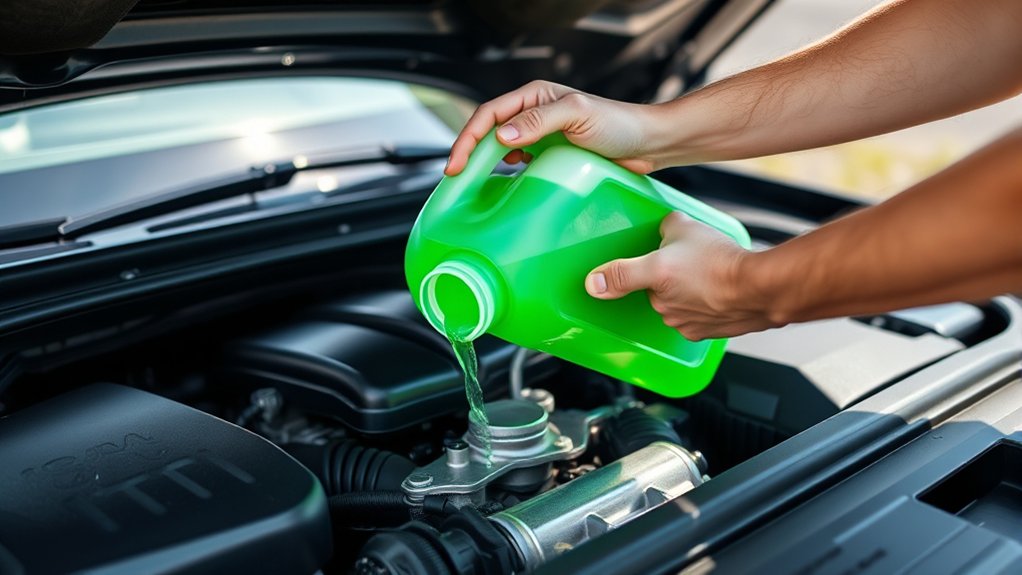
How to Add Coolant to Car
To add coolant to your car, first ensure the engine is completely cool and park on a level surface. This is crucial for safety and accurate coolant level reading. Locate the coolant reservoir near the engine bay’s front or side, then clean its exterior to prevent contaminants from entering.
Wearing protective gloves, slowly open the reservoir cap to release any built-up pressure. Check the coolant level inside the reservoir. If the level is low, prepare a 50/50 mix of coolant and distilled water.
Pour the mixture carefully up to the “Full” line on the reservoir. Once filled, secure the cap tightly to prevent leaks. Following these steps ensures safe, effective coolant addition; further details explain maintenance and troubleshooting.
How to Check Your Car’s Coolant Level Safely
How do you check your car’s coolant level without risking injury? First, ensure the engine is completely cool; opening the radiator cap when hot can cause scalding from pressurized steam. For novice car care, this safety step is crucial.
Next, locate the translucent coolant reservoir, usually marked with minimum and maximum level indicators. Avoid coolant myths suggesting you must open the radiator cap to check levels. This is unnecessary and dangerous.
Simply observe the fluid level against the reservoir markings. If unclear, wipe the reservoir clean for better visibility. Always use gloves to prevent contact with toxic coolant.
When and Why to Add Coolant to Your Car
You should add coolant whenever you notice the level is below the recommended mark or if your engine is overheating. Proper cooling prevents engine damage by maintaining optimal operating temperatures. Ignoring low coolant levels can lead to severe engine failure and costly repairs.
Signs Coolant Is Low
When should you add coolant to your car? You need to top off coolant when you notice signs like an overheating engine, low coolant level in the reservoir, or frequent temperature gauge spikes. Don’t fall for common coolant myths, such as the idea that “you only add coolant when it’s empty.”
Regular checks prevent serious damage. If you spot puddles under your vehicle or notice sweet smells, perform a leaks diagnosis immediately. These symptoms indicate coolant loss that requires prompt attention. Also, watch for warning lights on your dashboard.
Always check the coolant level when the engine is cold to get an accurate reading. Addressing low coolant early ensures optimal engine performance and avoids costly repairs.
Importance Of Proper Cooling
In managing your car’s engine temperature, proper cooling plays a critical role in maintaining performance and preventing damage. You need to add coolant at recommended intervals to ensure the system operates within optimal temperature ranges.
This is vital not only for daily drivers but also for museum grade engines, which demand precise temperature control to preserve their integrity. Avoid falling for broad coolant myths, such as the idea that water alone suffices or that coolant never needs replacement.
Proper coolant maintains corrosion inhibitors and prevents overheating, which safeguards engine components. When you add coolant, use the correct type specified by your vehicle manufacturer. Maintaining this balance helps your engine run efficiently, extends its lifespan, and keeps it from costly repairs caused by improper cooling.
Risks Of Neglecting Coolant
Failing to maintain the proper coolant level directly threatens your engine’s health and performance. Without sufficient coolant, your engine risks overheating, which can cause warped cylinders, blown head gaskets, or complete engine failure.
You might hear neighborhood gossip about quick fixes, but don’t fall for them. Relying on quick, DIY fashion solutions can worsen damage instead of preventing it.
Regularly check coolant levels and top up as specified in your vehicle’s manual. Neglecting this essential fluid disrupts heat regulation, accelerates corrosion, and compromises your car’s reliability.
Choosing the Right Coolant for Your Car
Why does choosing the right coolant matter for your car’s performance and longevity? Using the correct coolant ensures optimal engine temperature regulation, preventing overheating and corrosion. This directly impacts engine diagnostics by reducing fault codes related to overheating or sensor malfunctions.
To select the proper coolant, consult your vehicle’s manual for specifications, including recommended chemical composition and compatibility. Avoid mixing types, as this can degrade cooling efficiency and damage components.
Proper coolant maintains fuel efficiency by stabilizing engine temperature, allowing the combustion process to run smoothly. Pay attention to coolant types such as ethylene glycol or propylene glycol and their additive packages, which protect against rust and scale buildup.
Selecting the right coolant safeguards your engine’s health and keeps diagnostics accurate, ensuring reliable performance over time.
Tools You’ll Need to Add Coolant
What tools do you need to add coolant safely and effectively? Avoid incorrect grammar and unrelated topic distractions by focusing on the essential equipment. Here are the top three tools you’ll require:
1. Protective Gloves
To prevent skin irritation from coolant chemicals, always wear durable gloves.
2. Funnel
A funnel ensures precise pouring, reducing spills and contamination risks.
3. Coolant Container
Use a clean, labeled container for the correct coolant type, preventing mix-ups.
These tools guarantee a controlled, safe coolant addition process. Remember, precision in tool use reflects on overall vehicle maintenance quality. Don’t confuse the task with unrelated topic details like engine repair; keep your focus sharp and your tools ready.
Getting Your Car Ready to Add Coolant
First, park your car on a level surface to ensure accurate coolant readings. Wait until the engine has completely cooled to avoid burns or pressure release. Then, locate the coolant reservoir under the hood, typically a translucent plastic tank marked with minimum and maximum levels.
Park on Level Ground
A level surface guarantees accurate coolant level readings and prevents spillage during the refill process. Before you start, make sure to park your vehicle on firm, flat ground. Uneven terrain can cause misleading coolant levels, risking overfill or underfill.
Follow these steps:
- Choose a stable, level spot away from traffic to maintain proper driving etiquette.
- Engage the parking brake to secure the vehicle and prevent movement.
- In cold weather, avoid parking on ice or snow patches to prevent slipping and ensure safe access, following cold weather tips.
Parking correctly sets a safe foundation for coolant addition, minimizing errors and hazards. This preparation respects both your safety and the environment around you.
Let Engine Cool
After securing your vehicle on level ground, allow the engine to cool completely before opening the coolant reservoir or radiator cap. Hot coolant can cause severe burns, so wait at least 30 minutes.
During this downtime, check the engine oil level and tire pressure to ensure overall vehicle readiness. Proper engine oil maintains lubrication, while correct tire pressure supports safe handling.
| Task | Purpose |
|---|---|
| Wait 30 minutes | Avoid burns from hot coolant |
| Check engine oil | Confirm lubrication levels |
| Inspect tire pressure | Ensure vehicle stability |
| Avoid opening cap | Prevent coolant spray injury |
| Prepare tools | Have coolant and funnel ready |
Locate Coolant Reservoir
Finding the coolant reservoir is essential before adding coolant to your vehicle. This transparent or semi-transparent plastic tank is typically located near the engine bay’s front or side to optimize driving ergonomics and maintenance ease.
To locate it quickly:
- Open the hood using the interior lever, then secure it with the prop rod.
- Identify the coolant reservoir by its cap, often marked with a warning symbol or labeled “coolant.”
- Check the reservoir’s position relative to the radiator and engine to ensure correct identification.
Properly locating the reservoir ensures accurate coolant levels, which directly affects fuel economy and engine performance. Confirming the reservoir position before filling maintains safety and precision in your car maintenance routine.
Step-by-Step Guide to Adding Coolant
How exactly do you add coolant to your car safely and effectively? First, ensure the engine is cool to avoid burns. Open the coolant reservoir cap slowly to release any pressure.
Check the coolant level against the marks on the reservoir. If low, prepare a 50/50 mixture of coolant and distilled water unless using pre-mixed coolant.
Pour the mixture into the reservoir until it reaches the “Full” line. Secure the cap tightly to prevent leaks.
Adding coolant correctly maintains optimal engine temperature, enhancing driving safety by preventing overheating. It also supports fuel efficiency by ensuring the engine runs smoothly.
After filling, run the engine briefly and recheck the level, topping off if needed. Following these steps precisely keeps your vehicle reliable and efficient on the road.
Common Mistakes to Avoid When Adding Coolant
When adding coolant, don’t use the wrong type, as it can damage your engine or reduce cooling efficiency. Avoid overfilling the reservoir, since excess coolant can lead to pressure buildup and leaks. Follow the manufacturer’s specifications carefully to prevent these common errors.
Using Incorrect Coolant Type
Why does using the incorrect coolant type matter? Your car’s cooling system relies on specific coolant chemistry tailored to its radiator design. Using the wrong type can cause serious problems. Here’s why you must be precise:
- Chemical Incompatibility: Different coolants have unique additives and inhibitors. Mixing incompatible types can cause gel formation or corrosion, damaging the radiator and engine components.
- Reduced Heat Transfer: Incorrect coolant chemistry alters boiling and freezing points, compromising heat dissipation and risking overheating or freezing.
- Seal and Hose Degradation: Some coolants contain chemicals that can deteriorate seals and hoses if they’re not designed for your vehicle’s system.
Always consult your owner’s manual to match coolant type with your radiator design. Avoid guessing. Precision protects your engine’s longevity and performance.
Overfilling The Reservoir
Where should you stop when filling your coolant reservoir? Always fill only to the “Full” or “Max” line marked on the reservoir. Overfilling the reservoir can cause excessive pressure buildup as the coolant expands from engine heat, potentially leading to leaks or damage.
Avoid the overheating myths that suggest more coolant equals better cooling; this is a common coolant myth. Too much coolant reduces the system’s ability to accommodate thermal expansion, which can impair performance.
Instead, fill precisely and check the level when the engine is cold to ensure accuracy. Remember, proper coolant levels maintain optimal pressure and prevent overheating. By not overfilling, you protect your engine and cooling system components from unnecessary stress and failure.
How to Dispose of Old or Excess Coolant Safely
How should you dispose of old or excess coolant to prevent environmental harm and comply with regulations? Proper disposal is essential for maintaining fuel efficiency and managing maintenance budgeting effectively. Follow these steps:
- Collect and Store Securely: Use a sealed container labeled “Used Coolant” to avoid spills and contamination.
- Locate a Recycling Center: Find an authorized facility or auto shop that accepts used coolant. Many areas have hazardous waste programs.
- Transport Safely: Keep the container upright and secure during transport to prevent leaks.
Never pour coolant down drains, on the ground, or into water sources. Safe disposal protects the environment and ensures you comply with local laws, ultimately supporting your vehicle’s optimal performance and your maintenance budgeting goals.
Signs Your Car Might Have a Coolant Leak
When do you know if your car has a coolant leak? Start by checking for visible puddles of coolant under your vehicle, typically green, orange, or pink in color.
Monitor your engine temperature gauge; a consistent rise above normal indicates potential coolant loss. Also, watch for a sweet, syrupy odor inside or outside the car, signaling leaking antifreeze.
Reduced fuel efficiency can result from poor engine cooling, so if you notice a sudden drop, inspect your cooling system. Additionally, your car’s heater may fail to produce warm air if coolant levels are low.
Regular car maintenance includes inspecting hoses and radiator for cracks or corrosion. Addressing these signs promptly prevents overheating and costly repairs.
How Often to Check and Replace Your Coolant
Regularly checking and replacing your car’s coolant is essential to maintain optimal engine performance and prevent overheating. Just like routine tire rotation and car audio system checks, coolant maintenance keeps your vehicle running smoothly.
Regular coolant checks and replacements are key to keeping your engine cool and running smoothly.
Here’s when to check and replace it:
- Check every 6 months: Inspect coolant level and condition during regular maintenance, such as alongside tire rotation.
- Replace every 2 to 5 years: Follow your manufacturer’s schedule since coolant degrades and loses corrosion inhibitors over time.
- After repairs: Always flush and replace coolant after engine or cooling system repairs to restore proper protection.
Sticking to this schedule ensures your engine stays cool and efficient, preventing costly damage and maintaining overall vehicle health.
What to Do If Your Engine Overheats Despite Adding Coolant
Why does your engine still overheat even after adding coolant? First, check for leaks in hoses, the radiator, or the water pump, as coolant loss causes overheating.
Inspect the radiator cap; a faulty cap can’t maintain pressure, reducing cooling efficiency. Next, examine the thermostat. If stuck closed, coolant circulation halts.
Also, consider air pockets trapped in the cooling system; bleeding may be necessary. Don’t get distracted by an unrelated topic like battery issues or tire pressure. Focus strictly on cooling components.
Avoid the random idea that more coolant always solves overheating; the problem often lies elsewhere. If these steps don’t resolve the issue, consult a mechanic to test for head gasket failure or a warped engine block, both of which require professional repair.
Frequently Asked Questions
Can I Mix Different Brands of Coolant Safely?
If you mix brands without checking coolant compatibility, like a driver who combined green and orange types, you risk corrosion and reduced protection.
Always verify chemical formulas and use compatible coolants to guarantee system safety and efficiency.
Is It Necessary to Bleed Air From the Cooling System?
Yes, you need to bleed air from the cooling system to prevent air pockets. Air trapped inside reduces cooling efficiency and can cause overheating.
Carefully follow your vehicle’s bleeding procedure after adding coolant.
How Does Coolant Affect My Car’s Heater Performance?
Think of coolant as your heater’s fuel; without proper coolant efficiency, your heater performance drops like a phone losing signal inside a tunnel.
Maintaining correct coolant levels ensures consistent heat transfer, keeping your car’s cabin warm and comfortable.
Can Using Water Instead of Coolant Cause Engine Damage?
Yes, using water instead of coolant risks engine damage due to poor heat transfer and corrosion. You should avoid mixing water and coolant without proper ratios, as mixing cautions prevent ineffective cooling and potential overheating.
What Are the Environmental Impacts of Coolant Spills?
Coolant spills harm soil and water, affecting ecosystems. You must practice proper environmental disposal and use spill containment measures immediately to prevent contamination.
Always follow local regulations to minimize environmental impact effectively.