How Long to Charge Car Battery With Jumper Cables
You should keep the jumper cables connected for 5 to 10 minutes to transfer enough charge to the dead battery before starting your engine. This is how long to charge a car battery with jumper cables to ensure sufficient power.
After ignition, leave the cables on for an additional 1 to 2 minutes to stabilize the voltage. Avoid prolonged connection to reduce the risk of sparks and battery damage.
Use quality cables and guarantee proper grounding for safety. Understanding factors like battery health and donor car voltage will help you manage the process more effectively.
How to Connect Jumper Cables Safely
How exactly do you connect jumper cables safely to avoid sparks or damage? First, ensure both vehicles are in safe parking positions with engines off and parking brakes engaged to prevent movement. Avoid metal contact between cable clamps.
To connect jumper cables safely, park vehicles securely with engines off and keep clamps from touching metal.
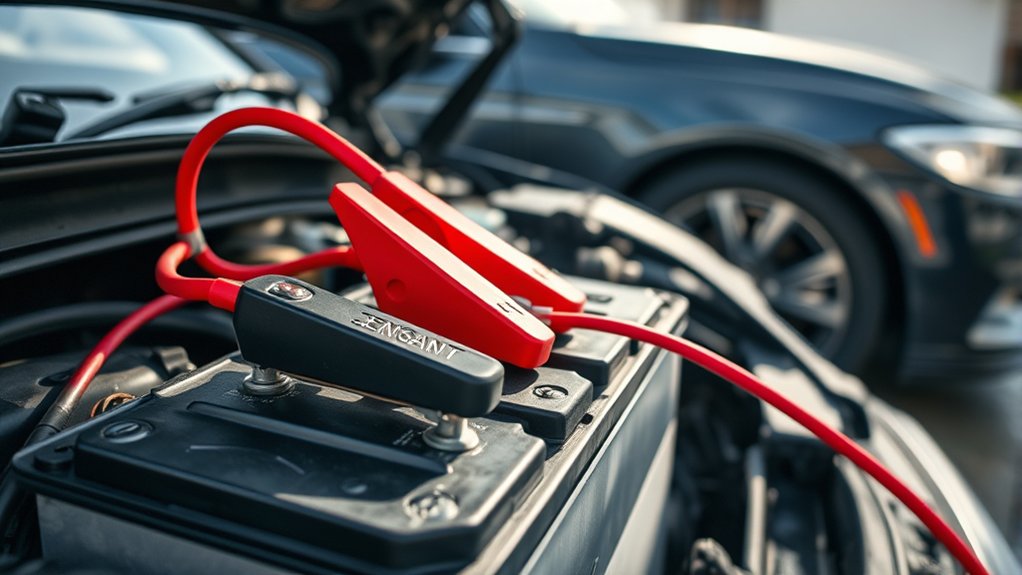
Attach the red clamp to the positive terminal (+) of the dead battery, then connect the other red clamp to the positive terminal of the good battery. Next, connect the black clamp to the negative terminal (−) of the good battery.
Finally, attach the remaining black clamp to an unpainted metal surface away from the dead battery to ground the circuit and minimize spark risk. Remember, some insurance considerations require you to follow safe procedures to avoid liability for damage during jump-starts.
Always confirm proper connections before starting the donor vehicle.
How Long Should You Keep Jumper Cables Connected?
Once you’ve securely connected the jumper cables following proper safety steps, you need to determine the appropriate amount of time to keep them attached. Typically, keeping the cables connected for 5 to 10 minutes is sufficient to transfer enough charge to start the dead battery.
However, pay attention to these key points:
- Monitor the donor vehicle’s engine RPM to avoid overloading the electrical system or triggering security risks.
- Consider legal considerations; some jurisdictions regulate roadside assistance procedures to prevent liability.
- Once the dead vehicle starts, keep cables connected for 1 to 2 minutes to stabilize the battery charge before disconnecting.
Prolonged connection increases security risks like sparks or battery damage. Always follow manufacturer guidelines and local laws for safe, legal jump-starting.
What Factors Affect Charging Time for Dead Batteries?
You’ll find that the battery’s condition and age greatly influence charging time, as older or damaged batteries hold less charge. The quality of your jumper cables also matters because thicker, high-quality cables reduce resistance and improve current flow. Additionally, the vehicle’s alternator output determines how quickly the battery can recharge once the engine is running.
Battery Condition And Age
Why does the age and condition of your car battery matter when charging it with jumper cables? Older or degraded batteries take longer to recharge and may not hold a full charge. Understanding battery condition helps you set realistic expectations during jump-starting.
Consider these factors:
- Battery Age: Batteries older than 3-5 years often have reduced capacity, slowing recharge times.
- Battery Condition: Corrosion or damage to terminals affects conductivity, impacting how efficiently current flows. Always check for corrosion using color coding on terminals.
- State of Discharge: A deeply discharged battery requires more time to recharge, even with a high-quality jump pack.
Jumper Cable Quality
Efficiency plays a critical role when charging a dead battery with jumper cables, and cable quality directly influences this. High-quality jumper cables feature thicker gauge wires, which reduce electrical resistance and allow higher current flow.
If your cables are thin or poorly constructed, they’ll limit current delivery, extending charging time. Additionally, ensure the clamps have strong, corrosion-resistant contacts for secure connections to the battery terminal. Loose or oxidized clamps increase resistance, further reducing efficiency.
Inspect jumper cables for any frayed wiring or damage, as compromised insulation can cause power loss or safety hazards. By selecting heavy-gauge, well-made jumper cables and ensuring firm, clean battery terminal connections, you’ll optimize current transfer and minimize the time required to recharge a dead battery effectively.
Vehicle Alternator Output
How much power does your vehicle’s alternator supply during charging? The alternator output directly impacts how quickly your dead battery regains charge when using jumper cables.
To optimize charging efficiency and maintain battery safety, consider these factors:
- Alternator amperage rating – Higher amperage alternators deliver more current, reducing charging time.
- Engine RPM – Alternators produce more power at higher engine speeds; idling yields less efficient charging.
- Alternator condition – A worn or faulty alternator decreases output, prolonging battery recharge and risking incomplete charging.
Understanding these elements helps you estimate charging duration accurately and avoid overloading the battery. Always ensure cables and connections are secure to maintain battery safety throughout the process.
Why Your Donor Car’s Battery Makes a Difference
What impact does the donor car’s battery have on jump-starting your vehicle? The donor battery’s voltage and charge capacity directly influence how effectively it can transfer power to your dead battery.
A fully charged, healthy donor battery provides the necessary current to overcome the dead battery’s state, enabling a faster and more reliable jump-start. Conversely, using a donor battery with low charge or insufficient capacity reduces current flow, prolonging the charging time or causing the jump-start to fail.
Avoid distractions from irrelevant topics or unrelated concepts like the donor car’s model or age; focus solely on battery condition and charge level. Ensuring the donor battery is in good shape optimizes energy transfer, so your vehicle can regain sufficient charge efficiently during the jump-start process.
How Good Jumper Cables Help Charge Faster
Once you’ve confirmed the donor battery is healthy and fully charged, the quality of your jumper cables plays a significant role in speeding up the charging process. Using good cables ensures efficient current flow, which directly impacts how fast your dead battery regains charge.
To optimize charging while maintaining battery safety and proper charging etiquette, focus on these factors:
- Cable Gauge: Choose thicker cables (lower gauge number, like 4 or 6) to reduce resistance and allow higher amperage flow.
- Cable Length: Shorter cables minimize voltage drop, improving charging speed.
- Clamp Quality: Solid, corrosion-free clamps ensure a secure connection, preventing sparking and heat buildup.
Following these guidelines helps you charge faster without compromising battery safety or violating charging etiquette.
How to Tell When Your Battery Has Enough Charge After Jump Start
Knowing when your battery has enough charge after a jump start is crucial to avoid overworking the donor battery and ensure your vehicle starts reliably. After jump-starting, let your engine run for at least 20 minutes to allow the alternator to recharge the battery.
Use a multimeter to measure the voltage: a fully charged 12-volt battery should read about 12.6 volts or higher. If the voltage remains below 12.4 volts after this period, your battery may have suffered irreversible damage and might require battery disposal and replacement.
Avoid turning off the engine immediately, as insufficient charge can cause repeated failure. Monitoring voltage and engine performance helps you determine when your battery is adequately charged and prevents further harm to both batteries.
What to Do If Jump Starting Your Battery Fails
If your battery won’t start even after multiple jump attempts, you need to take immediate steps to diagnose and address the issue. Random success in jump-starting often signals underlying problems beyond a simple charge. Follow these steps with proper battery etiquette to avoid damage or injury:
- Check Connections: Ensure jumper cables are securely connected with correct polarity and clean terminals.
- Test the Battery and Alternator: Use a multimeter to measure voltage; a healthy battery should read around 12.6V, and the alternator should provide 13.7-14.7V when running.
- Inspect for Physical Damage: Look for corrosion, leaks, or swelling that indicate battery failure.
If these steps fail, replace the battery or seek professional assistance immediately to avoid worsening the condition.
How to Avoid Overcharging and Battery Damage
Although charging your car battery is necessary, you must carefully monitor the process to prevent overcharging, which can cause irreversible damage. When dealing with a dead battery, avoid leaving jumper cables connected longer than needed.
After jump start vs using a dedicated charger, jumper cables provide a quick boost but lack precise voltage control, increasing the risk of overcharging. Once the engine starts, disconnect the cables promptly to stop excess current flow.
Use a multimeter to check battery voltage; a fully charged 12-volt battery reads around 12.6 volts. Charging beyond 14.4 volts can lead to overheating and electrolyte loss, damaging the battery cells.
Stay vigilant, monitor voltage levels, and disconnect the power source promptly to preserve battery life and avoid damage during charging with jumper cables.
How to Maintain Your Battery After Jump Starting
Once your car starts after jump starting, you’ll need to maintain the battery by allowing the alternator to recharge it fully. To ensure optimal battery health, follow these steps:
- Drive continuously for at least 30 minutes to enable the alternator to replenish the battery charge efficiently. Avoid short trips immediately after jump starting.
- Incorporate regular maintenance routines, such as car waxing and tire rotation, to keep your vehicle in peak condition. While unrelated directly to the battery, these tasks support overall vehicle reliability, reducing unexpected battery strain.
- Monitor battery voltage with a multimeter after driving. A healthy battery should register around 12.6 volts or higher when the engine is off and 13.7 to 14.7 volts when running.
Maintaining these practices helps extend battery life and ensures consistent performance after a jump start.
When to Replace Your Battery Instead of Jump Starting
Maintaining your battery after jump starting helps prolong its life, but knowing when to replace it is equally important. If your car frequently requires jump starts, its battery likely has deteriorated cells or internal damage.
Regular jump starts signal battery damage; timely replacement is essential to maintain vehicle reliability and safety.
Conduct a voltage test; readings below 12.4 volts at rest indicate diminished capacity. Also, inspect for corrosion or leakage, which compromises battery maintenance and charging safety.
If your battery is over three to five years old or shows physical damage, replacement is safer than repeated jump starting. Continual reliance on jump starts risks electrical system damage and may pose safety hazards.
Prioritize proper battery replacement to ensure reliable performance and avoid compromising charging safety protocols. Always dispose of old batteries according to environmental regulations to maintain responsible battery maintenance.
Frequently Asked Questions
Can Jumper Cables Damage Sensitive Electronics in My Car?
Yes, improper jumper cable use can damage sensitive car electronics. Ensure jumper cable safety by connecting cables correctly and avoiding sparks.
Use electronics protections like surge protectors or isolators to prevent voltage spikes that harm your vehicle’s systems.
Is It Safe to Jump Start a Hybrid or Electric Vehicle?
Picture sparks flying. Jump starting hybrids demands caution. For hybrid safety, consult your manual; many require specific procedures.
Electric vehicle risks include damaging high-voltage systems, so only use jump starts if explicitly approved by the manufacturer.
How Do Temperature Extremes Affect Battery Jump Starting Success?
Cold weather impact reduces battery capacity, making jump starts harder, while hot climate effects increase internal battery resistance, risking damage.
You should always check battery health and adjust jump-start procedures accordingly to assure success and safety.
Can I Use Jumper Cables on Motorcycles or Other Small Engines?
Yes, you can use jumper cables on motorcycles and small engines, but ensure motorcycle safety by matching voltage and polarity carefully. Use cables rated for small engine compatibility to prevent damage and follow proper connection procedures to avoid sparks or shorts.
What Type of Gloves or Tools Should I Use When Jump Starting?
Don’t grab your garden gloves. Use insulated gloves designed for safety to prevent shocks. Pair them with tools that ensure compatibility, like insulated jumper cables with sturdy clamps, to jump-start safely and efficiently every time.