How to Dispose of Coolant
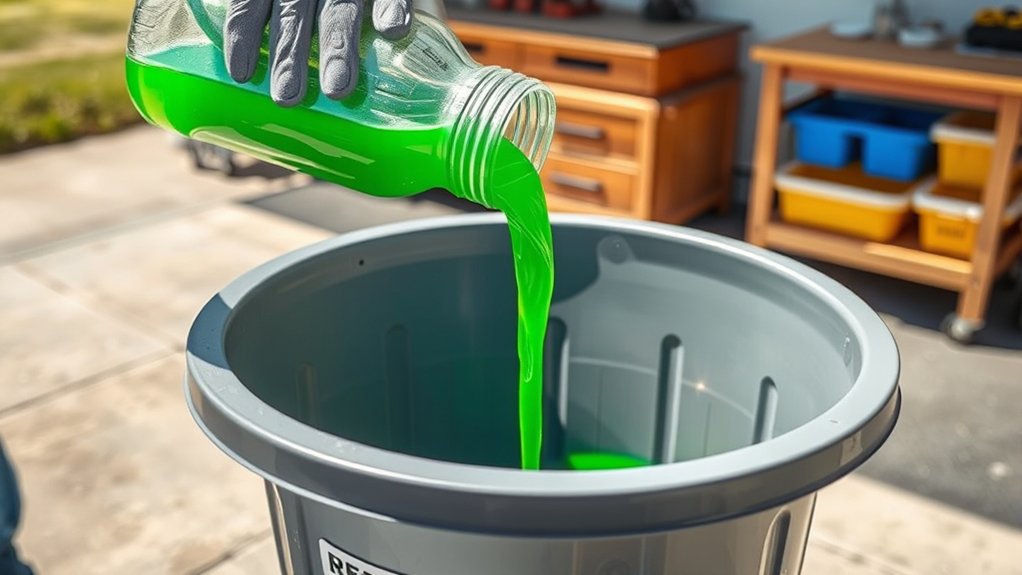
To dispose of coolant safely, first collect it in a sealed, chemical-resistant container labeled “Used Coolant.” Avoid mixing it with other fluids and store it in a cool, ventilated area.
Proper disposal of coolant is essential to prevent environmental harm and health risks.
Take the coolant to authorized recycling centers, automotive shops, or hazardous waste facilities.
Never pour it down drains or on soil, as it contains toxic chemicals harmful to ecosystems and health.
Following these guidelines helps prevent contamination and legal issues.
Understanding safe draining, storage, and spill response can further protect you and the environment.
Proper handling ensures both safety and compliance with regulations.
Why Proper Coolant Disposal Matters
Why should you care about disposing of coolant properly? Improper disposal poses significant environmental and health risks due to its toxic components.
As you learn effective methods, understanding various modes of training can enhance your ability to handle coolant safely. Whether through hands-on workshops or digital modules, these training modes improve compliance with regulatory standards and reduce contamination risks.
Additionally, future research aims to develop more sustainable disposal techniques and alternative coolant formulations, which could further mitigate hazards.
By staying informed and applying precise disposal protocols, you prevent soil and water pollution, safeguarding ecosystems and public health. Proper disposal also ensures legal compliance, avoiding costly penalties.
Your commitment to responsible coolant management contributes to broader environmental protection efforts and advances industry best practices.
What’s In Coolant and Why It’s Harmful
You’ll find that coolant contains chemicals like ethylene glycol and additives designed to prevent corrosion and freezing. These substances are highly toxic, posing serious health risks if ingested or improperly handled. Additionally, releasing coolant into the environment can contaminate water sources and harm wildlife.
Common Coolant Ingredients
What makes coolant hazardous lies in its chemical composition. You’ll find that most coolants contain ethylene glycol or propylene glycol, which serve as antifreeze agents. These compounds lower the freezing point and raise the boiling point of the coolant, ensuring engine stability.
Additionally, corrosion inhibitors like silicates and phosphates protect metal components but add to toxicity. Dyes and additives enhance performance but complicate disposal.
Understanding coolant chemistry helps you recognize why improper disposal can harm the environment. Disposal myths often downplay these risks, suggesting you can simply pour coolant down drains or on soil, which you shouldn’t.
Each ingredient contributes to coolant’s environmental persistence and toxicity, demanding careful handling and adherence to proper disposal procedures to prevent ecological damage.
Toxic Effects on Health
Exposure to coolant poses significant health risks due to its toxic ingredients. When you handle coolant improperly, toxic exposure can occur through skin contact, inhalation, or ingestion.
Key chemical hazards include ethylene glycol and propylene glycol, which are highly poisonous if absorbed or swallowed. These substances can cause symptoms ranging from dizziness and headaches to severe organ damage, particularly affecting the kidneys and nervous system.
Additionally, many coolants contain additives like corrosion inhibitors and dyes that increase chemical hazards, potentially leading to allergic reactions or respiratory distress. You must avoid direct contact and guarantee proper ventilation to reduce these risks.
Understanding these toxic effects helps you appreciate the importance of careful handling and disposal to protect your health from coolant’s harmful properties.
Environmental Impact Risks
Handling coolant carefully protects your health, but improper disposal can severely damage the environment. Coolant contains ethylene glycol and other toxic additives that contaminate water and soil, threatening wildlife and ecosystems.
You might hear marketing myths suggesting pouring coolant down drains is safe or a cost saving strategy; however, these claims ignore long-term environmental costs and legal consequences.
| Coolant Component | Environmental Risk |
|---|---|
| Ethylene Glycol | Toxic to aquatic life |
| Corrosion Inhibitors | Soil contamination |
| Dyes & Additives | Disrupt microbial balance |
How to Drain Coolant Safely for Disposal
Before you start draining coolant, make sure your vehicle is cool and parked on a level surface to avoid accidents. Use a proper container to collect the used coolant, ensuring it’s sealed to prevent leaks. Take precautions like wearing gloves and positioning absorbent materials to minimize spills and exposure hazards.
Preparing Your Vehicle
Draining coolant safely starts with ensuring your engine is completely cool to prevent burns or pressure-related injuries. Begin by setting the preparation timing correctly. Schedule the task several hours after the vehicle has been turned off. This allows the coolant and engine components to reach a safe temperature.
Next, focus on tool selection: gather a drain pan, gloves, safety goggles, and the appropriate wrench or screwdriver for your radiator drain plug or petcock valve. Confirm compatibility with your vehicle’s model to avoid damage or incomplete drainage.
Position the vehicle on a level surface and engage the parking brake to stabilize it. Removing the radiator cap at this stage helps facilitate smooth coolant flow during draining. These steps ensure a safe, efficient start to the coolant disposal process.
Collecting Used Coolant
Once your vehicle is properly prepared and the radiator cap is removed, you can begin collecting the used coolant. Position a suitable container beneath the radiator drain valve or petcock, then carefully open it to allow coolant to flow out.
Ensure the container is compatible with the coolant’s chemical properties to prevent reactions or leaks. Understanding coolant chemistry is crucial here, as it informs proper handling and disposal methods to avoid environmental harm.
If you’re interested in careers in coolant, mastering such technical procedures is essential. Monitor the flow until the radiator empties, then securely close the valve.
Always use protective gloves and eyewear during this process to safeguard against exposure. Proper collection ensures the coolant is ready for safe disposal or recycling, minimizing contamination risks.
Preventing Spills and Hazards
How can you minimize risks when handling coolant during disposal? Start by debunking common coolant myths; for instance, never assume coolant is non-toxic or biodegradable. Always wear chemical-resistant gloves and eye protection to prevent skin and eye contact.
When draining coolant, use a funnel and a dedicated container designed to avoid leaks. Maintain spill etiquette by having absorbent materials and a spill kit nearby to address accidental releases immediately.
Work in a well-ventilated area to reduce inhalation hazards. Secure the vehicle and ensure the engine is cool before draining to avoid burns or pressure-related spills.
Properly seal the used coolant container to prevent evaporation or contamination. By following these steps, you’ll safely drain coolant and reduce environmental and health risks effectively.
Where to Take Used Coolant for Recycling or Disposal
Where can you safely take used coolant for recycling or disposal? You should locate authorized disposal locations such as automotive service centers, hazardous waste collection sites, or specialized coolant recycling facilities. These sites follow environmental regulations to handle antifreeze safely, preventing soil and water contamination.
Many municipalities offer designated collection events or permanent drop-off points for automotive fluids, including used coolant. Before transporting, confirm each facility’s acceptance policies and any preparation requirements.
Never discard coolant in regular trash, drains, or the environment, as improper disposal poses serious hazards. By choosing certified disposal locations, you contribute to responsible coolant recycling efforts, ensuring the toxic components are processed or neutralized correctly, protecting public health and ecosystems.
Always consult local regulations to identify appropriate disposal locations near you.
How to Store Used Coolant Before Disposal
After identifying a proper disposal site, you need to store used coolant securely until you can transport it. To do this, use a durable, leak-proof container made of chemical-resistant material such as high-density polyethylene (HDPE). Ensure the container has a tight-fitting lid to prevent spills and evaporation.
When considering how to store used coolant, keep it in a cool, well-ventilated area away from direct sunlight and ignition sources. Proper container labeling is essential; clearly mark the container with “Used Coolant” along with the date of storage and any hazard warnings.
This labeling helps prevent accidental misuse and facilitates safe handling by disposal personnel. Avoid mixing used coolant with other fluids to maintain its chemical integrity and comply with disposal regulations.
Is Pouring Coolant Down Drains or on the Ground Safe?
Although it might seem convenient, pouring coolant down drains or onto the ground poses significant environmental and health risks. Coolant contains toxic substances like ethylene glycol that contaminate water sources and soil. For safe handling and proper disposal steps, you must avoid improper disposal methods. Here’s why:
- Environmental contamination: Coolant seeps into groundwater, harming aquatic ecosystems and disrupting natural processes.
- Health hazards: Toxic chemicals can poison humans and animals through direct contact or contaminated water.
- Legal consequences: Many jurisdictions enforce strict regulations against dumping hazardous materials, leading to fines or penalties.
To protect yourself and the environment, follow recommended disposal steps at authorized collection centers or recycling facilities. Always use safe handling techniques to minimize exposure and prevent accidental spills.
How to Dispose of Coolant Containers and Packaging
Dispose of coolant containers and packaging responsibly to prevent chemical residues from harming the environment. First, carefully check the container labeling for disposal instructions or hazardous waste symbols.
Many containers are not suitable for standard recycling due to contamination risks, so don’t assume all coolant packaging is recyclable. This is a common recycling myth.
Rinse containers only if the label explicitly advises it; otherwise, treat them as hazardous waste. Locate a local hazardous waste facility or automotive shop that accepts coolant containers for proper disposal.
Avoid placing these containers in general recycling bins, as they can contaminate the recycling stream. By following container labeling guidance and understanding recycling myths, you ensure coolant packaging is disposed of safely and compliantly, minimizing environmental impact.
What to Do If You Spill or Leak Coolant
If you spill or leak coolant, you must act quickly to contain and clean the area to prevent environmental contamination and health hazards. First, wear the appropriate PPE, including gloves and eye protection, to safeguard yourself from toxic exposure.
Second, implement spill containment measures immediately by using absorbent materials like pads or granules to soak up the coolant and prevent it from spreading. Third, collect the contaminated absorbents and place them in a sealed, labeled container for proper disposal according to local regulations.
Avoid rinsing the spill into drains or soil, as coolant contains harmful chemicals. Always ventilate the area and report significant leaks to relevant authorities if required. Prompt, precise action ensures safety and compliance while minimizing environmental impact.
Disposing of Eco-Friendly Coolants: What You Need to Know
Handling spills and leaks is only part of managing coolant safely; understanding how to dispose of eco-friendly coolants properly is equally important. When dealing with eco friendly alternatives, you must treat disposal with the same rigor as traditional coolants.
These coolants often contain biodegradable compounds but can still pose environmental risks if discarded improperly. You should never pour them down drains or onto soil. Instead, collect used eco-friendly coolant in sealed, labeled containers.
Engage with authorized coolant recycling facilities that specialize in processing these substances. Coolant recycling not only prevents environmental contamination but also recovers valuable components for reuse.
Frequently Asked Questions
Can Pets Be Poisoned by Coolant Residue in the Garage?
Like “an ounce of prevention is worth a pound of cure,” you should prioritize pet safety because coolant residue in your garage can cause contamination. This poses serious poisoning risks to pets who might lick or ingest toxic substances.
How Often Should I Change My Vehicle’s Coolant?
You should change your vehicle’s coolant every 2 to 5 years, depending on the manufacturer’s recommendations. Proper coolant handling guarantees environmental safety by preventing leaks and contamination during replacement and disposal procedures.
What Are the Signs of Coolant Contamination?
You’ll notice signs of coolant contamination like discoloration, sludge buildup, or a milky appearance.
Coolant symptoms also include overheating, strange odors, or reduced cooling efficiency. These indicate contamination affecting your engine’s performance.
Are There Any DIY Coolant Recycling Methods at Home?
Back in the days of the Wright brothers, you couldn’t DIY recycling coolant easily at home. Today, you can filter and distill it with proper equipment, but home disposal demands caution and adherence to local hazardous waste regulations.
Can Old Coolant Affect My Car’s Engine Performance?
Yes, old coolant can degrade engine performance by losing its corrosion inhibitors and freezing point protection. You’ll notice overheating, corrosion, or clogging if you don’t replace it promptly.
This impacts your engine’s efficiency and longevity.