Can Car Oil Evaporate
You won’t lose significant engine oil through evaporation under normal conditions because oil’s high boiling point and viscosity limit vaporization.
Synthetic oils resist thermal breakdown better than conventional ones, keeping evaporation minimal despite engine heat. What you might mistake for oil evaporation is often fuel burning or leaks from seals and gaskets.
Oil consumption typically stems from internal engine wear or improper viscosity. Understanding how heat, oil types, and leaks contribute helps clarify actual oil loss causes and prevention strategies.
Does Car Oil Evaporate Normally?
How does car oil behave under normal operating conditions? Typically, engine oil does not evaporate significantly due to its high boiling point and viscosity. You might hear oil change myths suggesting frequent oil loss from evaporation, but these claims often confuse oil degradation or fuel evaporation with actual oil volume reduction.
Synthetic vs conventional oils differ primarily in molecular stability; synthetics resist thermal breakdown better, minimizing volatility. Fuel evaporation, on the other hand, is a distinct process where gasoline vaporizes in the combustion chamber and intake system, not affecting oil levels directly.
Under standard temperature and pressure, oil remains within the engine, lubricating moving parts effectively without noticeable evaporation. Thus, if you observe oil loss, it’s more likely due to leaks or combustion-related consumption, not normal evaporation.
Other Reasons Your Car Loses Oil
You might notice oil loss even without evaporation, often caused by leaks or increased engine oil consumption. Identifying leaks requires careful inspection of seals, gaskets, and oil pans for signs of seepage or residue. Additionally, abnormal oil consumption can indicate internal engine issues that demand diagnostic evaluation.
Oil Leaks Detection
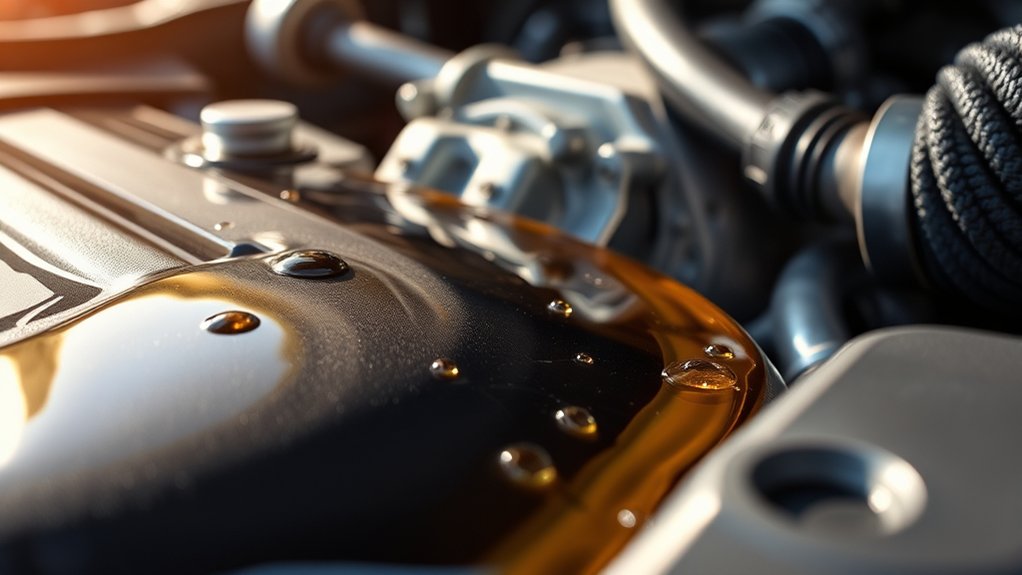
Where exactly is your car losing oil? Detecting oil leaks requires a systematic inspection of common leak points like the oil pan gasket, valve cover gasket, and drain plug. Look for visible signs of an oil spill beneath your vehicle or on engine components.
Pay close attention to dark, wet spots or a slick residue that indicates fresh leaks. Additionally, vapor emission around the engine bay can signal a compromised seal or cracked hose allowing oil vapors to escape.
Using a UV dye additive in your oil can enhance leak detection under blacklight, pinpointing otherwise invisible leak sources. Accurate identification of leak locations prevents misdiagnosis and unnecessary repairs, ensuring you address the root cause rather than symptoms.
Regular inspections help maintain oil integrity and vehicle performance.
Engine Oil Consumption
Identifying oil leaks is a key step, but oil loss doesn’t always stem from external leaks. Engine oil consumption can occur internally due to oil characteristics and evaporation mechanics under high temperature and pressure.
Your engine burns small amounts of oil during combustion, especially if oil viscosity degrades or seals wear out. This internal consumption may be subtle but significant over time.
| Cause | Effect on Oil Loss | Detection Method |
|---|---|---|
| High Combustion Temp | Accelerates evaporation | Monitor oil level drop |
| Worn Valve Seals | Oil enters combustion chamber | Compression test |
| Oil Viscosity Thin | Increased burn rate | Analyze oil sample |
Understanding these factors helps you diagnose engine oil consumption beyond visible leaks.
How Engine Heat Causes Car Oil Evaporation
You’ll notice that as engine heat rises, it directly affects the oil’s viscosity, causing it to thin. This thinning increases the rate at which oil molecules vaporize, leading to gradual evaporation. Understanding this vaporization process helps explain why high engine temperatures accelerate oil loss.
Oil Vaporization Process
How exactly does engine heat lead to the vaporization of car oil? When your engine operates, it generates substantial heat, raising the temperature of the oil circulating within.
As the oil temperature climbs, lighter hydrocarbon components begin to vaporize. This vaporization occurs primarily in areas exposed to intense heat, such as near combustion chambers.
Engine venting systems then release these oil vapors to prevent pressure buildup, but this process can contribute to oil loss over time. If you don’t manage oil spillages properly, these vapors can compound oil consumption issues.
Understanding this vaporization process helps you realize why maintaining proper oil levels and monitoring for leaks is crucial. The precise balance between heat, oil composition, and venting efficiency governs how much oil evaporates during engine operation.
Heat Impact On Viscosity
Why does engine heat considerably alter the viscosity of car oil, accelerating its evaporation? When you subject car oil to elevated temperatures, its viscosity decreases, making the oil thinner and more fluid. This change stems from the oil’s temperature sensitivity, where heat disrupts molecular cohesion.
As viscosity drops, the oil’s volatility increases, meaning lighter hydrocarbon fractions vaporize more readily. You’ll notice that at higher engine temperatures, these volatile components evaporate faster, reducing the oil’s overall mass.
This evaporation not only diminishes lubrication efficiency but also alters the oil’s chemical composition, potentially compromising engine protection. Understanding this heat-induced viscosity change is crucial because it directly impacts oil performance and longevity, emphasizing the need for oils engineered to withstand high temperature volatility in modern engines.
Which Car Oils Evaporate Faster?
Which car oils evaporate faster depends largely on their chemical composition and viscosity. Oils with lower viscosity grades, such as 0W-20 or 5W-20, tend to experience increased oil vaporization under high temperatures due to their lighter molecular structure.
Conversely, higher viscosity oils like 15W-40 contain larger hydrocarbon chains, reducing the rate of oil evaporation. Synthetic oils often have more uniform molecular weights, which can decrease volatility compared to conventional oils.
Additives also play a critical role; anti-evaporation additives help mitigate oil loss by stabilizing the oil film. When selecting oil, consider that lower viscosity oils evaporate quicker, especially under prolonged heat exposure, potentially requiring more frequent top-offs.
Understanding these properties helps you manage oil consumption more effectively, minimizing performance issues linked to excessive oil evaporation.
Signs Your Car Is Losing Oil Through Evaporation or Leaks
Detecting oil loss early can prevent engine damage and costly repairs. If you notice a drop in oil levels without visible leaks, it may indicate evaporation accelerated by high engine temperatures affecting oil viscosity.
Thinner oil due to evaporation compromises lubrication, increasing wear. Pay attention to oil discoloration or a burnt smell, signs that emission cooling isn’t adequately maintaining optimal temperatures.
Additionally, frequent oil top-ups suggest unseen leaks or vapor loss. Inspect under your car for fresh oil puddles indicating leaks, and monitor exhaust smoke; bluish smoke often signals burning oil.
Regularly check oil viscosity with a dipstick or oil analysis to detect degradation. By recognizing these signs, you can pinpoint whether oil loss stems from evaporation or leaks and act before it harms engine performance.
How to Prevent Oil Evaporation and Keep Your Engine Healthy
Understanding the indicators of oil evaporation and leaks sets the stage for effective prevention strategies. To prevent oil evaporation, focus on optimizing the oil composition. Use high-quality synthetic oils with additives that reduce volatility and enhance thermal stability.
Regularly check oil levels and replace oil before degradation accelerates evaporation mechanisms caused by excessive heat or contamination. Maintain engine temperature within manufacturer specifications, since overheating exacerbates evaporation and oil breakdown.
Additionally, inspect seals and gaskets to prevent leaks that compound oil loss. Use proper oil grades suited to your engine’s design to ensure the oil’s viscosity remains stable under operating conditions.
Frequently Asked Questions
Can Using Synthetic Oil Reduce Evaporation?
Yes, synthetic oil reduces evaporation due to its lower oil volatility compared to conventional oils. When you use synthetic oil, you engage in a synthetic evaporation control, minimizing oil loss and maintaining optimal engine lubrication longer.
Does Oil Evaporation Affect Fuel Efficiency?
Think of oil volatility as a leaking faucet; its evaporation impact subtly reduces lubrication, forcing your engine to work harder. This inefficiency can lower fuel efficiency, so you’ll want to monitor oil quality to maintain prime performance.
How Often Should I Check My Oil Level?
You should check your oil level at least once a month to monitor oil consumption and detect oil leaks early. Regular checks help maintain optimal engine performance and prevent costly damage due to insufficient lubrication.
Can Oil Evaporation Cause Engine Knocking?
Imagine a leaky faucet dripping away essential fluid; oil volatility leads to evaporative loss, reducing lubrication.
You’ll face engine knocking as metal parts collide without proper oil film, so monitor and top up to prevent damage.
Is It Safe to Drive With Low Oil Levels?
You shouldn’t drive with low oil levels because reduced lubrication from car oil volatility increases engine wear. Insufficient engine venting worsens pressure buildup, risking component damage and decreased performance.
Maintain proper oil levels consistently for safe operation.
Conclusion
You should know that engine oil can evaporate, especially under high temperatures, losing up to 10% of its volume during intense driving conditions. This evaporation, combined with leaks and combustion byproducts, accelerates oil depletion.
Monitoring oil levels regularly and using high-quality synthetic oils with higher evaporation resistance can substantially reduce this loss. Staying proactive helps maintain ideal engine lubrication, preventing wear and costly repairs.
Don’t underestimate evaporation—it’s a subtle but impactful factor in oil consumption. Understanding that car oil can evaporate is essential for effective engine maintenance.