
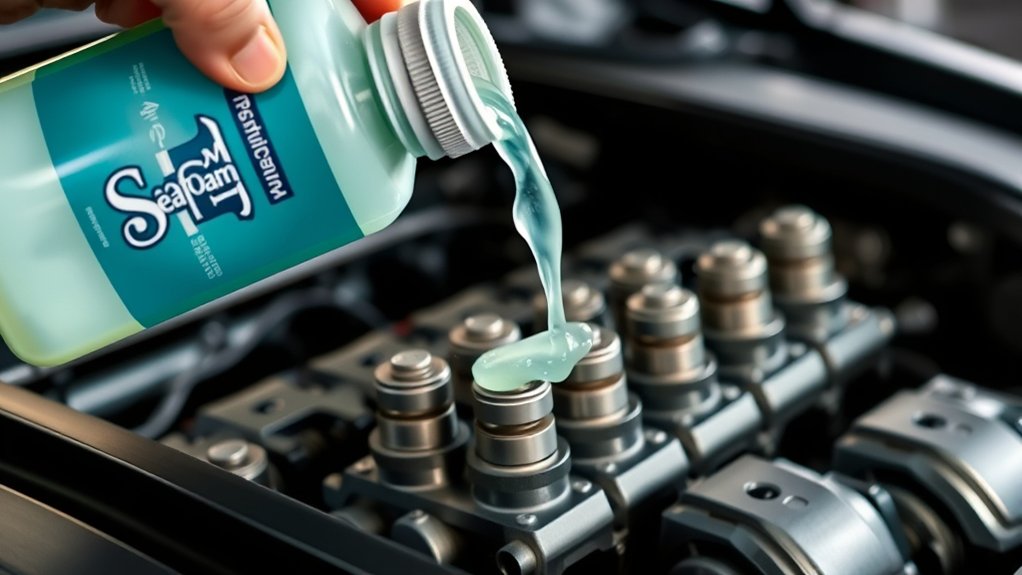
Does Seafoam Clean Fuel Injectors
Yes, you can use Seafoam to clean fuel injectors by dissolving mild to moderate carbon deposits that disrupt fuel spray and timing. It helps restore precise fuel delivery, improving combustion efficiency and engine performance during routine maintenance.
However, Seafoam isn’t effective on severe clogging or mechanical injector wear—it works best as preventive care added to a near-empty tank.
If you want to understand how it works, user experiences, and when to apply it, more details follow.
Does Seafoam Really Clean Fuel Injectors?
Seafoam cleans fuel injectors effectively by dissolving carbon deposits that negatively affect injection timing and overall engine performance. By cleaning these injector ports, it helps restore precise fuel delivery, which is critical for maintaining proper combustion.
Using Seafoam can indirectly support ideal fuel octane utilization, as clean injectors ensure the fuel-air mixture burns efficiently. This prevents knocking and allows the engine to run closer to its designed timing specifications.
However, Seafoam is best suited for mild to moderate buildup rather than heavy deposits. For consistent results, you should use it as part of regular maintenance rather than relying solely on it for severe injector issues.
In closing, Seafoam effectively cleans injectors to improve injection timing and fuel octane performance under typical operating conditions.
What Are Fuel Injector Deposits and Why They Matter
Fuel injector deposits form when impurities in fuel or incomplete combustion leave residue on injector nozzles. These deposits disrupt fuel spray patterns, reducing engine efficiency and causing rough idling or poor acceleration. You’ll notice signs like decreased fuel economy and engine misfires when injectors start clogging.
Causes Of Fuel Deposits
Why do deposits form inside your vehicle’s fuel injectors, and what impact do they have? Fuel deposits develop primarily due to impurities and incomplete combustion residues. These deposits obstruct fuel flow, reducing injector efficiency. Understanding their causes helps you prevent buildup effectively.
- Low-quality fuel: Contains additives and contaminants that don’t burn cleanly, leaving residues.
- Incomplete combustion: Occurs when fuel doesn’t fully vaporize, often from rapid acceleration or cold starts.
- Evaporation of lighter hydrocarbons: Leaves behind heavier components that adhere to injector surfaces.
- Fuel system additives: Some marketing strategies promote additives, but not all prevent deposits; their effectiveness varies.
Similar to literary devices shaping a narrative, the interplay of these factors crafts the extent of deposit formation inside your injectors.
Impact On Engine Performance
What happens when deposits clog your fuel injectors? These buildups restrict fuel flow, disrupting the precise spray pattern needed for efficient combustion.
As a result, your engine struggles to maintain optimal air-fuel mixtures, leading to reduced power and lower fuel economy. You might be tempted to go off topic venting about unrelated issues, but focusing on injector deposits is crucial.
These deposits cause incomplete combustion, increasing emissions and engine knock risks. Over time, your engine’s responsiveness and smoothness deteriorate, impacting overall performance.
Addressing injector deposits promptly helps maintain consistent fuel delivery, ensuring your engine runs as designed. Understanding this impact highlights why cleaning solutions like Seafoam are more than just an unrelated topic; they directly influence engine health and efficiency.
Signs Of Injector Clogging
When deposits build up inside your injectors, they interfere with the spray pattern and fuel flow, leading to noticeable symptoms in your vehicle’s operation. Recognizing these signs helps you avoid costly repairs. Here are four key indicators of injector clogging:
- Rough idling: Uneven fuel delivery causes engine vibrations and unstable RPMs.
- Reduced power: You’ll notice sluggish acceleration due to inefficient combustion.
- Poor fuel economy: Deposits disrupt optimal fuel atomization, increasing consumption.
- Engine misfires: Inconsistent fuel spray results in incomplete combustion cycles.
Avoid considering irrelevant or off-topic discussion when diagnosing injector issues; focus strictly on symptoms related to fuel delivery. Understanding what fuel injector deposits are and why they matter ensures you address the problem effectively before it worsens.
Seafoam’s Claims for Cleaning Fuel Injectors
You’ll want to understand the specific ingredients Seafoam uses to target fuel injector deposits and how effective they are in practice. It’s important to assess the cleaning performance based on both lab results and real-world engine conditions. Additionally, you should consider the manufacturer’s instructions to ensure proper application and avoid potential engine issues.
Seafoam Cleaning Ingredients
How exactly does Seafoam claim to clean fuel injectors? The formula combines specific ingredients designed to dissolve deposits and improve fuel flow. Unlike unrelated topic discussions or random chatter, here’s what you’ll find in Seafoam’s cleaning solution:
- Petroleum-based solvents Break down varnish and gum buildup on injectors.
- Detergents Remove carbon deposits and prevent new buildup.
- Lubricants Protect injector components from wear during cleaning.
- Stabilizers Maintain fuel integrity during storage and treatment.
These components work synergistically to dissolve and flush out contaminants inside the fuel system, targeting injector ports and spray patterns. Understanding these ingredients helps you grasp how Seafoam intends to maintain injector cleanliness without relying on vague claims or random chatter.
Effectiveness On Injectors
Seafoam’s blend of solvents, detergents, lubricants, and stabilizers targets fuel injector deposits to restore efficient spray patterns and fuel atomization. When you use Seafoam, it dissolves carbon buildup that can hinder injector performance, improving fuel flow and combustion efficiency.
However, some claims about its effects veer into irrelevant discussion or stray topic territory, such as exaggerated expectations of complete injector restoration after a single treatment. You should understand that while Seafoam can reduce deposits, it isn’t a substitute for professional cleaning if severe clogging exists.
Its effectiveness largely depends on the extent of contamination and consistent maintenance. Avoid getting sidetracked by anecdotal reports that don’t focus on measurable injector performance improvements. Stick to practical evaluation of Seafoam’s solvent action on deposits for realistic expectations.
Manufacturer Usage Recommendations
When should you use Seafoam to clean fuel injectors for best results? Seafoam’s manufacturer guidelines suggest applying it during routine maintenance or when you notice injector-related symptoms. To optimize effectiveness, you should:
- Add Seafoam to a near-empty fuel tank for thorough injector cleaning.
- Use it every 3,000 miles or as specified in your vehicle’s manual.
- Avoid confusing this with unrelated topics like engine horsepower improvements; Seafoam targets injector deposits, not power gains.
- Ensure the engine runs at normal operating temperature for proper chemical action.
Following these recommendations ensures that Seafoam addresses injector clogging efficiently without risking engine performance or voiding warranties. Stick to the prescribed intervals and conditions for practical, measurable injector cleaning results.
How Seafoam Works Inside Your Engine
Why does adding Seafoam to your fuel system help maintain engine performance? Seafoam works by dissolving and loosening stubborn engine deposits that accumulate on fuel injectors, intake valves, and combustion chambers.
When you introduce Seafoam into the fuel system, its petroleum-based formula spreads evenly, breaking down varnish, gum, and carbon buildup. This process restores optimal fuel atomization and combustion efficiency.
As a result, your engine runs smoother, with improved throttle response and reduced emissions. Seafoam also lubricates critical components, preventing premature wear.
What Science Says About Seafoam’s Effectiveness
Numerous automotive studies and engine tests have evaluated the impact of fuel additives like Seafoam on injector cleanliness and overall engine performance. You should focus on these scientific findings rather than discussion ideas or unrelated topics that often cloud judgment.
Research indicates that:
- Seafoam’s detergent components can reduce carbon deposits inside injectors.
- Fuel system cleaning efficiency varies by engine type and condition.
- Laboratory tests show moderate improvements in fuel atomization post-treatment.
- Seafoam does not restore severely clogged injectors; mechanical cleaning may be necessary.
While Seafoam offers measurable benefits in maintaining injector function, it’s not a cure-all. Scientific evidence supports its use as a preventative maintenance tool rather than a fix for major injector problems.
Avoid confusing unrelated topics or anecdotal claims with these technical findings when assessing Seafoam’s effectiveness.
Real User Experiences With Seafoam Injector Cleaning
Scientific studies provide a solid foundation for understanding Seafoam’s impact on fuel injectors, but real-world results can vary based on individual use and engine conditions. When you read user reviews, you’ll find a mix of positive feedback and skepticism, often influenced by unrelated topics or random speculation.
To help you assess actual experiences, here’s a clear summary:
| User Experience | Common Outcome |
|---|---|
| Consistent Use | Noticeable smoother idling |
| Occasional Use | Minimal or no perceptible change |
| High Mileage Engines | Some report improved fuel economy |
| Skeptical Reports | Attribute improvements to unrelated factors |
This range shows that while Seafoam can aid injector cleaning, its effectiveness depends heavily on your specific engine state and maintenance routine, not random speculation.
When and How to Use Seafoam for Fuel Injector Cleaning
When should you use Seafoam to clean your fuel injectors for the best results? Apply it before performance issues arise or after noticing rough idling, hesitation, or reduced fuel efficiency. Avoid getting distracted by unrelated topics or random chatter that doesn’t focus on injector care specifics.
Follow these steps for precise use:
- Add Seafoam directly into the fuel tank with a nearly empty tank to ensure concentration.
- Run the engine to allow the cleaner to flow through injectors, dissolving deposits.
- For severe buildup, consider a direct intake manifold treatment following Seafoam’s guidelines.
- Regular maintenance intervals, like every 3,000 miles, optimize injector cleanliness and longevity.
This approach maintains injector function without unnecessary complications.
Limitations and Alternatives to Seafoam for Injector Cleaning
While Seafoam can effectively clean fuel injectors under many conditions, it doesn’t address all types of injector issues or severe deposits. Injector aging causes mechanical wear and corrosion that chemical cleaners like Seafoam can’t reverse.
Additionally, poor fuel quality can contribute to stubborn varnish and deposits that require more aggressive treatments. If you face persistent injector problems, professional ultrasonic cleaning or injector replacement may be necessary. These methods physically remove contaminants and restore precise spray patterns, which Seafoam cannot guarantee.
You might also consider fuel additives formulated specifically for injector decarbonization or use high-quality fuels with detergents to prevent buildup. Ultimately, understanding Seafoam’s limitations helps you choose the best maintenance strategy tailored to your injector’s condition and fuel quality.
How to Tell If Your Fuel Injectors Need Cleaning
How can you tell if your fuel injectors need cleaning? Identifying injector issues early avoids unrelated topic distractions or off topic discussion about other engine parts. Focus on these four key signs:
- Engine Misfires or Rough Idle: Inconsistent fuel delivery causes uneven combustion.
- Decreased Fuel Efficiency: Clogged injectors reduce fuel atomization, increasing consumption.
- Poor Acceleration: Delayed throttle response signals injector flow problems.
- Fuel Odor or Emissions Issues: Leaks or incomplete combustion produce noticeable smells or fail emissions tests.
If you notice these symptoms, your fuel injectors likely require cleaning. Don’t confuse these with unrelated topic issues like spark plugs or air filters, as accurate diagnosis ensures effective maintenance without off topic discussion.
Frequently Asked Questions
Is Seafoam Safe for All Types of Engines?
You’ll find Seafoam generally safe for many engine types, but you must check engine compatibility first. Using it improperly can cause fuel system risks, so follow manufacturer guidelines to avoid damage and ensure optimal performance.
Can Seafoam Improve Overall Fuel Economy?
You can see modest fuel economy improvements using Seafoam, but uninformed claims often exaggerate results.
Pay attention to consumer warnings; effectiveness varies by engine condition and driving habits, so don’t expect dramatic or consistent mileage boosts.
How Often Should Seafoam Be Used for Maintenance?
You should use Seafoam about every 3,000 miles or during routine oil changes. Frequently asked maintenance myths suggest daily use, but that’s unnecessary and could harm your engine.
Follow manufacturer recommendations for best results.
Does Seafoam Clean Other Engine Components Besides Injectors?
Yes, Seafoam aids in cleaning intake valves and combustion chambers while ensuring fuel compatibility across gasoline and diesel engines. You’ll find it practical for dissolving carbon deposits beyond just the injectors, enhancing overall engine performance effectively.
Are There Any Risks of Using Seafoam in Older Vehicles?
About 70% of older engines have seals sensitive to fuel additives like Seafoam. You should avoid heavy use, as it may cause leaks or damage.
Use Seafoam cautiously, following manufacturer guidelines for older vehicles.
Conclusion
If you think of your engine as a finely tuned instrument, Seafoam acts like a gentle tuner, reaching fuel injectors to dissolve deposits. While it won’t replace professional cleaning, it can improve flow and performance when used correctly.
Coincidentally, the clearer your injectors run, the smoother your engine hums—proof that Seafoam’s chemistry works. Use it as a practical maintenance tool, but know its limits and watch for signs that deeper cleaning is needed.
In conclusion, Seafoam can clean fuel injectors to some extent, helping maintain your engine’s efficiency, but it should not be relied on as the sole solution for injector problems.