Can I Use Car Oil in a Lawn Mower
You shouldn’t use car oil in your lawn mower because its formulation and additives don’t match the unique needs of small, air-cooled engines.
Car oil contains detergents and additives designed for high temperatures and multi-cylinder engines, which can cause carbon buildup and poor lubrication in your mower.
Using the wrong oil reduces performance and engine life.
To protect your mower, use oil specifically designed for small engines.
Keep exploring to understand why mower oil differs and how to pick the right one.
What’s the Difference Between Car Oil and Lawn Mower Oil?
When comparing car oil and lawn mower oil, you’ll find key differences in their formulation and viscosity tailored to the specific demands of each engine type. Car basics teach you that automotive engines operate under higher temperatures and pressures, requiring oils with additives to prevent sludge and wear.
Lawn mower oil, however, is designed for smaller, air-cooled engines with shorter intervals between oil changes. It typically has a different viscosity and fewer detergents to avoid foaming and ensure proper lubrication.
Don’t fall for oil myths suggesting all oils are interchangeable; using the wrong type can impair engine performance. Understanding these distinctions helps you select the right oil, ensuring efficient operation and longevity of your lawn mower without compromising your car’s engine health.
Why Do Lawn Mowers Need Special Oil?
A lawn mower’s engine demands oil specifically formulated to handle its unique operating conditions, such as higher RPMs, exposure to dirt, and less efficient cooling compared to car engines. You need to ensure oil compatibility because standard car oil doesn’t address these factors.
Lawn mower oils contain additives that protect against wear from frequent high-speed operation and resist breakdown from heat and contaminants. They also provide superior lubrication in small, air-cooled engines, preventing carbon buildup and corrosion.
Using incompatible oil can lead to reduced engine life, inefficient performance, and increased maintenance. So, prioritizing the correct oil ensures your lawn mower runs smoothly under its specific stresses, maintaining optimal function and durability.
This technical distinction is why you can’t just substitute car oil without risking damage.
How to Find the Right Oil for Your Lawn Mower
To find the right oil for your lawn mower, start by identifying the oil types compatible with your engine. Always check the manufacturer’s recommendations to ensure proper performance and protection. Next, match the oil viscosity to your mower’s operating conditions for optimal efficiency.
Understanding Oil Types
How do you determine the correct oil type for your lawn mower? Understanding oil types is crucial; using car oil without verifying can lead to improper lubrication. Unlike irrelevant topics or unrelated themes, this is directly about matching the oil’s viscosity and additives to your mower’s engine needs.
Lawn mower oils are typically SAE 30 or multi-viscosity oils like 10W-30.
| Oil Type | Viscosity | Use Case |
|---|---|---|
| SAE 30 | Single | Warm weather mowers |
| 10W-30 | Multi | Variable temperatures |
| Synthetic | Multi | High-performance |
| SAE 5W-30 | Multi | Cold climates |
| Lawn Mower | Special | Small engines |
Choose based on your climate and mower type for optimal performance.
Checking Manufacturer Recommendations
Where can you find the exact oil specifications for your lawn mower? Start by consulting the owner’s manual or the manufacturer’s website. These sources provide precise guidance on the types of oil approved for your model, helping you avoid incompatible blends that can degrade engine performance.
Using oil not recommended by the manufacturer risks causing damage and may lead to warranty issues if repairs become necessary. Manufacturers often specify oil grades and additives designed for small engines, differing from automotive oils.
Following their recommendations ensures optimal lubrication and longevity. Don’t guess or substitute car oil without verifying compatibility. Doing so can void your warranty and harm your mower.
Always prioritize manufacturer instructions to maintain your mower’s efficiency and protect your investment.
Matching Oil Viscosity
Why does oil viscosity matter when choosing the right lubricant for your lawn mower? Viscosity affects how oil flows and protects engine parts under different temperatures. Ignoring this can lead to poor lubrication or engine damage. Don’t confuse this with an irrelevant topic like oil brand marketing or unrelated concept like fuel type, which don’t impact viscosity needs.
To find the right oil viscosity, follow these steps:
- Check your mower’s manual for the manufacturer’s recommended viscosity grade (e.g., SAE 30, 10W-30).
- Consider the operating temperature range. Thicker oils suit warm climates; thinner oils work better in cold.
- Use oil labeled for small engines, as automotive oil viscosity might differ despite similar numbers.
Matching viscosity precisely ensures optimal performance and longevity of your lawn mower engine.
Can Car Oil Damage Your Lawn Mower Engine?
You should avoid using car oil in your lawn mower because its viscosity often differs from what small engines require. Using the wrong oil viscosity can reduce lubrication efficiency, increasing engine wear and overheating risks. This mismatch can lead to premature engine damage and costly repairs.
Oil Viscosity Differences
How does oil viscosity impact your lawn mower’s engine performance? Viscosity determines how well the oil flows at different temperatures, directly affecting lubrication. Car oil typically has a viscosity grade suited for automotive engines, which operate at different speeds and temperatures than lawn mowers.
Using the wrong viscosity can lead to inadequate lubrication or increased friction. When comparing car oil to lawn mower oil, consider:
- Cold start flow: Lawn mower oils often have lower viscosity for quick lubrication at startup.
- Operating temperature: Lawn mower engines run hotter; oil must maintain stability without thinning excessively.
- Shear resistance: Lawn mower oil resists breakdown under continuous high RPM better than many car oils.
Choosing the correct viscosity ensures optimal protection and performance for your lawn mower engine.
Engine Wear Risks
Though some car oils might seem suitable, using them in your lawn mower can increase engine wear risks due to differences in formulation and additives. Lawn mower engines have unique design requirements for lubrication, focusing on high RPMs and less complex fuel systems than car engines.
Car oils often contain additives optimized for multi-cylinder engines, which may degrade fuel efficiency and cause premature wear in your mower.
| Factor | Lawn Mower Oil | Car Oil |
|---|---|---|
| Additive Type | Simple, focused on wear | Complex, multi-functional |
| Engine Design | Single-cylinder, high RPM | Multi-cylinder, variable RPM |
| Fuel Efficiency | Optimized for small engines | Designed for larger engines |
Using car oil may compromise protection, leading to increased friction and reduced mower lifespan.
Is It Ever Okay to Use Car Oil in a Lawn Mower?
Although car oil might seem like a convenient substitute, using it in a lawn mower is generally not recommended due to differences in formulation and performance requirements. You should consider that lawn mowers need oil with specific oil viscosity and fuel compatibility standards to ensure proper engine function.
Using car oil in lawn mowers is usually discouraged due to different formulation and performance needs.
Here’s when it might be okay:
- Emergency Use Only: If you’re out of mower oil and must operate the mower briefly.
- Matching Viscosity: The car oil must have the exact viscosity grade recommended by your mower’s manufacturer.
- Non-Mixed Engines: Use only if your mower is a 4-stroke engine; avoid in 2-stroke where oil mixes with fuel.
Still, it’s best to use lawn mower-specific oil to maintain engine longevity and performance.
What Happens If You Use Car Oil in Your Mower?
Using car oil in your lawn mower can cause several issues due to differences in additive packages and oil formulation. Car oils often contain detergents and additives designed for long engine life and high temperatures, which may not suit small mower engines.
These additives can lead to carbon buildup, poor lubrication, and increased wear in your mower’s engine. Avoid topic drift by not confusing this with unrelated issues like fuel type or mower brand.
Making an irrelevant comparison between car and lawn mower oils ignores the distinct operating conditions both require. Ultimately, using car oil compromises your mower’s performance and longevity.
Stick to oils specifically formulated for lawn mowers to ensure proper viscosity, additive balance, and engine protection under the mower’s unique operating demands.
How to Choose the Right Lawn Mower Oil
How do you select the right oil to keep your lawn mower running smoothly? First, avoid distractions from irrelevant topics or off topic ideas that don’t affect mower performance. Focus strictly on oil specifications suited to your mower’s engine. Follow these steps:
- Check the manufacturer’s manual for recommended oil type and viscosity.
- Choose oil labeled for small engines, typically SAE 30 or 10W-30 for multi-season use.
- Use high-quality, detergent oils designed to prevent buildup and protect against wear.
Don’t substitute car oil without verifying compatibility; it often contains additives that may harm your mower. Sticking to the correct oil ensures optimal lubrication, reduces engine wear, and extends mower life. Avoiding irrelevant or off topic ideas lets you make an informed, practical choice for your mower’s health.
How to Change Your Lawn Mower Oil Properly
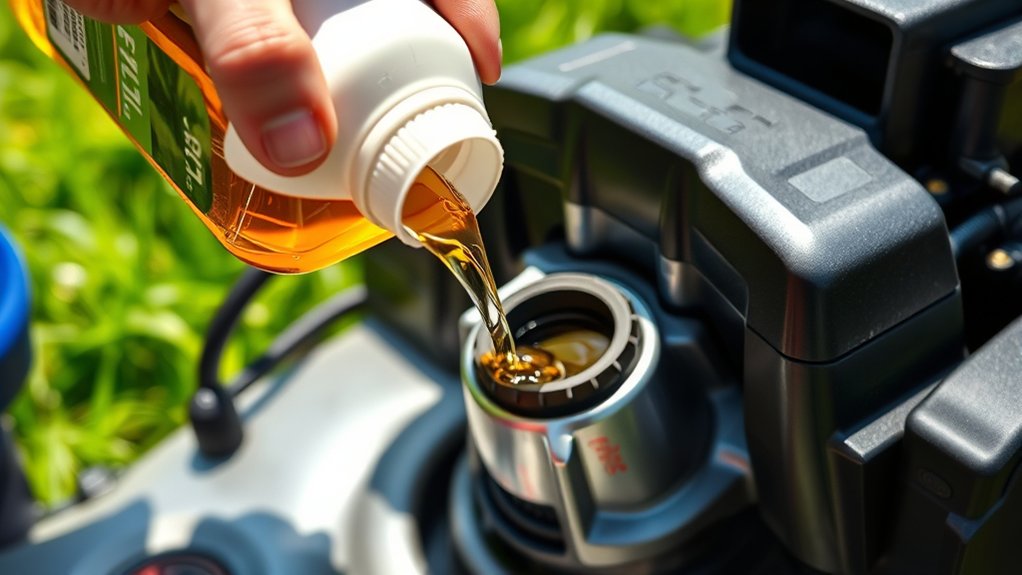
Before you begin changing your lawn mower oil, make sure the engine is cool to prevent burns and ensure accurate oil drainage. Locate the oil drain plug or remove the dipstick to allow oil to flow freely into a container. Use a wrench to loosen the drain plug carefully.
Once drained, replace the drain plug securely to prevent leaks. Next, fill the engine with the recommended type and amount of engine oils specified in your mower’s manual. Check the oil level with the dipstick to confirm proper mower lubrication.
Avoid overfilling, as excess oil can damage the engine. Finally, dispose of used oil responsibly at a recycling center. Regular maintenance following these steps ensures optimal performance and prolongs your mower’s engine life.
Signs It’s Time to Change Your Lawn Mower Oil
When should you change your lawn mower oil to keep the engine running smoothly? Monitoring specific signs helps maintain performance and preserves your engine warranty.
- Oil Color and Consistency: If the oil turns dark, gritty, or thickens, it’s degraded and can cause engine wear.
- Engine Performance Drops: Noticeable reduction in power or increased smoke signals oil contamination or breakdown.
- Operating Hours: Follow the manufacturer’s recommended interval, usually every 25-50 hours of use, to prevent sludge buildup.
Proper oil disposal is crucial; never pour used oil down drains or on soil. Use designated collection points to protect the environment and comply with regulations. Addressing these signs promptly safeguards your mower’s engine and keeps your warranty valid.
Frequently Asked Questions
How Often Should I Check My Lawn Mower Oil Level?
You should check your lawn mower oil level before every use as part of your oil level checklist.
Regular lawn mower maintenance ensures optimal performance and prevents engine damage by keeping oil levels within recommended ranges.
Can Synthetic Oil Be Used in Lawn Mowers?
You can use synthetic oil in lawn mowers, but be cautious. Using engine lubrication that matches your mower’s specifications ensures optimal performance.
Check oil compatibility carefully, as some synthetics might affect seals or engine wear differently.
What Are the Environmental Impacts of Lawn Mower Oil Disposal?
You must handle lawn mower oil carefully to minimize environmental disposal impacts. Proper recycling and containment prevent soil and water contamination.
Following local regulations ensures effective impact mitigation, protecting ecosystems from hazardous chemical exposure.
How Do I Store Leftover Lawn Mower Oil Safely?
Think of leftover lawn mower oil as a ticking time bomb; you store it in a sealed, labeled metal container away from heat and children. This unrelated topic avoids miscellaneous discussion clutter, ensuring safe, precise handling and environmental protection.
Can Using the Wrong Oil Affect Lawn Mower Warranty?
Yes, using the wrong oil can void your lawn mower’s warranty claims. Manufacturers require specific oil types to ensure engine performance and longevity.
Always check the manual to avoid warranty issues caused by improper oil use.
Conclusion
Using car oil in your lawn mower might seem like a quick fix, but it’s like putting rocket fuel in a lawn tractor—overkill that can wreck your engine. Lawn mowers need specific oil designed for their unique demands, or you risk costly damage and poor performance.
Always choose the right oil, change it properly, and keep an eye on signs for a smooth-running mower. Don’t gamble—your mower’s life depends on it! When considering whether to use car oil in a lawn mower, it’s best to avoid it and stick to the recommended oil for optimal results.