How Often to Change Oil Filter
You should change your oil filter every time you change your oil. This typically occurs between 3,000 and 7,500 miles, depending on your vehicle’s make, oil type, and driving conditions. Changing the oil filter regularly is essential to maintain engine health and performance.
Synthetic oils often extend the intervals between changes, but short trips or driving in dusty environments may clog filters faster. It’s important to watch for signs like reduced performance or dark oil. Avoid waiting for dashboard alerts alone to prompt a filter change.
Following these guidelines guarantees proper filtration and engine protection. Further details explain how to optimize timing and replacement steps for the best results.
Key Takeaways
- Change the oil filter with every oil change, typically every 3,000 to 7,500 miles, depending on vehicle and oil type.
- Synthetic oils often allow longer intervals between oil and filter changes compared to conventional oils.
- Driving conditions like stop-and-go traffic and dusty environments may require more frequent filter changes.
- Signs such as reduced engine performance, unusual noises, or dark oil indicate the filter may need replacement sooner.
- Regularly follow manufacturer guidelines and inspect the filter to prevent clogging and ensure optimal engine protection.
What Factors Affect How Often to Change Your Oil Filter?
How often should you change your oil filter depends on several key factors that influence its efficiency and lifespan. Primarily, the type of oil you use, synthetic or conventional, affects filtration duration. Synthetic oils generally extend the filter’s service life.
Your vehicle’s make and model also dictate specific requirements outlined in the maintenance schedule, which you should always consult. Driving conditions play a crucial role; frequent short trips, stop-and-go traffic, or dusty environments accelerate filter clogging.
Additionally, the oil change interval impacts when you need to replace the filter. Skipping or extending oil changes can degrade filter performance, leading to contaminants bypassing it. By understanding these variables, you can optimize your oil filter replacement timing, ensuring engine protection and maintaining vehicle performance.
How Often Should You Change Your Oil Filter?
Determining the right interval for changing your oil filter depends on balancing factors like oil type, vehicle specifications, and driving conditions. Generally, manufacturers recommend replacing the oil filter every time you change the oil, typically between 3,000 to 7,500 miles.
However, consult your vehicle’s maintenance schedule for exact guidance, as newer engines and synthetic oils often allow longer intervals. Sticking to the prescribed oil filter replacement cues ensures supreme filtration, preventing contaminants from compromising engine performance.
Ignoring these intervals can lead to clogged filters, reduced oil flow, and accelerated engine wear. Regularly updating your oil filter according to your maintenance schedule helps maintain oil cleanliness and engine efficiency, ultimately extending your vehicle’s lifespan and reducing costly repairs.
How Can You Tell When Your Oil Filter Needs Changing?
You can often detect the need to change your oil filter by monitoring specific signs in your vehicle’s performance and maintenance indicators. Key oil filter clues include reduced engine performance, unusual engine noises, and a drop in fuel efficiency.
Additionally, a dark, dirty oil appearance during oil checks signals filter saturation. Avoid common maintenance myths, such as waiting for the oil change light to activate, because relying solely on dashboard alerts can delay necessary filter replacement.
It’s also a myth that you only need to change the filter when you change the oil; contaminants accumulate and can clog the filter between oil changes. Regularly inspecting these clues and adhering to manufacturer recommendations ensures optimal engine protection and longevity, preventing premature wear caused by ineffective filtration.
How to Replace Your Oil Filter Without Stress
Wondering what steps will make replacing your oil filter straightforward and efficient? Start by ensuring you’ve tracked your oil filter usage and adhere to the recommended replacement timing.
Gather tools: a wrench, new filter, and oil catch pan. Warm up the engine briefly for easier oil flow, then drain the old oil.
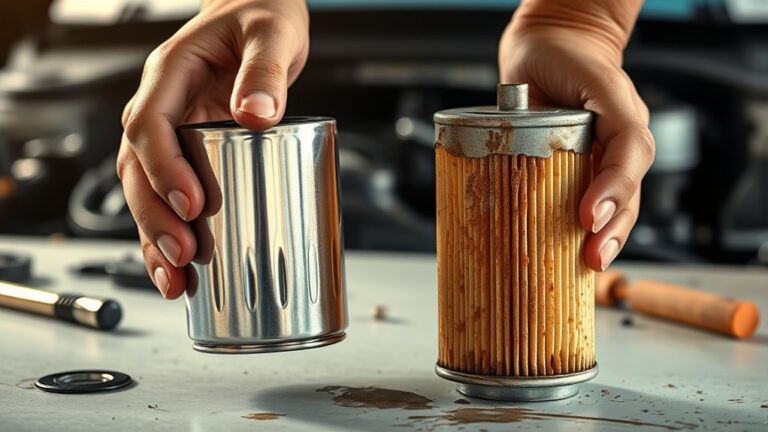
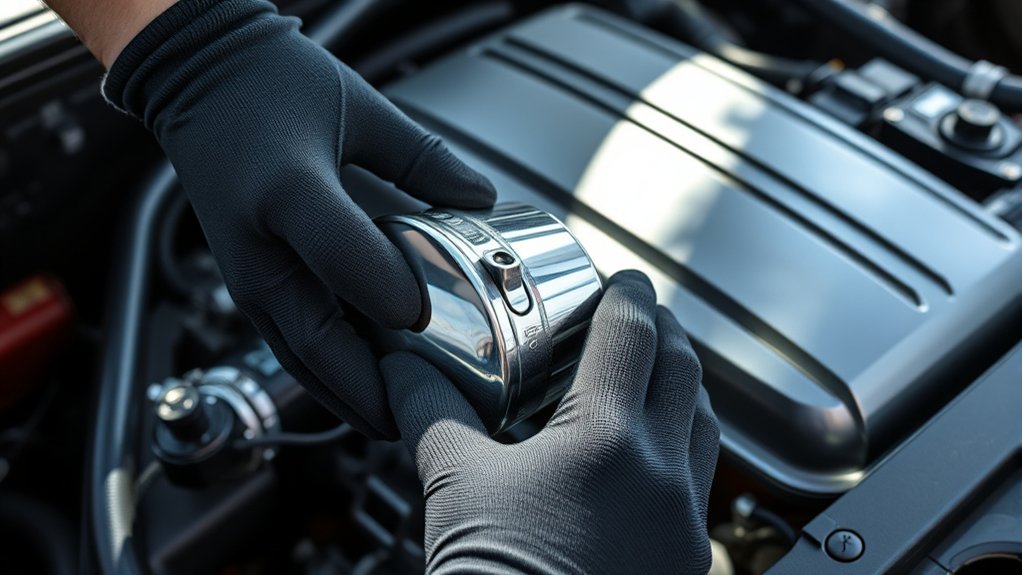
Remove the old filter carefully to avoid spills. Before installing the new filter, apply a thin oil layer to its gasket for a secure seal.
Tighten it by hand, then check for leaks after refilling oil.
| Step | Tool Needed | Emotional Cue |
|---|---|---|
| Drain oil | Oil catch pan | Relief |
| Remove filter | Wrench | Focus |
| Prep new filter | Oil | Confidence |
| Install filter | Hands | Accomplishment |
Frequently Asked Questions
Can Using a High-Quality Oil Filter Extend Its Lifespan?
Yes, using a high-performance oil filter with superior filtration efficiency can extend your oil filter’s lifespan by capturing more contaminants and reducing clogging. This helps maintain optimal engine protection and prolongs the interval between replacements.
Do Synthetic Oils Require Different Oil Filter Change Intervals?
You might expect synthetic oils to demand longer oil filter intervals, but that’s not always true. While synthetic oils reduce contaminants, you still need a high-quality filter to maximize lifespan and maintain optimal engine protection consistently.
Is It Safe to Reuse an Old Oil Filter Temporarily?
It’s generally unsafe to reuse an old filter temporarily due to clogging and contamination risks.
Old filter reuse compromises oil flow and engine protection, so you shouldn’t rely on it even as a short-term solution.
How Does Extreme Weather Impact Oil Filter Performance?
Extreme weather can degrade oil filter performance by causing oil viscosity changes and accelerating filter media wear.
You’ll notice reduced filtration efficiency and potential clogging, so monitor and replace filters more frequently under harsh climate conditions to maintain engine health.
Are There Environmental Benefits to Changing Oil Filters Regularly?
Imagine you change your oil filter regularly and recycle it properly; this reduces harmful waste and lessens environmental impact by preventing toxic oil leaks.
You’ll support filter recycling programs, promoting sustainability and cleaner ecosystems efficiently.
Conclusion
You might’ve heard the theory that changing your oil filter every oil change is overkill. However, precision matters—filters trap contaminants that degrade oil quality, so neglecting timely replacement compromises engine health.
Sticking to manufacturer recommendations ensures ideal performance and longevity. By regularly changing your oil filter, you actively prevent buildup and maintain proper lubrication.
Don’t let assumptions risk costly damage; stay proactive and protect your engine with precise, scheduled filter changes. Remember, how often to change oil filter plays a crucial role in keeping your engine running smoothly.