How to Jumpstart a Battery With Jumper Cables
To jumpstart a battery with jumper cables, begin by parking the cars close together but not touching. Turn off both engines and engage the parking brakes to ensure safety.
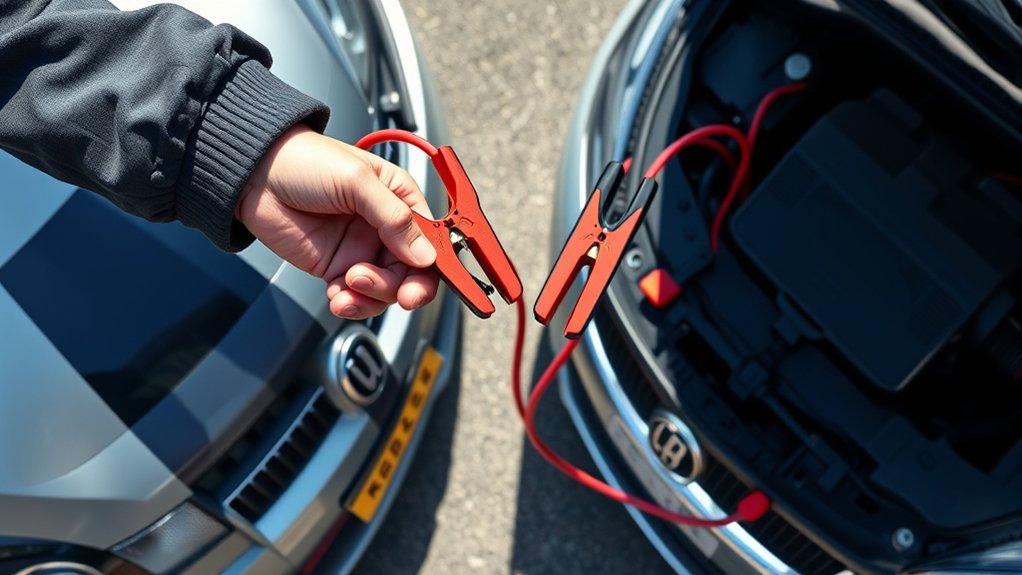
Next, connect the red clamp to the dead battery’s positive terminal. Then, attach the other red clamp to the donor battery’s positive terminal.
After that, connect the black clamp to the donor battery’s negative terminal. Finally, attach the remaining black clamp to a grounded metal surface on the car with the dead battery.
Start the donor car first, and then try starting the dead car. Proper connection and aftercare are vital for a safe and effective jumpstart. Keep exploring to learn more about ensuring jumpstarts are done correctly.
Preparing Your Car and Staying Safe to Jumpstart
Before you begin jumpstarting your battery, how do you ensure both vehicles are properly prepared and you stay safe throughout the process? Start by consulting a preparation checklist: park the vehicles facing each other, about 18-24 inches apart, and turn off both engines.
Ensure safety by parking cars 18-24 inches apart, facing each other, with engines turned off before jumpstarting.
Engage parking brakes on both cars to prevent movement. Verify both batteries have the same voltage rating. Remove any metal jewelry and avoid contact with battery terminals.
Safety considerations require you to wear gloves and eye protection to guard against sparks or acid exposure. Confirm that the battery terminals and jumper cables are clean and dry.
Avoid smoking or open flames near the batteries. Finally, ensure the vehicles’ electrical systems are off, including lights and radios, to prevent damage or electrical surges during the jumpstart.
How to Jumpstart a Battery With Jumper Cables
How exactly do you connect jumper cables to safely and effectively jumpstart a battery? First, attach one red clamp to the positive terminal of the dead battery. Next, connect the other red clamp to the positive terminal of the charged battery.
Then, attach one black clamp to the negative terminal of the charged battery. Finally, connect the remaining black clamp to an unpainted metal surface on the dead car, away from the battery, to avoid sparks.
- Ensure cables are free from damage to prevent potential hazards.
- Keep clamps from touching each other during connection.
- Consider alternative methods like portable jump starters if cables aren’t available.
Following these steps minimizes risks and ensures a successful jumpstart.
Common Jumpstarting Mistakes to Avoid
Why do some jumpstarts fail despite following basic steps? Often, it’s due to overlooking critical details. First, ensure you connect the jumper cables in the correct order; mixing polarity can damage the dead battery or electrical system.
Avoid attempting a jumpstart during extreme cold starts without warming the battery slightly, as this reduces effectiveness. Confirm the donor vehicle’s engine is running to provide sufficient power.
Also, be aware of jumpstart legality in your jurisdiction. Some places restrict assistance, which could impact insurance implications if damage occurs.
Never touch clamps together or let cables dangle near moving engine parts. By avoiding these common mistakes, you’ll increase the chances of a successful jumpstart and protect both vehicles from harm or legal issues.
After Jumpstarting Your Car: What to Do Next
Once you’ve successfully jumpstarted your car, don’t disconnect the cables immediately. Let your engine run for several minutes to stabilize battery charge. Follow proper aftercare routines to prevent battery drainage and ensure optimal performance.
Next, focus on parking considerations: choose a safe, level spot to avoid strain on your battery and electrical system. When ready, disconnect the cables in reverse order, negative clamp first, then positive, to avoid sparks.
Finally, drive your car for at least 15-20 minutes to allow the alternator to recharge the battery fully. Remember, thorough aftercare routines and mindful parking considerations can extend battery life and prevent future jumpstarts.
- Let engine run 5+ minutes before disconnecting cables
- Disconnect cables in reverse order carefully
- Drive 15-20 minutes post-jumpstart to recharge battery
Troubleshooting Jumpstarting Problems
Where should you start if your car won’t jumpstart despite following all the steps? Begin by inspecting safety: ensure all connections are secure and cables aren’t damaged or corroded. Faulty clamps or poor contact can prevent the jumpstart.
Start by checking all connections and cables for damage or corrosion to ensure a safe jumpstart.
Next, verify the donor vehicle’s engine is running and providing sufficient voltage. If the problem persists, focus on checking alternator functionality in your vehicle.
A failing alternator won’t charge the battery, causing repeated jumpstart failures. Use a voltmeter to measure output; it should read between 13.5 and 14.5 volts with the engine running.
Also, confirm your battery terminals are clean and tight. If everything checks out, consider battery replacement or consult a professional mechanic for further diagnostics.
Frequently Asked Questions
Can I Jumpstart a Battery in Cold Weather?
Jumpstarting a battery in cold weather is like waking a hibernating bear, possible but requires care. You must follow cold weather charging techniques and prioritize safety considerations to avoid damage or injury while restoring power effectively.
How Long Do Jumper Cables Typically Last?
Jumper cable durability typically spans 3 to 10 years. You’ll find lifespan factors include cable material quality, insulation integrity, storage conditions, and frequency of use.
Regular inspection helps maintain safety and performance.
Are All Jumper Cables Compatible With Every Vehicle?
Think all jumper cables fit every vehicle? They don’t. You must avoid incompatible connections and ensure gauge adequacy for your car’s battery.
Using the wrong gauge can cause inefficiency or damage during jumpstarting. Always check specs carefully.
Can Jumpstarting Damage My Car’s Electrical System?
Yes, jumpstarting can damage your car’s electrical systems if done incorrectly. To ensure battery safety, always connect cables properly and avoid sparks.
Use the right voltage and follow manufacturer guidelines to protect sensitive electronics.
What Should I Do if My Car Won’T Start After Multiple Attempts?
If your car won’t start after multiple attempts, it’s like the dead battery’s refusing to cooperate. Double-check all connections, ensure safety precautions, and consider testing or replacing the battery.
If these steps don’t help, consult a professional mechanic promptly.