What Should Spark Plugs Look Like
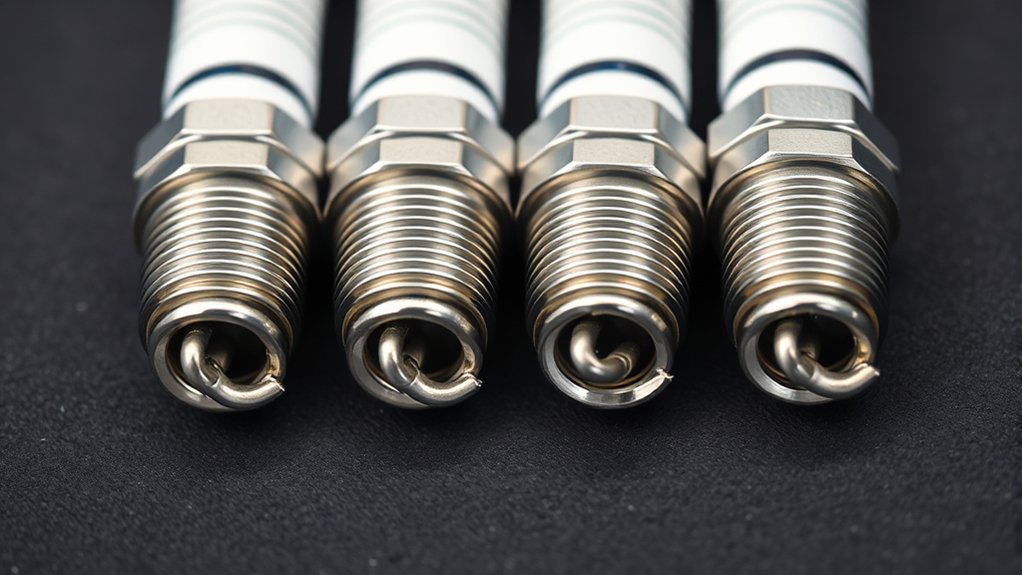
You should look for spark plugs with a clean, light tan or grayish insulator tip, which is what spark plugs should look like when functioning properly. Minimally worn electrodes also indicate proper combustion and ignition timing.
Avoid plugs with heavy deposits, oily or black soot, cracks, or blistered tips, as these signal engine issues or overheating. The gap between electrodes must match manufacturer specs to ensure efficient sparks.
Keeping an eye on these signs helps maintain optimal performance and prevent damage. Exploring further reveals how to diagnose and maintain plug health.
Key Takeaways
- Spark plugs should have a light tan or grayish color on the electrode and insulator tip, indicating proper combustion and ignition timing.
- The electrode should show minimal wear with no heavy deposits, cracks, or blistering for optimal performance.
- A clean, dry appearance without oil or carbon fouling confirms healthy engine combustion and materials.
- Consistent coloration across all plugs suggests balanced cylinder performance and good engine health.
- The spark plug gap must align with manufacturer specifications to ensure efficient spark intensity and combustion.
How to Visually Identify Healthy Spark Plugs
How can you tell if a spark plug is healthy just by looking at it? First, examine the electrode and insulator tip for a light tan or grayish color, indicating proper combustion and correct ignition timing. The electrode should show minimal wear, as excessive erosion can suggest improper engine materials or combustion conditions.
You’ll want to avoid plugs with heavy deposits, cracks, or blistering, which point to engine issues beyond normal operation. Also, check that the gap between the center and ground electrodes is consistent with manufacturer specifications, as this gap affects ignition timing and overall engine performance.
A healthy spark plug will have a clean, dry appearance with no oil or carbon fouling, confirming that the engine materials and combustion processes are functioning optimally.
What Spark Plug Colors Reveal About Engine Health
You can assess your engine’s condition by examining the color of your spark plugs. A normal plug shows a light tan or grayish color, while signs of overheating appear as white or blistered deposits. Dark, oily, or sooty plugs indicate fouling, which points to specific engine issues you need to address.
Normal Spark Plug Appearance
What can the color and condition of your spark plugs tell you about your engine’s health? A normal spark plug appearance typically features a light tan or grayish-brown deposit on the insulator tip. This coloration indicates efficient combustion and proper air-fuel mixture.
If you observe a clean, dry plug with no heavy deposits, it suggests your engine runs well under standard conditions. Avoid drawing conclusions from insufficient data or unrelated topics like plug gap size or electrode wear, as these don’t directly reflect combustion quality.
Consistent coloration across all plugs confirms balanced cylinder performance. Deviations from this norm, such as black soot or oily residue, signal issues but fall outside normal appearance. Monitoring your spark plugs regularly helps you maintain optimal engine health and avoid unexpected failures.
Signs of Overheating
Why does your spark plug’s color shift toward white or blistered appearances? This change signals overheating causes within the engine, leading to serious signs of damage. Overheated spark plugs lose their protective electrode coating, causing premature wear and poor ignition performance.
You should watch for these signs of overheating:
- White, chalky deposits on the insulator tip
- Blistered or melted electrodes
- Cracked insulator porcelain
- Excessive gap widening due to electrode erosion
- Discoloration extending beyond the firing tip
These indicators reveal the engine runs too hot, possibly from lean fuel mixtures, incorrect spark plug heat range, or ignition timing issues. Recognizing these signs of damage early helps you prevent costly repairs and maintain optimal engine health.
Indicators of Fouling
While overheating leaves distinct marks on spark plugs, fouling presents another set of telltale signs that reveal underlying engine issues. Fouling occurs when deposits like carbon, oil, or fuel residues coat the spark plug’s electrodes, disrupting optimal spark generation.
During your visual inspection, look for black, dry, and sooty deposits indicating carbon fouling, often caused by a rich fuel mixture or weak ignition. Oily deposits suggest oil leakage into the combustion chamber, signaling potential valve or piston ring wear. White or blistered insulator tips can indicate improper combustion or additive deposits.
Insufficient diagnostics often arise when fouling is overlooked, leading to misfires and poor engine performance. Regularly inspecting spark plug color and condition allows you to pinpoint specific engine faults early, ensuring accurate diagnosis and timely maintenance.
Recognizing Common Wear and Fouling Patterns
How can you quickly identify issues with your engine just by examining the spark plugs? By recognizing wear and fouling patterns through spark plug colors and deposits, you can diagnose engine performance problems effectively.
Common indicators include:
- Light tan or grayish electrodes signify normal wear and proper combustion.
- Black, sooty deposits indicate carbon fouling, often from a rich fuel mixture or weak ignition.
- Oily deposits suggest oil leakage into the combustion chamber.
- White, blistered electrodes point to overheating or incorrect heat range plugs.
- Rust or corrosion on the metal parts highlight moisture exposure or poor maintenance.
Spotting Differences Between New, Used, and Damaged Spark Plugs
What sets new, used, and damaged spark plugs apart is their distinct physical condition and performance characteristics. When spotting differences, focus on spark plug visuals: new plugs have clean, shiny electrodes with no deposits or wear marks.
Used spark plugs show signs of normal wear, such as slight electrode erosion, a light tan or grayish deposit, and minimal discoloration. Damaged spark plugs, however, exhibit clear abnormalities such as cracked insulators, heavy carbon buildup, burnt or rounded electrodes, and excessive corrosion.
These visual indicators help you assess the spark plug’s health accurately. By carefully examining electrode shape, color, and deposit patterns, you can distinguish between optimal and compromised performance. Spotting differences precisely enables timely replacement, preventing engine misfires or inefficiency.
How Spark Plug Gaps Impact Engine Performance
Examining the condition of your spark plugs gives you important clues about their performance, but understanding the gap between the electrodes is equally important for optimal engine function. The gap directly affects spark intensity and combustion efficiency, which in turn influences engine wear and overall performance.
Here’s how spark plug gaps impact your engine:
- Too wide a gap demands higher voltage, stressing ignition components
- Too narrow a gap results in weak sparks, causing incomplete combustion
- Proper gap size ensures consistent ignition timing and power output
- Incorrect gaps increase engine wear due to misfires and rough idling
- Adjusting the gap is a critical step in performance tuning for peak efficiency
Maintaining the correct spark plug gap helps you optimize engine longevity and power delivery.
When to Replace Spark Plugs Based on Inspection
When should you replace your spark plugs based on their condition? Begin by closely examining the insulation wear. If the ceramic insulator shows cracks or significant erosion, it compromises the plug’s ability to contain the ignition spark, indicating replacement is necessary.
Next, inspect the electrode alignment. Misaligned or severely worn electrodes disrupt the spark’s consistency, leading to misfires and poor combustion. Additionally, check for excessive carbon buildup or blistering on the electrodes, which signal underlying engine issues and the need for new plugs.
If the electrode gap has widened beyond manufacturer specifications due to wear, replacement is essential to maintain optimal performance. Regular inspection focusing on insulation wear and electrode alignment ensures timely spark plug replacement, preventing engine inefficiency and costly repairs.
Tips for Maintaining Spark Plug Health
You should establish a regular inspection routine to catch wear early and prevent engine issues. Always verify and adjust the spark plug gap to manufacturer specifications for optimal performance. Additionally, keep the spark plug tips clean to ensure consistent ignition and efficient combustion.
Regular Inspection Routine
How often should you check your spark plugs to
When performing spark plug removal, use a proper socket to avoid damage. Apply a lubrication technique on the threads to prevent seizing and
Key inspection steps include:
- Examine electrode wear and gap condition
- Check for carbon deposits or oil fouling
- Inspect ceramic insulator for cracks or chips
- Verify spark plug color for combustion health
- Assess thread condition and clean if necessary
Adhering to this routine helps maintain efficient combustion and prevents engine misfires, keeping your vehicle running smoothly.
Proper Gap Adjustment
Why does the gap between the spark plug electrodes matter so much? The spark gap determines the voltage needed to generate a spark and ignite the air-fuel mixture efficiently. If the gap’s too narrow, the spark may be weak; too wide, and the ignition system may struggle to fire.
Understanding spark gap terminology helps you set this distance correctly, measured in thousandths of an inch or millimeters. Regularly check the gap using a feeler gauge, adjusting carefully to the manufacturer’s specifications.
Pay attention to electrode wear patterns, which can widen the gap over time, causing misfires or poor performance. Maintaining the proper gap ensures optimal combustion, fuel efficiency, and prevents premature spark plug replacement.
Accurate gap adjustment is essential for long-term spark plug health and engine reliability.
Clean Spark Plug Tips
When should you clean spark plug tips to maintain ideal engine performance? You should clean spark plug tips whenever you notice deposits or fouling that can disrupt the spark, affecting combustion and fuel efficiency. Keeping a clean spark plug ensures optimal ignition and proper fuel mixture combustion.
To maintain spark plug health, regularly:
- Inspect tips for carbon buildup or oil deposits
- Clean with a wire brush or specialized spark plug cleaner
- Check for electrode wear and replace if damaged
- Adjust the gap to manufacturer specifications after cleaning
- Use quality fuel to prevent excessive deposits
A clean spark plug promotes efficient combustion, reduces misfires, and extends engine life by ensuring a consistent and strong spark for igniting the fuel mixture.
Common Spark Plug Problems and How to Avoid Them
Which issues can degrade your spark plug’s performance and shorten its lifespan? Common problems include fouling, electrode wear, and improper gap settings. Fouling occurs when deposits like oil or carbon accumulate on the plug, leading to misfires.
Electrode wear reduces spark efficiency, while incorrect gaps cause weak or inconsistent sparks. Avoid these by following routine maintenance: inspect plugs regularly, clean deposits carefully, and adjust gaps to manufacturer specifications.
Using the wrong spark plug type or ignoring engine issues can also cause damage. Stay focused—don’t get sidetracked by irrelevant topics or unrelated discussions that don’t address these technical aspects.
Proper care ensures optimal combustion, fuel efficiency, and engine longevity. Addressing spark plug problems promptly prevents further mechanical complications and costly repairs down the line.
Frequently Asked Questions
What Tools Are Needed to Remove Spark Plugs Safely?
You’ll need a spark plug socket, ratchet wrench, and extension for safe removal. Follow the proper removal procedure to avoid damage. Always use gloves and safety glasses for tools safety during the process.
How Do Spark Plugs Affect Fuel Economy?
As your spark plugs wear, their gap widens, causing incomplete combustion and lower fuel economy. You’ll face fuel economy tradeoffs by ignoring this.
Maintaining the correct spark plug gap ensures efficient ignition and optimal fuel consumption.
Can Spark Plugs Cause Starting Problems?
When starting problems arise, don’t beat around the bush. Faulty spark plug design and incorrect ignition timing often cause misfires.
You’ll want to inspect and replace plugs promptly to ensure reliable engine starts and optimal performance.
What Types of Spark Plugs Are Best for Cold Climates?
You’ll want iridium or platinum spark plugs for colder climates since their materials resist fouling and provide reliable ignition. These spark plug materials handle lower temperatures better, ensuring consistent starts and improved engine performance in cold conditions.
How Does Spark Plug Brand Affect Engine Performance?
Like choosing Excalibur, spark plug branding shapes your engine’s performance perception. Trusted brands ensure precise electrode design and durable materials, directly enhancing combustion efficiency and ignition reliability.
This means you get consistent power and fuel economy every drive.
Conclusion
You don’t want your spark plugs looking like they’ve survived a volcanic eruption or a mudslide. Healthy plugs sport a clean, light tan color with crisp edges—anything else screams trouble. Ignoring worn or fouled plugs is like expecting fireworks from damp matches.
By regularly inspecting and maintaining your spark plugs, you ensure your engine runs like a finely tuned machine, avoiding costly damage and performance drops. Keep those sparks sharp, or risk your engine sputtering into oblivion.
Remember, knowing what spark plugs should look like is key to keeping your vehicle running smoothly.