What Coolant Does My Car Need
You need the exact coolant type specified by your vehicle manufacturer for proper engine protection and cooling performance. Knowing what coolant your car needs is essential to maintain engine health and efficiency. Always check your owner’s manual and the coolant reservoir label for precise coolant formulations and acceptable colors—never guess by color alone.
Using the right coolant guarantees optimal heat transfer, prevents corrosion, and safeguards seals and metals. Mixing incompatible coolants can cause damage and blockages, leading to costly repairs. Learn how to identify, maintain, and handle your coolant correctly for reliable engine operation.
Why Choosing the Right Coolant Protects Your Engine
How exactly does choosing the right coolant protect your engine? Selecting the correct coolant guarantees optimal heat transfer, preventing your engine from overheating or freezing.
Modern vehicles, especially those using alternative fuel systems, often demand specific coolant formulations to maintain thermal stability and chemical compatibility. Using an inappropriate coolant can cause corrosion, scale buildup, and reduced heat dissipation, leading to engine damage and decreased battery efficiency in hybrid or electric vehicles.
Proper coolant also safeguards rubber seals and metal components, extending your engine’s lifespan. By matching the coolant to your engine’s requirements, you maintain consistent operating temperatures, enhance fuel efficiency, and support integrated systems like battery thermal management.
This precise balance is critical to preserving engine integrity and performance over time.
How to Identify Your Car’s Required Coolant Type
To identify your car’s required coolant type, start by consulting the owner’s manual, which specifies the exact formulation compatible with your engine. You should also check the label on the coolant reservoir, as it often indicates the recommended coolant type or specifications. These steps ensure you use a coolant that meets your vehicle’s design requirements and avoids potential damage.
Check Owner’s Manual
Where can you find the exact coolant specifications for your vehicle? The most reliable source is your owner’s manual. It provides detailed information tailored to your engine placement, whether front, mid, or rear mounted, ensuring you select a coolant compatible with your specific cooling system design.
The manual also clarifies acceptable coolant aesthetics, such as color and clarity, which can indicate formulation type and contamination levels. By consulting this document, you avoid the risks of using incompatible fluids that could damage engine components or degrade cooling efficiency.
Don’t guess based on color alone; manufacturer recommendations take precedence over visual assumptions. Keep your manual accessible for quick reference, especially during maintenance or coolant replacement, to maintain optimal engine temperature and prolong the life of your cooling system.
Inspect Coolant Reservoir Label
Why should you inspect the coolant reservoir label before adding or replacing coolant? Inspecting reservoirs ensures you use the correct coolant type, preventing engine damage and maintaining system efficiency. The label accuracy is essential because manufacturers specify coolant formulations tailored to your engine’s needs.
Always verify the label before topping off or flushing the system.
Here’s a quick guide for common coolant labels:
| Coolant Type | Color | Recommended Use |
|---|---|---|
| Inorganic Additive | Green | Older vehicles, basic protection |
| Organic Acid Tech | Orange/Red | Modern cars, extended life |
| Hybrid Organic | Yellow/Green | Mixed fleets, moderate life |
| Dex-Cool | Pink/Orange | GM vehicles, long life |
| Phosphate-Free | Blue | Asian vehicles, high performance |
Confirm label accuracy during inspecting reservoirs to avoid costly errors.
The Main Types of Car Coolants Explained
You’ll encounter various types of coolant fluids, each with distinct chemical compositions tailored for different engine requirements. The color coding on coolant bottles isn’t just for show—it indicates specific formulations and additive packages. Understanding these differences helps you choose the right coolant that protects your engine effectively.
Types Of Coolant Fluids
How do different coolant types affect your car’s performance and longevity? Choosing the right coolant fluid is crucial, as it directly impacts your engine’s temperature regulation and corrosion prevention.
There are mainly three types: Inorganic Acid Technology (IAT), Organic Acid Technology (OAT), and Hybrid Organic Acid Technology (HOAT). IAT coolants are traditional, requiring frequent changes but effectively protecting metal components.
OAT coolants last longer and offer superior corrosion resistance, enhancing engine oil life by preventing contaminants from degrading oil quality. HOAT combines benefits of IAT and OAT, providing balanced protection.
Using the wrong coolant can cause deposits that impair cooling efficiency, potentially damaging components like brake pads due to heat transfer issues. Always match coolant type to your vehicle’s specifications to ensure optimal performance and avoid costly repairs.
Color Coding Significance
What does the color of your car’s coolant actually indicate? Color coding serves as a quick visual guide to identify the type and formulation of coolant in your vehicle. Manufacturers use distinct colors, such as green, orange, yellow, or pink, to differentiate between inorganic additive technology (IAT), organic acid technology (OAT), and hybrid organic acid technology (HOAT) coolants.
Understanding this color coding is crucial for proper coolant monitoring and maintenance, as mixing incompatible types can cause chemical reactions, reducing corrosion protection and system efficiency. When checking your coolant level, observe its color to confirm it matches your vehicle’s specifications.
Maintaining the correct coolant type, discernible through color coding, ensures optimal engine temperature regulation and prolongs the lifespan of cooling system components.
Coolant Composition Differences
Why do different coolants have varying compositions? It all comes down to coolant chemistry tailored to optimize vehicle heat transfer while preventing corrosion and freeze damage. Traditional coolants use ethylene glycol or propylene glycol as a base, mixed with water for efficient heat conduction.
However, additives differ: inorganic acid technology (IAT) relies on silicates and phosphates for corrosion inhibition but requires frequent changes. Organic acid technology (OAT) coolants use organic acids for longer-lasting protection and improved heat transfer stability.
Hybrid organic acid technology (HOAT) combines both approaches, enhancing durability and performance. When selecting coolant, consider your vehicle’s material compatibility and manufacturer recommendations. Understanding these composition differences ensures you maintain optimal engine temperature and extend your cooling system’s lifespan.
How to Find Coolant Info in Your Owner’s Manual
Where can you locate the exact coolant specifications for your vehicle? The answer lies in your owner’s manual, a crucial resource for understanding the correct coolant chemistry required. To efficiently find this information, follow these steps:
- Locate the Maintenance Section. This part often covers topic ideas related to fluids, including coolant type.
- Check the Cooling System Subsection. Here, you’ll find detailed specs on coolant composition and recommended brands.
- Review Safety and Handling Instructions. These notes clarify dilution ratios and compatibility, essential for optimal performance.
Key Info to Check on Coolant Container Labels
After identifying the coolant specifications in your owner’s manual, the next step is to examine the container labels carefully. Focus on container labeling details that confirm compatibility with your vehicle’s requirements, such as the type of antifreeze (ethylene glycol or propylene glycol), freeze and boil-over points, and corrosion inhibitors.
Don’t rely solely on coolant aesthetics like color, as hues vary between manufacturers and don’t indicate chemical composition. The label should also specify whether the coolant is pre-diluted or concentrate, so you know if you must add water.
Additionally, check for compliance with industry standards (ASTM, SAE) and manufacturer approvals to ensure optimal performance. By scrutinizing these label details, you’ll avoid costly mistakes and maintain your car’s cooling system efficiently.
Why You Should Avoid Mixing Different Coolants
Mixing different types of coolant can lead to chemical reactions that reduce their effectiveness and cause damage to your vehicle’s cooling system. When incompatible coolants combine, they can form sludge, corrode metal parts, and clog passages, risking expensive repairs.
Despite quirky anecdotes suggesting “any coolant will do,” the science says otherwise. Here’s why you should avoid mixing:
- Corrosion accelerates as inhibitors neutralize each other, damaging your radiator and engine.
- Sludge formation blocks coolant flow, causing overheating and system failure.
- Inconsistent freezing and boiling points compromise your car’s temperature regulation.
Unrelated trivia: the first automotive coolants were simple water, which wouldn’t survive a cold winter. Today, precise formulations prevent damage. Mixing them disrupts this balance. Stick to one coolant type for optimal performance and longevity.
How to Spot When Your Car Needs a Coolant Flush or Replacement
Understanding the risks of combining incompatible coolants highlights the importance of maintaining the right fluid condition in your vehicle. You should look for signs like discoloration, rust particles, or a slimy texture in the coolant, which indicate contamination or degradation.
Overheating, frequent engine temperature spikes, and visible leaks also signal the need for a coolant flush or replacement. Regularly check your owner’s manual for recommended flush intervals, as prolonged use reduces corrosion inhibitors and cooling efficiency.
When flushing, dispose of old coolant responsibly. Avoid pouring it down drains and use designated coolant disposal services to protect the environment. Opt for coolants packaged in recycled packaging to reduce waste.
Proper maintenance preserves your engine’s performance and prevents costly repairs linked to coolant failure.
How to Safely Check and Top Off Your Coolant Level
How often should you check your coolant level to keep your engine running smoothly? Ideally, inspect it monthly or before long trips. To safely check and top off your coolant level, follow these steps:
- Ensure the engine is completely cool to avoid burns from hot coolant or steam.
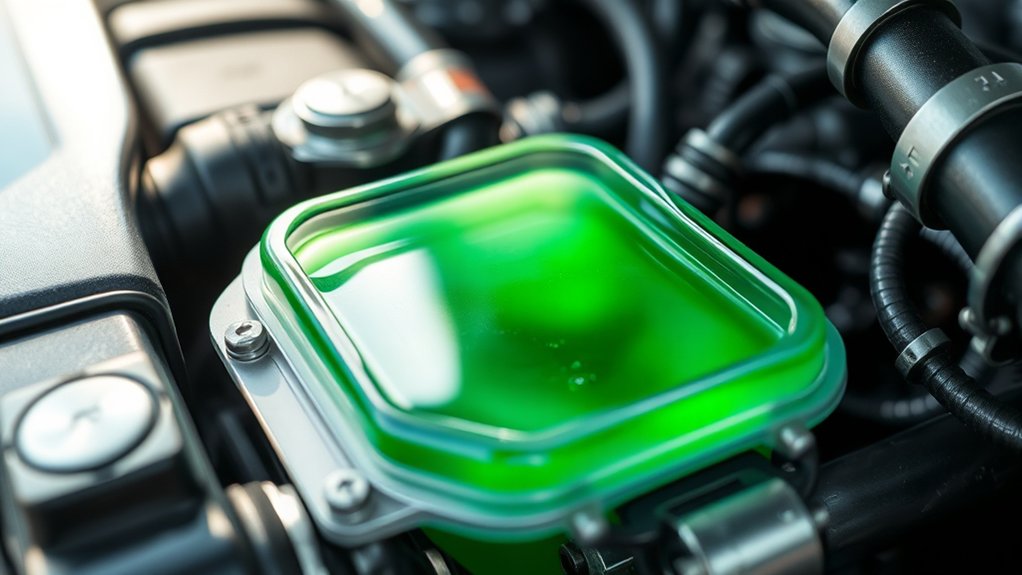
- Locate the coolant reservoir, usually a translucent plastic tank, and check the level against the marked minimum and maximum lines.
- If low, add the recommended coolant type gradually, avoiding overfilling.
Avoid distractions by steering clear of novelty ideas or unrelated topics during the process, as precision is critical. Remember, using the wrong coolant or improper topping can cause system damage. Stay focused, follow your vehicle’s manual, and maintain accuracy for optimal engine health.
Tips for Maintaining Your Coolant System Year-Round
Why should you prioritize year-round maintenance of your coolant system? Consistent upkeep prevents corrosion, overheating, and component failure, ensuring efficient engine performance.
Prioritizing year-round coolant maintenance prevents damage and keeps your engine running efficiently.
Start by scheduling regular coolant flushes based on your vehicle’s manufacturer recommendations. Use the correct coolant type to maintain optimal chemical balance, which protects your engine and radiator.
Routinely inspect hoses and clamps for leaks or wear to prevent unexpected breakdowns. Monitoring coolant levels monthly helps avoid overheating and maintains engine temperature stability, directly impacting fuel economy.
Proper coolant maintenance also aids in budget planning by reducing costly repairs and improving fuel efficiency. By staying proactive, you extend the lifespan of your cooling system and engine, saving money and enhancing overall vehicle reliability throughout all seasons.
What to Do If You Accidentally Use the Wrong Coolant
If you realize you’ve used the wrong coolant, first identify the type and concentration to assess compatibility with your system. Immediately draining and flushing the cooling system can prevent chemical reactions that cause corrosion or blockages. Taking prompt action reduces the risk of engine overheating and costly damage.
Identifying Incorrect Coolant
Although using the wrong coolant can happen unintentionally, recognizing the signs early is essential to preventing engine damage. Incorrect coolant can cause corrosion, clogging, and reduced heat transfer efficiency, affecting your vehicle’s performance and safety.
Watch for these indicators:
- Discolored or sludgy fluid – Unlike proper coolant, the wrong type often appears murky or rusty.
- Overheating engine – Your engine temperature may spike, similar to concerns like bridge clearance affecting vehicle safety.
- Coolant leaks or residue – Unexpected leaks can signal chemical incompatibility, much like uneven tire replacement impacts handling.
Spotting these symptoms promptly helps you avoid costly repairs and maintain optimal engine cooling. Always verify coolant type to safeguard your car’s longevity and performance.
Immediate Actions To Take
How should you respond when you realize you’ve put the wrong coolant in your vehicle? Act immediately to minimize damage and maintain engine efficiency, especially in vehicles using alt fuels or sensitive battery health systems.
| Step | Action | Reason |
|---|---|---|
| 1. Drain Coolant | Flush the entire cooling system | Remove incompatible fluid |
| 2. Inspect System | Check hoses and radiator for damage | Prevent leaks and corrosion |
| 3. Refill Properly | Use manufacturer-recommended coolant | Ensure optimal thermal control |
Avoid starting the engine repeatedly, as mixing coolants risks chemical reactions that impair cooling. Prioritize a coolant flush to protect components vital for alt fuel engines and battery health, ensuring reliable operation and longevity. Contact a professional if unsure about the procedure.
Preventing Engine Damage
Taking swift action to remove the wrong coolant prevents chemical interactions that can cause corrosion, blockages, and overheating. If you accidentally use the wrong coolant, follow these steps immediately to protect your engine:
- Drain and Flush: Completely drain the incorrect coolant and flush the system with distilled water to eliminate contaminants that may harm engine components or affect battery life.
- Refill with Correct Coolant: Use the manufacturer-recommended coolant to maintain optimal thermal regulation and prevent future damage.
- Monitor Performance: Regularly check for leaks, unusual noises, or temperature spikes that signal ongoing issues.
Just like data privacy protects sensitive information, maintaining the right coolant safeguards your engine’s integrity and battery life, ensuring reliable performance and longevity.
Why Regular Coolant Care Saves You Money and Trouble
Why should you prioritize regular coolant maintenance? Proper coolant care prevents engine overheating, which can cause costly damage and costly repairs. Neglecting coolant levels or quality leads to corrosion, blockages, and reduced heat transfer efficiency.
By scheduling routine coolant flushes and checks, you ensure your engine runs within optimal temperature ranges, extending its lifespan. Just like battery maintenance keeps your car starting reliably and maintaining tire pressure ensures safety and fuel efficiency, coolant care is essential for overall vehicle health.
Ignoring it increases the risk of unexpected breakdowns and expensive component failures. Regular coolant upkeep saves you money by avoiding major engine repairs and improves reliability, letting you drive with confidence while protecting your investment.
Frequently Asked Questions
Can I Use Distilled Water Instead of Coolant?
You shouldn’t use distilled water instead of coolant due to coolant compatibility issues. Distilled water lacks corrosion inhibitors and antifreeze properties, so relying solely on it risks overheating and damage. Always follow manufacturer guidelines for proper coolant mixtures.
How Long Does Coolant Typically Last Once Opened?
Wondering how long coolant lasts once opened? Typically, it has a short lifespan of around 1 to 2 years because antioxidant depletion occurs, reducing its effectiveness. Always store it sealed and check expiration for optimal performance.
Are There Any Environmental Concerns With Disposing of Old Coolant?
Yes, you should avoid environmental disposal of old coolant as it contains toxic chemicals. Instead, you must use proper coolant recycling facilities to prevent contamination and comply with hazardous waste regulations.
This protects ecosystems and water sources effectively.
Can I Mix Coolant With Antifreeze?
Yes, you can mix coolant and antifreeze, as antifreeze is a concentrate requiring dilution with water to become coolant. Use the correct ratio and type recommended by your vehicle’s manufacturer to ensure optimal performance and protection.
How Does Altitude Affect Coolant Performance?
You’d think higher altitude means cooler running, but altitude impact lowers coolant boiling point, risking overheating.
Your coolant’s boiling temperature drops as pressure decreases, so you must adjust coolant type or mixture to maintain proper performance.