Can I Add Oil to My Car
You can add oil to your car whenever the dipstick shows a low level or the dashboard oil warning light comes on.
Checking the oil is an essential part of car maintenance to keep your engine running smoothly.
Always check the oil when the engine is cool and the car is on level ground.
Use the correct oil type and grade as specified in your owner’s manual to avoid engine issues.
Avoid overfilling, as excess oil can cause pressure problems and damage.
Proper oil maintenance protects your engine’s performance and longevity, with more detailed guidance available.
How to Tell When Your Car Needs More Oil
How do you know when your car needs more oil? You should rely on specific indicators rather than irrelevant discussion or unrelated topic chatter. Key signs include the oil pressure warning light illuminating on your dashboard, unusual engine noises like knocking or ticking, and a noticeable decrease in engine performance.
Ignoring these signs can lead to engine damage, as oil lubricates critical components. Avoid distractions from irrelevant discussion about unrelated topic issues, like fuel type or tire pressure, which don’t indicate oil levels. Instead, focus on symptoms directly linked to oil deficiency.
How to Check Your Car’s Oil Level
When should you check your car’s oil level to ensure optimal engine performance? Ideally, you should check it when the engine is cool and the vehicle is parked on a level surface, typically before starting your day.
First, locate the dipstick, pull it out, and wipe it clean with a lint-free cloth. Reinsert it fully, then pull it out again to observe the oil level. The oil should sit between the minimum and maximum markers.
If the level is low, add oil carefully, avoiding overfilling. Remember, proper oil disposal is crucial; never pour used oil down drains or on soil, as it causes significant environmental impact. Always take used oil to authorized recycling centers to protect ecosystems.
Which Type of Oil Should You Use?
Choosing the right oil starts with understanding the viscosity grades that match your engine’s requirements. You’ll also need to decide between synthetic and conventional oils based on performance and cost. Always follow your manufacturer’s recommendations to ensure optimal engine protection and efficiency.
Understanding Oil Grades
Why does the type of motor oil matter for your car’s performance and longevity? Oil viscosity directly affects engine noise and wear. Choosing the right grade ensures optimal lubrication under varying temperatures. Using incorrect viscosity can lead to increased engine noise or insufficient protection.
| Oil Grade | Viscosity Range | Effect on Engine Performance |
|---|---|---|
| 5W-30 | Low at cold, moderate at hot | Reduces engine noise, good for cold starts |
| 10W-40 | Moderate cold, higher hot viscosity | Better for hotter climates, stable lubrication |
| 15W-50 | Higher cold and hot viscosity | Suitable for older engines, reduces wear |
| 0W-20 | Very low cold, low hot viscosity | Maximizes fuel efficiency, quiet operation |
Select the oil grade recommended by your manufacturer to balance engine noise reduction and protection.
Synthetic Vs. Conventional Oil
Deciding between synthetic and conventional oil hinges on understanding their chemical composition and performance characteristics. Synthetic oil is engineered with uniform molecules, providing superior thermal stability, oxidation resistance, and reduced engine wear compared to conventional oil, which is refined from crude oil and contains varied molecular structures.
You might consider synthetic oil if you want better protection under extreme temperatures or prolonged intervals between changes. Dismissing this choice as an irrelevant topic or an unused idea could lead you to overlook important performance benefits.
Conventional oil remains suitable for many engines and budget-conscious drivers, but understanding these distinctions helps you make an informed decision. Avoid treating the synthetic-versus-conventional debate as trivial; it directly affects engine longevity and efficiency.
Manufacturer Recommendations
While synthetic and conventional oils each offer distinct advantages, the best type for your vehicle ultimately depends on what your manufacturer specifies. Your owner’s manual provides precise oil viscosity and formulation requirements designed to optimize engine performance and longevity.
Ignoring these recommendations can lead to synthetic mix ups, where incompatible oils cause reduced efficiency or potential engine damage. Always use the exact oil grade and type indicated to maintain warranty coverage and engine health.
When changing oil, ensure proper oil disposal to prevent environmental harm. Never mix oils or pour them down drains. Following manufacturer guidelines minimizes risks and ensures your engine runs smoothly.
If uncertain, consult a certified mechanic or dealer to verify the correct oil type before adding or changing oil in your vehicle.
Where to Find the Oil Cap and Dipstick
Locating the oil cap and dipstick is essential for checking and adding engine oil accurately. Open your car’s hood and look for a round, often yellow or black cap labeled with “Oil” or an oil can symbol. This is the oil filler cap. It’s usually positioned on top of the engine.
Nearby, you’ll find the dipstick, a long, thin metal rod with a loop or handle for easy removal. The dipstick allows you to measure oil levels and assess oil viscosity, critical for engine performance.
Make sure you use the right oil viscosity recommended by the manufacturer to avoid engine damage. When changing or topping off oil, always follow proper oil disposal guidelines to protect the environment and comply with regulations.
Step-by-Step: How to Add Oil to Your Car
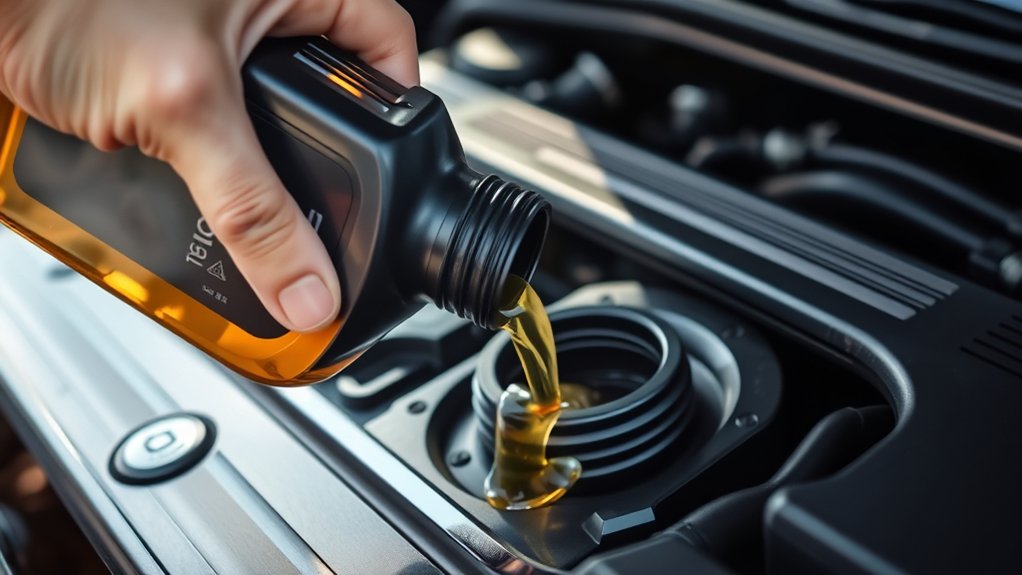
After identifying the oil cap and dipstick, you’re ready to add oil to your car. First, guarantee your engine is cool to avoid burns. Open the oil cap by turning it counterclockwise.
Ensure your engine is cool, then open the oil cap by turning it counterclockwise before adding oil.
Use a funnel to pour the appropriate oil type slowly into the opening, preventing spills. Avoid shifting to irrelevant topics or unrelated discussions like engine upgrades or fuel types during this procedure.
Pour a small amount at a time, then check the dipstick by reinserting and removing it to monitor the oil level. Repeat the process until the oil reaches the recommended mark on the dipstick.
Finally, securely replace the oil cap. This step-by-step approach ensures you add oil properly without introducing confusion from unrelated discussion points.
How Much Oil to Add Without Overfilling
How much oil should you add to avoid overfilling? Typically, add oil in small increments, about half a quart, and check the dipstick after each addition.
Overfilling can cause increased pressure, leading to foaming and poor lubrication. This may impair engine braking effectiveness and accelerate tire wear due to uneven vehicle performance.
Always consult your owner’s manual for the exact oil capacity. After adding oil, wait a few minutes for it to settle, then recheck the level.
If you’re close to the full mark, stop adding oil to prevent overfill. Maintaining the correct oil level ensures suitable engine function and extends component life, preserving both engine braking efficiency and preventing indirect impacts such as uneven tire wear caused by inconsistent vehicle handling.
Common Mistakes to Avoid When Adding Oil
When adding oil, you must use the correct type specified for your engine to guarantee proper lubrication and performance. Avoid overfilling the oil reservoir, as this can cause increased pressure and potential engine damage. Paying attention to these details will help maintain your car’s health and efficiency.
Using Incorrect Oil Type
Why does using the incorrect oil type matter? Choosing the wrong oil can profoundly impact your engine’s performance and longevity. Each engine is designed to operate with a specific viscosity grade and oil formulation.
Using an irrelevant topic like generic or unrelated concept oils might seem harmless, but it can lead to inadequate lubrication, increased friction, and accelerated wear. Your vehicle manufacturer’s specifications guide the correct oil type, balancing temperature tolerance and additive packages to protect engine components effectively.
Using synthetic oil where conventional is recommended or vice versa may cause issues like sludge buildup or reduced fuel efficiency. Always consult your owner’s manual or a trusted mechanic to avoid these costly mistakes and guarantee optimal engine function by using the proper oil type.
Overfilling Oil Reservoir
Selecting the correct oil type sets the foundation for proper engine maintenance, but adding oil requires equal attention to avoid overfilling the reservoir. Overfilling can cause increased pressure inside the engine, leading to oil foaming, reduced lubrication, and potential damage to seals and gaskets.
When you add oil, always check the dipstick to measure levels accurately, preventing overfill. Avoid distractions or irrelevant topic shifts when performing this task, as off topic discussion can result in careless errors.
Keep your focus on precise measurement and gradual top-offs. If you suspect overfilling, drain the excess oil promptly to maintain optimal engine function. Remember, overfilling is a common mistake that compromises engine health and should never be overlooked during routine maintenance.
What to Do If You Add Too Much Oil
Excessive oil in your engine can cause increased pressure, leading to leaks, foaming, and potential damage to seals and catalytic converters. If you’ve added too much oil, the first step is to drain the surplus to restore proper oil viscosity and prevent mechanical issues.
Use an oil extractor pump or remove the drain plug carefully to release excess oil into a suitable container. Avoid running the engine until the oil level is corrected, as overfilled oil can aerate and degrade lubrication quality.
Once drained, dispose of the excess oil responsibly through an oil recycling program to protect the environment. Always recheck the oil level with the dipstick to ensure it’s within the manufacturer’s recommended range before restarting the engine.
How Often Should You Check and Add Oil
You should check your car’s oil level at least once a month and before long trips to ensure optimal engine performance. Look for signs like the oil warning light, dark or gritty oil, or engine noise that indicate it’s time to add oil. Regular monitoring helps prevent engine damage caused by low oil levels.
Checking Oil Frequency
How often should you check your car’s oil to maintain optimal engine performance? It’s advisable to inspect your oil level at least once a month or every 1,000 miles, whichever comes first. Frequent checks help you detect leaks or excessive oil consumption early, preserving fuel economy and preventing engine damage.
When adding oil, use the correct grade and avoid overfilling, as it can harm engine components. Also, remember to dispose of used oil properly. Never pour it down drains or on the ground to protect the environment.
Proper oil disposal involves taking it to authorized recycling centers. Regular oil monitoring ensures your engine runs efficiently, reduces wear, and maintains fuel economy, ultimately extending your vehicle’s lifespan.
Signs Oil Needs Adding
When should you add oil to your car to maintain proper engine function? Regularly monitoring oil levels prevents engine damage and costly repairs. Watch for these signs that indicate it’s time to add oil:
- Low Oil Level on Dipstick: Checking the dipstick reveals if oil has dropped below the minimum mark. Don’t confuse this with an unrelated topic like coolant levels.
- Dashboard Oil Warning Light: This indicator signals insufficient oil pressure, often due to low oil quantity.
- Unusual Engine Noise: Excessive engine noise, such as knocking or ticking, may result from inadequate lubrication caused by low oil.
You should check oil levels at least once a month and top off as needed to avoid engine wear or failure.
How Adding Oil Protects Your Engine
Adding oil to your car guarantees that critical engine components remain lubricated, reducing friction and preventing wear. The right oil viscosity ensures optimal flow under temperature variations, maintaining a protective film between moving parts.
If oil levels drop, metal surfaces can grind, causing damage and overheating. Proper oil disposal after changes prevents environmental harm and contamination.
| Benefit | Explanation | Result |
|---|---|---|
| Lubrication | Reduces metal-to-metal contact | Less wear and tear |
| Heat Dissipation | Carries heat away from engine parts | Prevents overheating |
| Contaminant Removal | Suspends dirt and deposits | Keeps engine clean |
| Corrosion Prevention | Forms protective barrier | Prolongs engine lifespan |
When to See a Mechanic About Your Car’s Oil
Why should you consult a mechanic regarding your car’s oil? Proper oil maintenance is indispensable for engine longevity, but some issues require expert attention beyond simply adding oil. You should see a mechanic if you notice any of the following:
- Frequent oil depletion: If your car needs oil added more often than recommended, it may indicate leaks or internal engine problems.
- Oil change warning light: This signals the oil’s degraded quality or pressure issues, necessitating a professional oil change and engine inspection.
- Unusual engine noises or performance drops: These symptoms can result from inadequate lubrication or engine wear, requiring a thorough engine inspection.
Consulting a mechanic ensures accurate diagnosis and prevents severe engine damage by addressing oil-related issues promptly and effectively.
Frequently Asked Questions
Can I Use Cooking Oil in an Emergency to Top off My Car?
You shouldn’t use cooking oil for emergency topping because its oil compatibility with engine components is poor. It lacks proper lubricating properties, risking damage.
Always use the manufacturer-recommended motor oil for safe engine function.
Does Adding Oil Improve My Car’s Fuel Efficiency?
Adding oil won’t directly improve your car’s fuel efficiency. Using the correct oil viscosity and reputable oil brands ensures optimal engine performance and fuel economy, but simply adding oil doesn’t boost mileage or reduce fuel consumption by itself.
Can Synthetic Oil Be Mixed With Conventional Oil Safely?
You should know 60% of engine failures link to improper oil use. Yes, synthetic blending with conventional oil works safely if oil compatibility is guaranteed.
Always verify viscosity grades and manufacturer recommendations before mixing oils.
How Long Does Added Oil Typically Last Before Needing a Change?
Added oil typically lasts until your next scheduled oil change, usually 3,000 to 7,500 miles, depending on your oil type and driving conditions.
Monitor oil lifespan to maintain optimal engine performance and prevent premature wear.
Will Adding Oil Fix Engine Noise or Knocking Sounds?
Adding oil might reduce engine noise temporarily if low oil causes insufficient lubrication, but it won’t fix knocking. Ensure correct oil viscosity; improper viscosity can worsen noise.
Persistent knocking needs professional diagnosis beyond just adding oil.
Conclusion
Think of your car’s engine as a hardworking heart, pumping life through every journey. Just like you wouldn’t ignore your own health, don’t overlook your engine’s need for oil. Adding the right amount at the right time keeps your car running smoothly, preventing costly damage.
By checking and topping up oil regularly, you’re not just maintaining a machine—you’re safeguarding your reliable partner on the road. Stay attentive, and your car will thank you with years of dependable service.
So, can I add oil to my car? Absolutely. Regularly adding oil when needed is essential for keeping your engine healthy and your vehicle performing at its best.